 Save
Save There's something about arranging food on a board that makes you slow down. I learned this one afternoon when a friend showed up with barely any notice, and I had nothing but odds and ends in my fridge—some feta, vegetables, a jar of olives. Instead of panicking, I grabbed a wooden board and started playing with space and color, and suddenly we were sitting outside with something beautiful in front of us. That's when I realized a mezze platter isn't really cooking; it's more like composing a painting you can eat.
I remember my neighbor mentioning she'd never eaten feta with fresh mozzarella together, and when I finally made this board, she reached for both at once and said they complemented each other perfectly—creamy meeting salty and bright. That conversation stuck with me because it reminded me that sometimes the best discoveries happen when you trust your ingredients to work together.
Ingredients
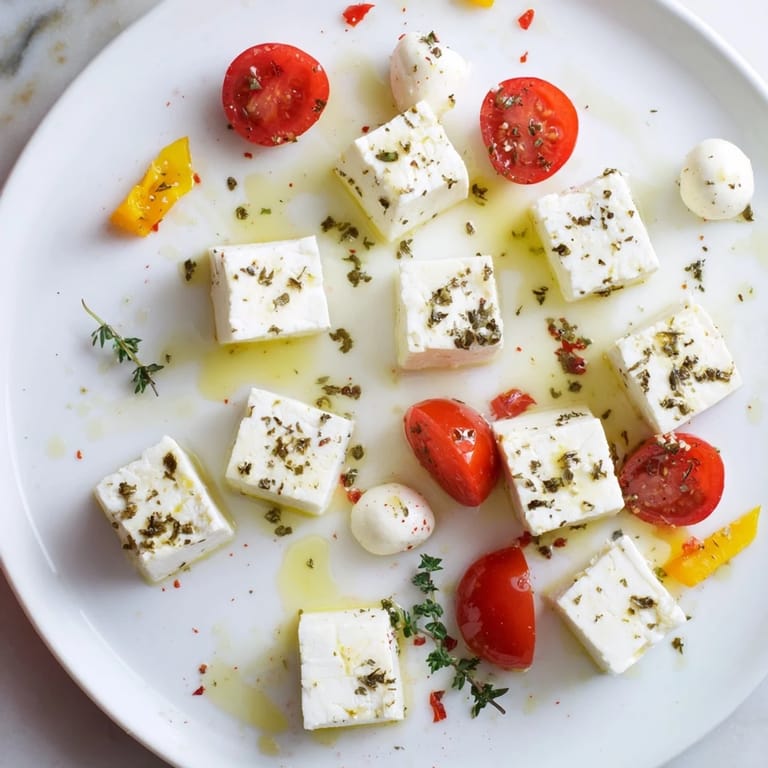
- Feta cheese, cubed: The salty anchor that makes everything else taste like itself; buy blocks and cut them yourself for the best texture and flavor.
- Fresh mozzarella balls: These stay delicate and mild, contrasting beautifully against the bolder feta and briny olives.
- Cucumber, sliced into rounds: The palate cleanser that keeps you coming back for more, best cut just before serving so they stay crisp.
- Cherry tomatoes, halved: Sweet little bursts of acidity that balance the richness of the cheeses without overwhelming.
- Yellow bell pepper, sliced into strips: Adds a subtle sweetness and breaks up the board with color that catches the light.
- Red onion, thinly sliced: A whisper of sharpness that wakes up your palate; soaking it in cold water for five minutes mellows it slightly if you prefer.
- Radishes, sliced: Peppery and crisp, they're the surprise ingredient that makes people ask what they are.
- Kalamata olives, pitted: Deep and briny, they anchor the savory side and deserve their own small pile so people can take as many as they want.
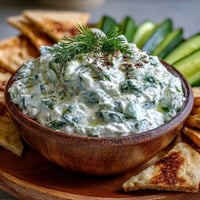
- Hummus and tzatziki: The creamy bridge between fresh vegetables and bread, each one playing a different role in the flavor story.
- Crispbreads or pita wedges: The edible vessel; choose ones that feel sturdy enough to hold a generous scoop of dip.
- Extra virgin olive oil: A final drizzle that makes everything feel intentional and finished, not like an afterthought.
- Fresh mint and dill: These aren't just decoration—they add a whisper of Mediterranean freshness that pulls everything together.
- Sea salt and cracked black pepper: Sprinkle with a generous hand; underseasoningis the most common mistake on boards like these.
Tired of Takeout? 🥡
Get 10 meals you can make faster than delivery arrives. Seriously.
One email. No spam. Unsubscribe anytime.
Instructions
- Start with the cheeses:
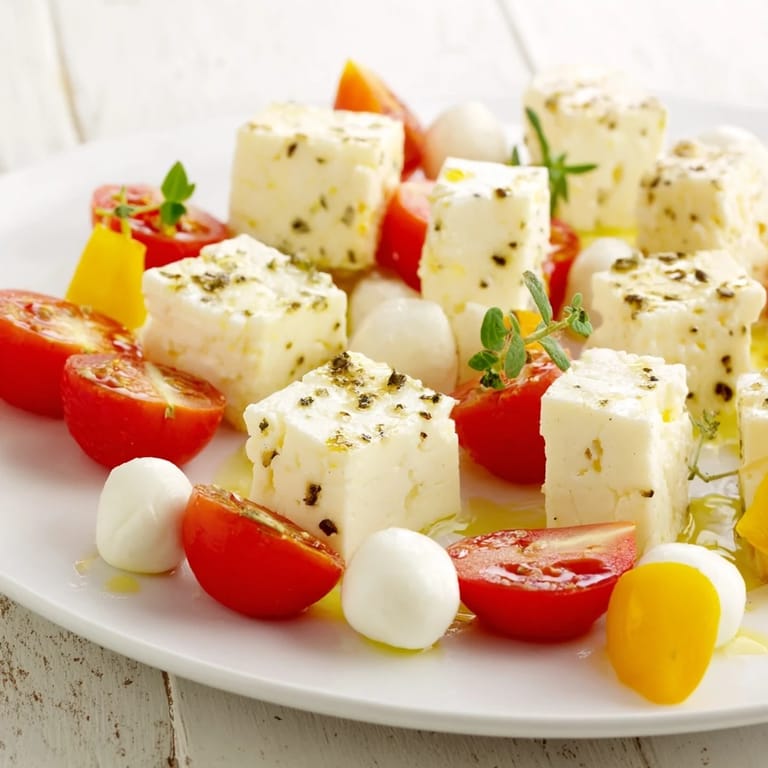
- Place your feta cubes and mozzarella balls in their own distinct areas on your board, leaving generous white space between them like you're arranging islands. This breathing room is what makes a board feel inviting rather than cluttered.
- Create vegetable clusters:
- Fan out each vegetable in small groups—cucumbers together, tomatoes together, peppers in their own section—so people can easily grab what calls to them. Think of it like a produce market where things have their own stall.
- Anchor with olives:
- Pile the Kalamata olives into a small bowl right on the board or in a separate dish; they're jewel-like and deserve a moment of attention.
- Add the dips:
- Spoon the hummus and tzatziki into small bowls and nestle them into the arrangement, leaving them visible and accessible so people know they're there to be used.
- Finish with oil and seasoning:
- Drizzle a careful hand of olive oil over the feta and vegetables—you want it to glisten, not swim. Season everything with sea salt and cracked black pepper so that first bite tastes intentional and complete.
- Garnish with herbs:
- Scatter fresh mint and dill sprigs across the board so their green catches the light; this is the final touch that says you cared enough to make it beautiful.
 Save
Save There was a moment when my sister-in-law set down her wine glass and said this was the kind of meal that made her feel like she was on vacation without leaving the table. That's when I understood the real magic of a mezze board—it's not about complicated techniques; it's about creating a moment where people slow down and feel a little bit happier.
The Art of Board Assembly
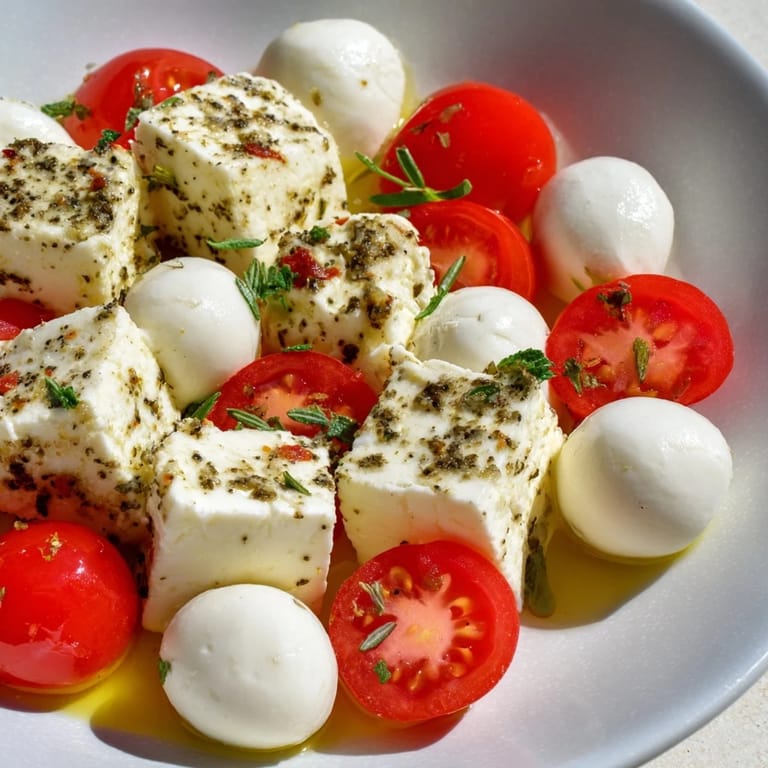
I've learned that a beautiful board is as much about restraint as abundance. You don't need sixteen different items—quality and proportion matter more than quantity. The key is choosing colors and textures that play off each other; the deep purple of olives against pale feta, the bright red of tomatoes next to cool white mozzarella. Think about the journey of eating: you want variety in every bite without having to work too hard for it.
Flavor Pairing Secrets
Mediterranean flavors work because they're built on contrasts—salty against fresh, rich against bright, creamy against crisp. The feta and mozzarella do different jobs on your palate; the olives provide umami depth that makes the vegetables taste more like themselves. Each component exists to make the others taste better, which is why even with simple ingredients, the whole feels greater than its parts.
Making It Your Own
The beauty of a mezze board is that it's forgiving and personal. You can work with what's in season or what you have on hand, and it still feels intentional and special. I've added roasted red peppers, artichoke hearts, fresh herbs, even pistachios when I wanted something different. The structure stays the same; only the details change.
- A light dusting of dried oregano or sumac on the feta adds warmth and a subtle tang that deepens the Mediterranean feeling.
- If you want to make it vegan, plant-based feta and cashew-based dips work beautifully and honestly no one will miss the dairy.
- Serve this with chilled Sauvignon Blanc or a light rosé, and you've turned a simple meal into an occasion.
 Save
Save A mezze board is an invitation to linger, to taste without rules, to enjoy good food and better company without the fuss. It's become my favorite way to gather people around a table because it feels both effortless and generous at the same time.
Recipe Questions & Answers
- → What cheeses are best for this platter?
Feta and fresh mozzarella balls (bocconcini) provide a creamy and tangy contrast ideal for this Mediterranean spread.
- → How can I keep the vegetables fresh and crisp?
Slicing the cucumber, cherry tomatoes, and bell peppers right before serving ensures optimal freshness and crunch.
- → Can I make this platter vegan?
Yes, substitute dairy cheeses with plant-based feta and omit mozzarella or use vegan alternatives to maintain flavor and texture.
- → What garnishes enhance the flavors here?
Fresh mint and dill sprigs add bright herbal notes, while a drizzle of extra virgin olive oil ties the components together.
- → Are there gluten-free options for the crackers?
Using gluten-free crispbreads or pita wedges ensures the platter suits gluten-sensitive diets without compromising taste.