 Save
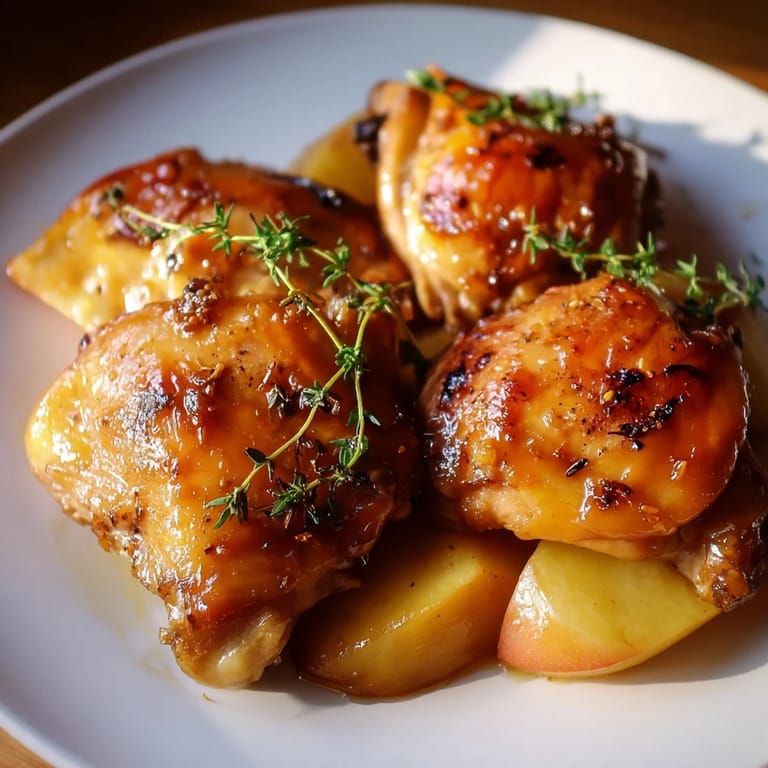
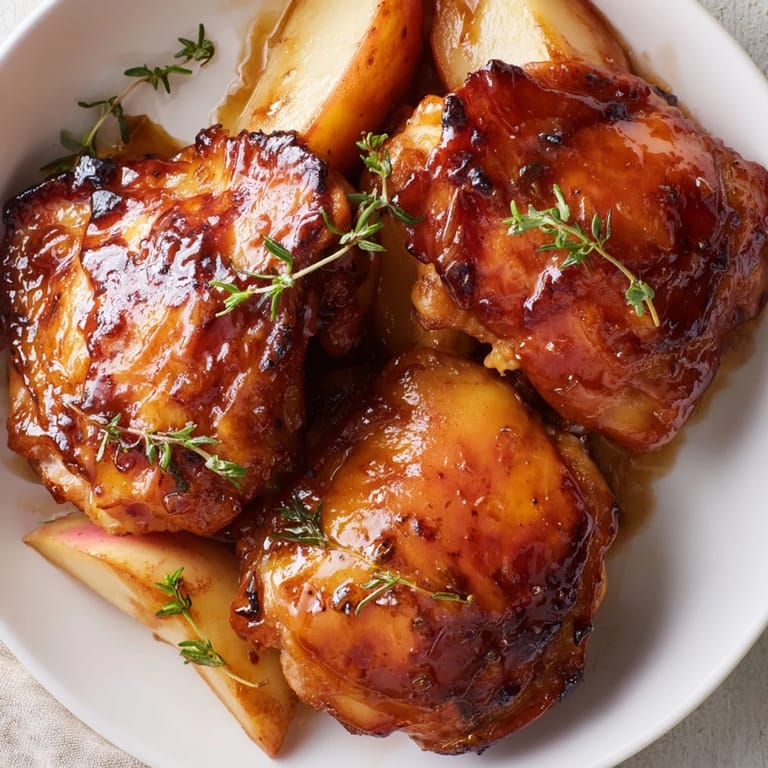
Save There's something almost magical about the moment when maple syrup hits a hot pan and the smell starts filling your kitchen—sweet, tangy, with this underlying richness that makes you pause whatever else you're doing. The first time I made sticky maple apple chicken was a quiet Tuesday night when I had good chicken thighs on hand and a bottle of apple cider I'd been saving. I whisked together maple syrup, apple cider vinegar, and Dijon mustard almost on instinct, and it turned into this glossy, burnished glaze that clung to golden-brown skin like it was meant to be there. That one dish became my go-to whenever I needed something that felt special but didn't demand hours in the kitchen.
I remember making this for my neighbor after her surgery recovery started feeling monotonous—she said it was the first meal in weeks that made her actually excited to eat. The apples nestled around the chicken release their own subtle sweetness as they roast, softening into almost jam-like texture at the edges. That moment when she took her first bite and closed her eyes is exactly why I keep making this dish.
Ingredients
- Bone-in, skin-on chicken thighs (8 pieces, about 1.2 kg / 2.5 lbs): The skin renders beautifully under heat, becoming crispy and golden, while the bone keeps the meat incredibly moist and flavorful.
- Pure maple syrup (1/3 cup): Use the real thing here—the grade doesn't matter as much as authenticity, and the deeper color will give you better caramelization.
- Apple cider or unsweetened apple juice (1/3 cup): The acidity cuts through richness and keeps the glaze from tasting one-dimensional.
- Apple cider vinegar (2 tbsp): This is your secret weapon for balance—it prevents the dish from becoming cloying and adds subtle brightness.
- Dijon mustard (2 tbsp): Its sharpness rounds out the maple sweetness and adds a layer of sophistication most people can't quite identify.
- Olive oil (2 tbsp): Helps the glaze coat evenly and contributes to that glossy finish.
- Garlic (2 cloves, minced): Adds savory depth that makes the dish feel more complete than just sweet and tangy.
- Fresh thyme (1 tsp fresh or 1/2 tsp dried): The herbaceous note here is essential—it ties everything together with an earthy whisper.
- Smoked paprika (1/2 tsp): A small amount gives the glaze complexity and subtle warmth without overwhelming the fruit flavors.
- Salt and freshly ground black pepper (1/2 tsp salt, 1/4 tsp pepper): Taste your glaze before it hits the pan—you may want slightly more depending on your palate.
- Medium apples (2, such as Honeycrisp or Gala): Choose apples that are firm but not mealy, cored and sliced into wedges for even cooking.
- Fresh thyme sprigs (for garnish, optional): A small handful adds visual warmth and reminds people what flavors are at play.
Tired of Takeout? 🥡
Get 10 meals you can make faster than delivery arrives. Seriously.
One email. No spam. Unsubscribe anytime.
Instructions
- Prep your space and heat your oven:
- Set your oven to 400°F (200°C) and line a large baking dish with parchment paper or a light grease—this makes cleanup easier and prevents sticking. I like using parchment because you get to watch the glaze develop without worrying about scrubbing later.
- Dry your chicken thoroughly:
- Pat each thigh completely dry with paper towels and sprinkle lightly with salt and pepper on both sides. This small step makes all the difference between sticky skin and watery skin, so don't skip it.
- Build your glaze:
- Whisk together the maple syrup, apple cider, apple cider vinegar, Dijon mustard, olive oil, minced garlic, thyme, smoked paprika, salt, and pepper in a medium bowl until smooth and emulsified. The glaze should look glossy and hold its color when you lift the whisk.
- Arrange and coat everything:
- Place the chicken thighs skin-side up in your prepared baking dish and nestle the apple wedges around them. Pour the glaze evenly over everything, then flip each chicken thigh once to coat both sides—the skin will cradle the glaze beautifully.
- Let the oven work its magic:
- Bake for 30 to 35 minutes, basting the chicken and apples with pan juices once or twice halfway through and near the end. You're looking for golden-brown skin and an internal temperature of 165°F (74°C) at the thickest part of the thigh.
- Caramelize for extra depth (optional):
- If you want deeper caramelization and a stickier glaze, switch your oven to broil on high for the last 2 to 3 minutes, keeping a close eye so nothing burns. The glaze will deepen and the skin will crackle slightly.
- Rest before serving:
- Pull everything from the oven and let it sit for 5 minutes—this allows the juices to redistribute through the meat. Garnish with fresh thyme sprigs if you have them on hand.
 Save
Save There was a night when my partner and I had friends over unexpectedly, and this was the only thing I could make without a trip to the store. The way the glaze reduced and darkened in the oven, how the apples practically dissolved into sweet tanginess—it felt like the kind of meal that shouldn't be this easy, but somehow was. Everyone lingered at the table longer than usual, picking at the apples and asking what was in the glaze.
Why the Maple-Apple Combination Works
Maple and apple are natural partners in the kitchen, but what makes them sing here is the acid—apple cider vinegar and Dijon mustard prevent the sweetness from cloying while adding sharpness that makes your palate want another bite. The thyme and smoked paprika ground everything in savory territory, so you're never eating something that tastes like dessert masquerading as dinner. When these elements hit hot chicken skin, they caramelize into something almost savory-sweet, which is the opposite of one-note.
Timing and Temperature Matter
I learned the hard way that bone-in thighs need those full 30 to 35 minutes, especially if your chicken isn't room temperature when it goes in. Skinless or boneless thighs cook faster, so if you go that route, shave 5 to 8 minutes off the time and check the internal temperature earlier to avoid drying them out. The glaze continues to reduce and thicken as the chicken cooks, so if it looks too loose at the halfway point, just trust the process.
Variations and Flavor Twists
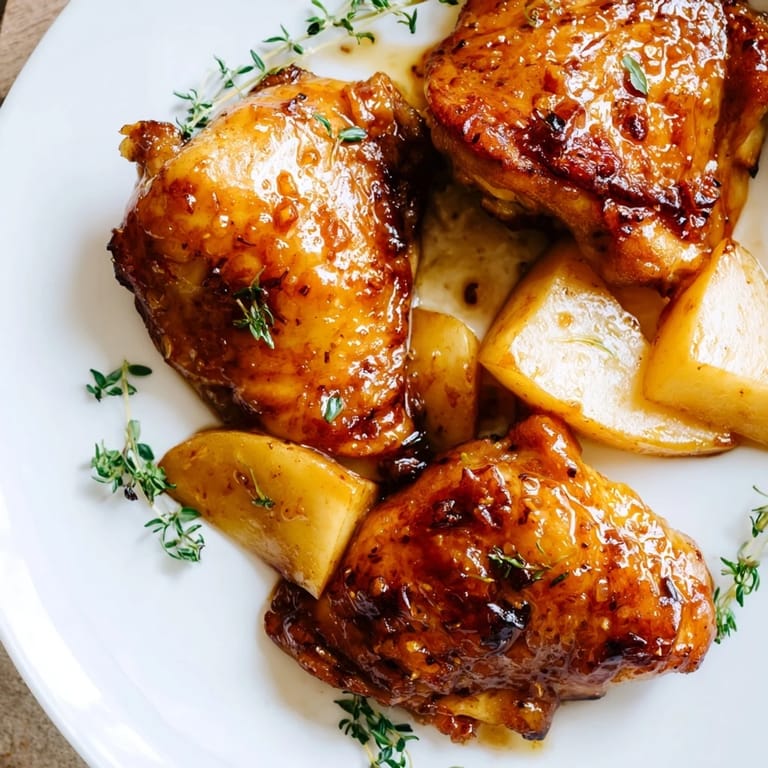
This recipe has become my blank canvas for experimentation because the maple-apple foundation is forgiving and flexible in the best ways. A pinch of chipotle powder adds smokiness without heat, or you could swap some apple cider for chicken broth if you want a less sweet glaze that still tastes rich. I've tried Gala, Honeycrisp, and even Braeburn apples, and they all work, though Honeycrisp seems to hold their shape best while staying tender.
- Add a touch of Dijon mustard if you want extra tang, or reduce it slightly if you're cooking for people who prefer gentler flavors.
- If you're using boneless, skinless thighs, reduce cooking time by 5 to 8 minutes and baste more frequently to keep them moist.
- Try pairing this with mashed potatoes or rice to soak up every last drop of that sticky, burnished glaze.
 Save
Save This dish has a way of making weeknight dinner feel like something worth celebrating, which is the highest compliment a recipe can receive. Every time you make it, your kitchen fills with that apple-and-maple smell that somehow feels both cozy and elegant.
Recipe Questions & Answers
- → How do I make the chicken extra crispy?
Pat the chicken skin dry before seasoning and use the broil setting for the last 2–3 minutes to crisp up the skin without burning.
- → Can I use boneless chicken thighs instead?
Yes, boneless thighs can be used but reduce baking time by 5 to 8 minutes to avoid overcooking.
- → What type of apples work best in the dish?
Firm apples like Honeycrisp or Gala hold their shape well and add a nice balance of sweetness and tartness.
- → Is there a way to add smokiness to the glaze?
Adding a pinch of chipotle powder to the glaze will introduce a gentle smoky heat that complements the maple and apple flavors.
- → What side dishes pair well with this chicken?
Roasted vegetables, mashed potatoes, or rice are excellent accompaniments that soak up the flavorful glaze.