 Save
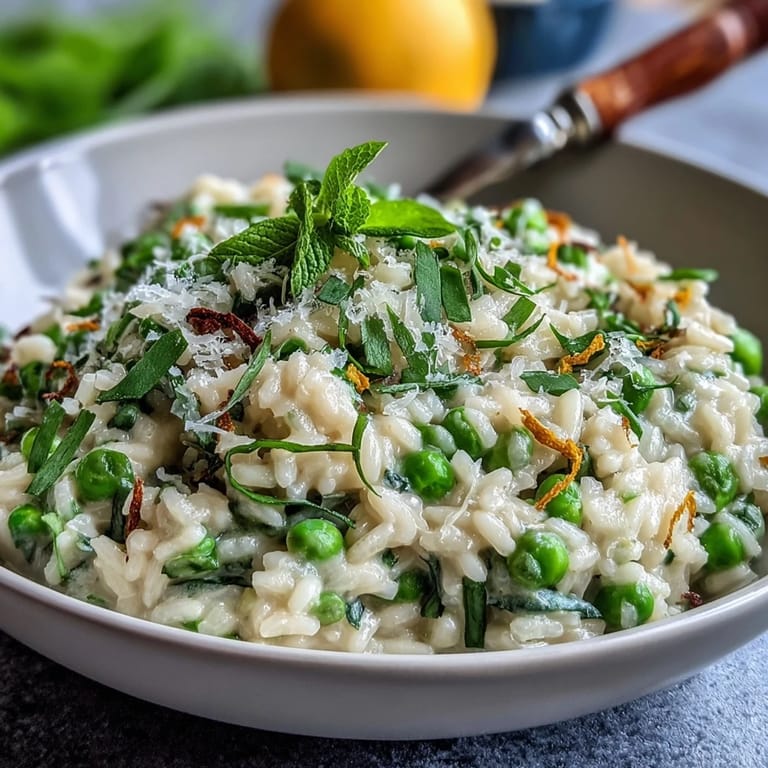
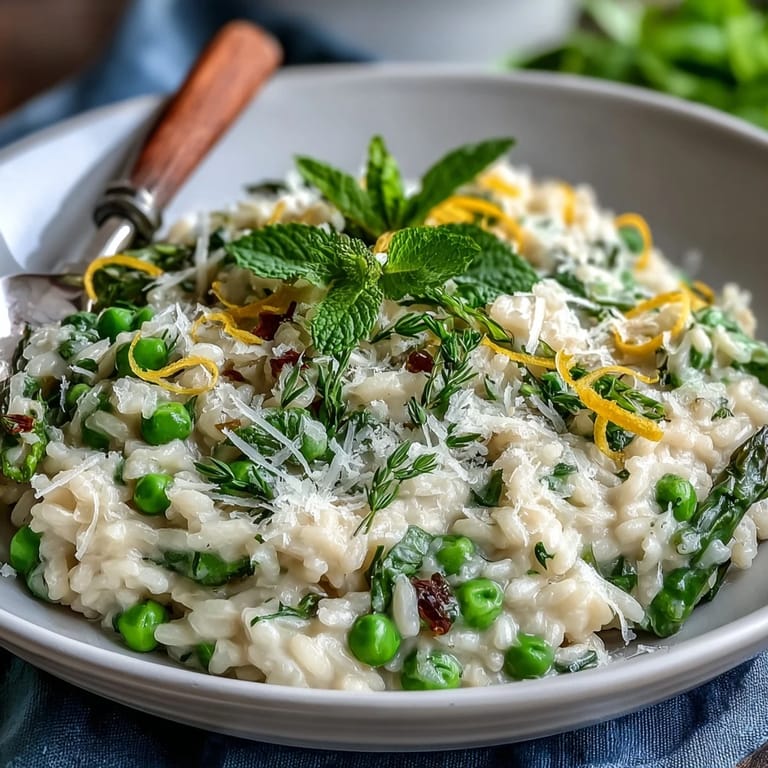
Save Steam drifted into my kitchen the first time I made this risotto, painting the windowpanes with a gentle haze as peas tumbled in bright green bunches onto the cutting board. The scent of mint mingled surprisingly well with the savory aroma of shallots in olive oil, and I remember thinking this was the smell of early spring. That evening, I barely noticed the time slipping by as I stirred rice and watched the broth slowly disappear, giving way to creamy tenderness. A little splash of wine joined the mix, fizzing softly in the pan, and suddenly dinner felt like an occasion even though it was just an ordinary weeknight. Every bite promised something green, fresh, and delicately cheesy—the kind of meal that made me want to linger at the table a bit longer.
Last May, a friend texted—short notice, she was in the neighborhood, could she swing by for dinner? I’d already intended to make this risotto, so I doubled everything, poured extra wine for us, and let her stir while I grated fresh Parmesan. We laughed about our less-than-perfect risotto attempts from years before, but this time everything came out creamy and just right. I don’t remember what else we talked about, but I remember the bright minty bite and how happy we felt as the rain tapped quietly outside. Sometimes the right dish softens an entire day.
Ingredients
- Spring peas: Use them fresh if you can—tiny, sweet, and tender—but frozen peas deliver a pop of green even in the off-season.
- Shallot: Its mellow sweetness forms the aromatic backbone for the whole dish; chop it finer than you think to avoid big bites.
- Garlic: Adds gentle warmth—if you love an assertive garlic flavor, use a larger clove.
- Fresh mint leaves: Sprinkle these in at the end for a bright, garden-fresh lift; watch the aroma wake up the entire pot.
- Lemon zest: It makes the final dish sunny and wakes up the creaminess, especially if you use a microplane grater.
- Arborio rice: The high starch in this short-grain rice is the secret to classic risotto’s creaminess—don’t try to swap it for regular long grain.
- Low-sodium vegetable broth: Always keep it warm; cold broth stops the rice from cooking evenly.
- Dry white wine: Adds depth and just the right bit of acidity; Sauvignon Blanc works beautifully here.
- Olive oil: Start with a fruity, medium-bodied one to gently cook the aromatics.
- Unsalted butter: Swirl this in at the end for creaminess without overpowering the fresh flavors.
- Aged Parmesan cheese: Go for the real deal if you can—grate it yourself for a fluffy finish that melts quickly.
- Kosher salt: Season gradually and taste as you go—Parmesan is salty, so you don’t want to overdo it.
- Freshly ground black pepper: A few twists at the end ties everything together—try it coarsely ground for texture.
Tired of Takeout? 🥡
Get 10 meals you can make faster than delivery arrives. Seriously.
One email. No spam. Unsubscribe anytime.
Instructions
- Warm the broth:
- Pour your vegetable broth into a saucepan and keep it over low heat—it should steam, not simmer, so the rice stays creamy.
- Sauté the aromatics:
- In your biggest heavy pot, swirl in olive oil, then add shallots and garlic; breathe in the sweet savory scent as they soften.
- Toast the rice:
- Stir in the Arborio rice and make sure each grain is slicked with olive oil—listen for that quiet sizzle as the rice turns milky and opaque.
- Add the wine:
- Pour in white wine and watch it bubble, stirring until it nearly disappears and the aroma picks up bright new notes.
- Stir in the broth:
- Ladle warm broth in, one spoonful at a time, stirring methodically and pausing so the rice gets perfectly creamy.
- Toss in the peas:
- After about 15 minutes, fold in your peas so they cook just until bright green, adding more broth as needed for the risotto to thicken but still flow off a spoon.
- Finish and season:
- Off the heat, stir in butter, Parmesan, mint, and lemon zest—work quickly so the cheese melts into the rice and fragrant steam rises up.
- Serve while hot:
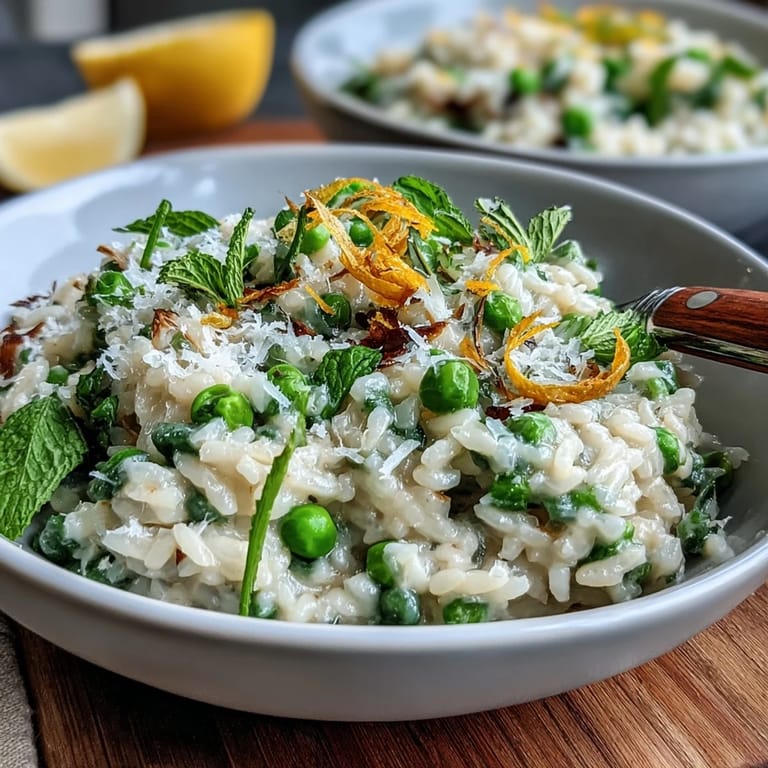
- Spoon it onto warm plates, sprinkle extra Parmesan and mint over the top, and serve right away.
 Save
Save One night, alone in my apartment and waiting for a friend who was running late, I caught myself humming absentmindedly as I stirred. When she arrived, hungry and tired, the risotto had rested just enough—she swore it was the coziest meal she’d had in months, and suddenly we had energy to talk late into the night. That’s when I realized some dishes can quietly mend a day’s fatigue. This isn’t just food—it’s comfort ladled up, one warm bowl at a time.
How to Time Your Risotto Perfectly
Keeping an eye on texture is more important than following the clock. The rice will start out stubborn, then lose its bite and become creamy after each addition of broth—taste a spoonful now and then, so you know exactly when it’s al dente. Never rush the ladling; it’s the secret to risotto’s signature texture. If the rice finishes before your peas are tender, just let it rest covered—a few extra minutes won’t hurt. Serve hot, as risotto waits for no one.
Making Risotto Less Stressful
I used to think risotto demanded constant stirring, but small, gentle breaks while you add broth will still yield creamy results. Turn on music, call a friend, or just lean over the counter and enjoy the process—this isn’t a race. If you’re worried about timing dinner exactly, prep everything ahead so it all flows. I even keep the cheese and herbs close by for the last minute whirlwind. Let the gentle rhythm of stirring be soothing—not stressful.
Upgrades and Swaps Youll Want to Try
Sometimes, a splash of cream at the very end sends things over the top; for a deeper flavor, try pecorino instead of Parmesan. Leftover risotto makes fantastic crispy cakes the next day—just form little rounds and sear them in butter. Feel free to toss in asparagus or swap mint for basil if you have those on hand.
- A squeeze of lemon juice brightens the whole bowl.
- Reheat leftovers with a splash of broth to restore creaminess.
- Always taste and adjust salt right before serving—it’s the little things that truly matter.
 Save
Save If you find quiet delight in watching green peas pop in cream and cheese, you’ll savor this dish as much as I do. Hope you’ll find your own kitchen moments in every spoonful.
Recipe Questions & Answers
- → Can I use frozen peas?
Yes. Add frozen peas toward the last 5–10 minutes of cooking so they heat through without losing color or texture. Fresh peas can be added a few minutes earlier if very tender.
- → Why use Arborio rice?
Arborio has a high starch content that yields the creamy, slightly chewy texture risotto is known for. Short-grain varieties like Carnaroli or Vialone Nano are also excellent substitutes.
- → How do I keep the risotto creamy?
Stirring while gradually adding hot broth releases starch from the rice, creating creaminess. Finish off with cold butter and grated aged cheese off the heat to emulsify the pan juices for a silky texture.
- → Can I skip the wine?
Yes. Replace the wine with an equal amount of warm broth for a gentler flavor. Wine adds acidity and depth, but warm broth keeps the cooking temperature steady and still produces a creamy outcome.
- → How to reheat leftovers?
Gently rewarm risotto in a skillet over low heat with a splash of broth or water, stirring to loosen the grains. Add a knob of butter or a little cream at the end to restore silkiness.
- → What cheeses pair well besides Parmesan?
Pecorino lends a sharper, saltier note; a mild aged Asiago also works. Adjust salt accordingly, since stronger cheeses can increase overall seasoning.