 Save
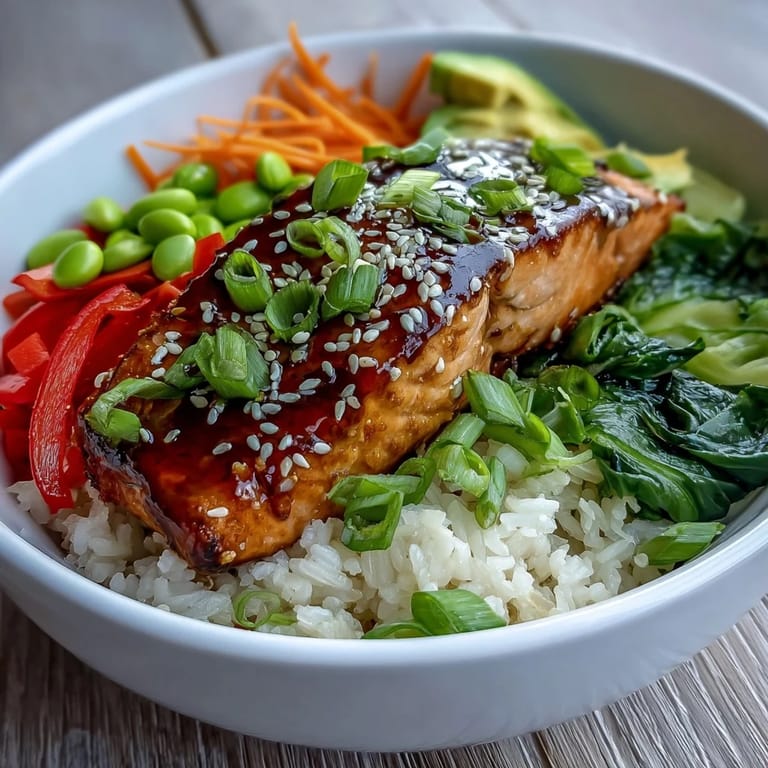
Save There's something about the sizzle of salmon hitting a hot pan that makes me feel like I actually know what I'm doing in the kitchen. Years ago, I'd overcooked fish every single time until a friend casually mentioned marinating salmon in soy and ginger beforehand—suddenly it wasn't just edible, it was genuinely delicious. This bowl became my go-to on nights when I wanted something that felt restaurant-quality but didn't require a recipe book and three hours. The glaze caramelizes just enough to make the fish taste like you've been trained in Asian cuisine, and the crisp vegetables beside it make the whole thing feel balanced and intentional.
I made this for my partner one Thursday evening after a brutal week at work, and they took one bite and just closed their eyes like the day had finally lifted off their shoulders. That's when I realized this bowl was more than just dinner—it was a small, edible act of care. Now whenever either of us needs something that tastes like we matter, this is what appears on the counter.
Ingredients
- Salmon fillets (4, about 150g each): The heart of this bowl—look for fillets that smell like the ocean, not fishy, and gently press the flesh to make sure it springs back slightly, a sign of freshness.
- Soy sauce (4 tbsp, low sodium): This is your umami foundation; low sodium keeps the marinade from becoming a salt bomb, but the flavor still penetrates every fiber of the fish.
- Honey or maple syrup (2 tbsp): Balances the salty-savory elements and creates that glossy, caramelized coating when the salmon hits the pan.
- Fresh ginger, grated (2 tbsp): Use a microplane if you have one—it releases the essential oils better than chunky pieces and distributes flavor more evenly through the marinade.
- Garlic cloves, minced (2): Finely mince this by hand or with a garlic press so it doesn't overpower and remains integrated into the glaze.
- Rice vinegar (1 tbsp): Adds brightness and prevents the glaze from tasting one-dimensional; this is what makes people say they can't quite name what they're tasting but know it's special.
- Sesame oil (2 tbsp total): Use toasted sesame oil for maximum flavor—just a little goes a long way, and it's what separates this from tasting like generic takeout.
- Sriracha or chili paste (1 tsp, optional): Leave this out if heat isn't your thing, or add more if you like your food to have personality.
- Sesame seeds (1 tbsp, plus more for garnish): Toast them lightly in a dry pan beforehand if you want an extra layer of nutty complexity.
- Jasmine or sushi rice (2 cups uncooked): Jasmine rice is more forgiving and stays fluffy; sushi rice is stickier and feels more intentional if you're comfortable with it.
- Water (2 1/2 cups): The ratio matters here—too little and the rice stays crunchy, too much and it becomes porridge.
- Edamame (1 cup, shelled): These little green soybeans add protein and a pop of color; frozen works just as well as fresh and requires no guilt.
- Carrots, shredded (1 cup): They add natural sweetness and a textural contrast that keeps the bowl interesting.
- Red bell pepper, thinly sliced (1): The color is half the appeal, but the slightly sweet, crisp flavor anchors the other vegetables.
- Baby bok choy or snap peas (1 cup, sliced): These stay crisp even with a bit of cooking time, which is why they work better here than softer greens.
- Green onions, sliced thin (2): Slice just before serving so they don't lose their snap and sharp onion bite.
- Avocado (1, sliced): Add this at the very last moment—even five minutes in advance and the cut edges start to oxidize and look tired.
- Lime wedges (for serving): The squeeze of lime at the end is what transforms this from good to something you'll actually crave later.
- Fresh cilantro or microgreens (optional garnish): A small handful adds freshness and visual finish, but don't feel obligated if your kitchen herbs have been neglected.
Tired of Takeout? 🥡
Get 10 meals you can make faster than delivery arrives. Seriously.
One email. No spam. Unsubscribe anytime.
Instructions
- Build the glaze:
- Grab a mixing bowl and whisk together the soy sauce, honey, fresh ginger, minced garlic, rice vinegar, sesame oil, and sriracha if you're using it. You'll notice the mixture has a deep amber color and smells instantly appetizing—that's when you know you're on the right track. Pour out about 2 tablespoons into a separate small bowl to reserve for drizzling later; this will stay fresh and bright while the rest clings to the salmon.
- Marinate the salmon:
- Place your salmon fillets in a shallow dish or resealable bag, then pour the remaining marinade over them, making sure each fillet gets coated on both sides. Slide this into the refrigerator for 15 to 30 minutes—this time allows the flavors to penetrate without making the fish texture weird, which happens if you go longer. If you're in a rush, even 10 minutes helps, though patience here really does pay off.
- Cook the rice:
- Rinse your rice under cold running water until the water runs mostly clear; this removes excess starch and prevents gluey rice. Combine the rinsed rice, water, and a pinch of salt in a saucepan, bring it to a boil over high heat, then immediately reduce to low and cover with the lid. Set a timer for 15 minutes—resist the urge to peek, as steam escaping means uneven cooking—then remove from heat and let it sit, covered, for 5 more minutes before fluffing with a fork.
- Stir-fry the vegetables:
- While the rice is doing its thing, heat 1 tablespoon of sesame oil in a large nonstick skillet over medium-high heat until it shimmers and smells toasty. Toss in the edamame, carrots, bell pepper, and bok choy or snap peas all at once, stirring constantly for 3 to 4 minutes—you want them to be crisp-tender, not soft, so they maintain texture and natural sweetness. When they look bright and just starting to soften at the edges, transfer them to a plate and set aside.
- Sear the salmon:
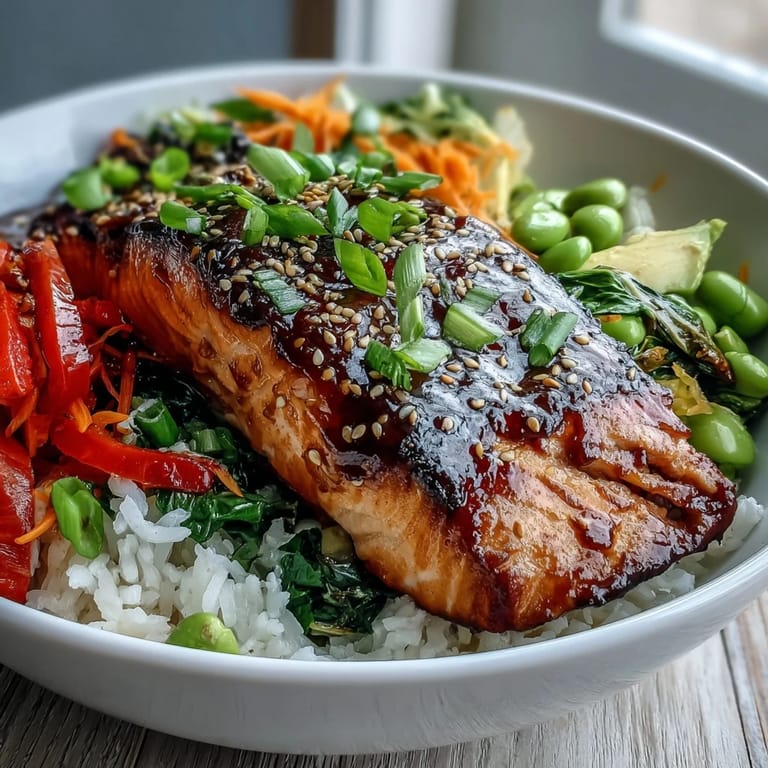
- Return the skillet to medium-high heat and add just a splash more oil if the pan looks dry. Carefully place the salmon fillets skin-side up (if they have skin) into the hot pan—you should hear that satisfying sizzle immediately, which means the temperature is exactly right. Let them sit undisturbed for 3 to 4 minutes until the bottoms develop a golden, caramelized crust, then gently flip and cook for another 3 to 4 minutes until the fish is cooked through and the glaze has become sticky and shiny. Sprinkle sesame seeds on top while the fish is still hot so they stick.
- Assemble the bowls:
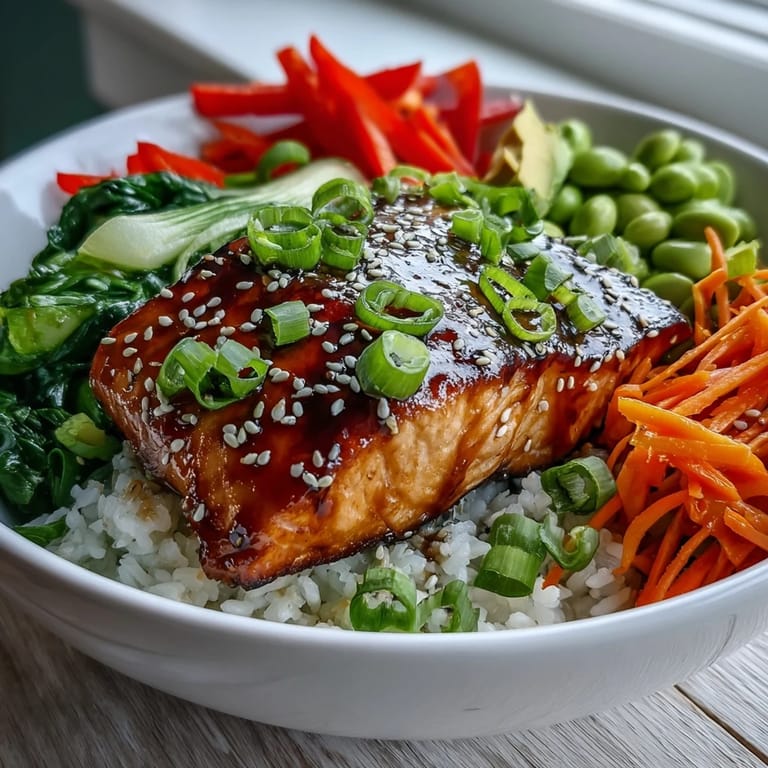
- Divide your fluffy rice among four bowls, creating a gentle mound in the center. Layer the stir-fried vegetables on top of the rice, then nestle a salmon fillet against the vegetables and add avocado slices, sliced green onions, and any garnishes you're using. Drizzle each bowl with some of that reserved marinade you saved earlier, squeeze fresh lime over everything, and serve immediately while the rice is still warm and the salmon is at its best.
 Save
Save The first time I served this to guests, I was nervous about the salmon because somehow cooking fish for other people feels more high-stakes than cooking it for myself. But watching people eat without hesitation, seeing them reach for seconds, hearing someone ask for the recipe—that's when I realized I'd actually cracked something. This bowl became proof that you don't need complicated techniques or hard-to-find ingredients to make something that feels special.
Timing Your Prep Like a Pro
The secret to making this feel effortless is doing your mise en place before any heat touches the pan—measure out all your ingredients, slice your vegetables, grate your ginger, mince your garlic. This 10-minute investment upfront means you're not scrambling when the rice boils over or the pan gets hot. I learned this the hard way after watching a television cooking show where the chef made it look like they were just casually adding ingredients from memory, and then I tried that approach and created chaos. Now I lay everything out like I'm performing surgery, and suddenly the whole process feels calm and controlled instead of stressful.
Why This Bowl Works as Meal Prep
This recipe scales beautifully if you're cooking for the week—you can make double or triple the components and store them separately, then assemble fresh bowls each day. The rice keeps for five days in an airtight container, the marinated salmon (uncooked) stays good for two days, and the stir-fried vegetables last about three days. The avocado and lime are the only things you'll add fresh each day, which takes maybe two minutes. I've learned that this approach makes it way more likely I'll actually eat well during busy stretches, because having half the work done already makes dinner feel possible instead of intimidating.
Flavor Tweaks That Change Everything
Once you've made this bowl a few times and you know how it tastes, you start seeing it as a template instead of a fixed recipe—that's when the fun begins. You can substitute the soy sauce with tamari for gluten-free, swap white rice for brown rice or even cauliflower rice if you want to adjust the carbohydrates, or add pickled ginger, sliced radishes, or crispy shallots for extra textural interest. The core of the dish remains solid even when you play with the edges, which is the mark of a genuinely good recipe—it's flexible enough to adapt to what you have on hand or what your body needs that particular week.
- A squeeze of fresh lime and a pinch of flaked sea salt can amplify flavors even more than you'd expect.
- If you have white miso paste, whisk a half teaspoon into the marinade for deeper umami complexity.
- Coconut aminos can replace soy sauce if you're avoiding soy, and it adds a subtle sweetness that's surprisingly pleasant.
 Save
Save This bowl has become my proof that restaurant-quality food is possible at home when you understand just a few foundational techniques—marinating, timing your components, and layering flavors thoughtfully. Make it once and you'll see what I mean.
Recipe Questions & Answers
- → How long should I marinate the salmon?
Marinate the salmon for 15–30 minutes in the refrigerator. This allows the flavors to penetrate the fish without breaking down the texture too much. Longer marinating times can make the salmon mushy.
- → Can I use frozen salmon fillets?
Yes, frozen salmon works well for this bowl. Thaw completely in the refrigerator before marinating and pat dry with paper towels to ensure proper searing and glazing.
- → What vegetables can I substitute?
You can swap the vegetables based on what's available. Try sugar snap peas, shredded cabbage, sliced cucumber, or thinly sliced snow peas. The key is maintaining a mix of colors and textures.
- → How do I store leftovers?
Store components separately in airtight containers for up to 3 days. Keep the salmon, rice, and vegetables in the refrigerator. Reheat the salmon and vegetables gently, then assemble fresh bowls.
- → Can I make this gluten-free?
Absolutely. Substitute tamari or coconut aminos for the soy sauce, and ensure all other ingredients are certified gluten-free. The flavor profile remains excellent with these swaps.
- → What rice works best for this bowl?
Jasmine or sushi rice provides the ideal fluffy texture. Brown rice adds nuttiness and fiber, while cauliflower rice offers a low-carb alternative. Adjust cooking times accordingly.