 Save
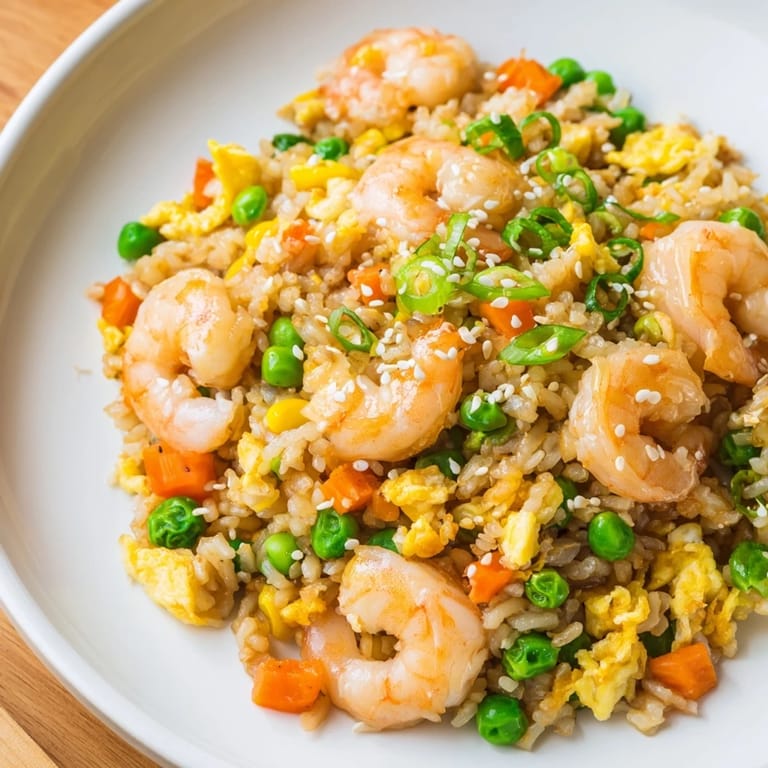
Save Last Tuesday, I was staring at a pot of leftover rice and a pile of shrimp that needed rescuing when my neighbor stopped by asking what smelled so good. Ten minutes later, she was sitting at my counter with a fork in hand, amazed that something tasting this craveable came together faster than ordering takeout. That's when I realized this wasn't just a weeknight dinner hack—it was the answer to the question I'd been asking myself for years: how do busy people actually eat well?
My mom used to make fried rice on nights when the fridge was looking sparse and our patience was even sparser. She'd move with this rhythm—shrimp in, eggs scrambled, vegetables tumbled in—like she was conducting an orchestra with a wooden spoon. Watching her work taught me that the speed isn't about rushing; it's about knowing exactly what comes next and trusting your instincts.
Ingredients
- Medium shrimp, peeled and deveined (200 g / 7 oz): These cook in seconds if you don't overcrowd the pan—keep the heat high and your timing sharp, and they'll stay tender instead of turning into little rubber rings.
- Large eggs (2): Beat them with a fork before they hit the pan, and they'll ribbon through the rice instead of forming dense chunks.
- Frozen mixed vegetables (100 g / 1 cup): Don't thaw them first; they'll cook perfectly in the hot pan and stay bright instead of turning mushy.
- Scallions (2), sliced: Use both the white and green parts—the whites add subtle bite when cooked, and the greens bring color and freshness at the end.
- Cooked jasmine rice, chilled (300 g / 2 cups): Cold rice is non-negotiable here; room-temperature rice will steam and clump, but chilled rice separates and crisps up beautifully.
- Soy sauce (2 tbsp): This is your seasoning backbone—taste as you go because salt levels vary between brands.
- Oyster sauce (1 tbsp, optional): It adds umami depth that makes people ask if there's some secret ingredient they can't quite name.
- Sesame oil (1 tsp): A little goes a long way; too much turns the rice greasy and overpowering, so measure it out.
- Ground white pepper (1/2 tsp): It distributes more evenly than black pepper and doesn't leave dark specks that look like bugs.
- Vegetable oil (1 tbsp): Use something neutral with a high smoke point—peanut oil works beautifully if you have it.
Tired of Takeout? 🥡
Get 10 meals you can make faster than delivery arrives. Seriously.
One email. No spam. Unsubscribe anytime.
Instructions
- Get Your Heat Going:
- Pour the vegetable oil into your wok or skillet and let it shimmer over medium-high heat—you're aiming for that moment just before smoke, when the oil looks alive and moves like water. This is when you know it's hot enough to sear the shrimp properly instead of just stewing them.
- Sear the Shrimp:
- Once the oil is ready, add the shrimp in a single layer and leave them alone for about 90 seconds before you even think about stirring. They'll turn pink on one side, then flip and finish cooking—this whole phase takes maybe 2-3 minutes total, and you'll know they're done when they curl slightly and feel firm to the touch.
- Scramble the Eggs:
- Push the shrimp to the side of the pan and pour in your beaten eggs, letting them set for just a few seconds before you start breaking them into small, fluffy pieces with your spatula. The goal is tender ribbons, not a hard omelet, so keep the heat high and your hand moving.
- Warm the Vegetables:
- Scatter your frozen vegetables across the pan and stir everything together—they'll thaw and soften in about a minute, and the pan will fill with the smell of dinner actually happening. Don't skip this step even though it seems quick; it's when the vegetables release their subtle sweetness into the rice.
- Add the Rice and Break It Apart:
- Dump in your cold rice and use your spatula to break up any clumps, pressing and separating rather than mushing. After about 2 minutes of constant stirring, every grain will be coated with oil and warmed through, and you'll see individual rice grains instead of a solid mass.
- Bring the Shrimp Back Home:
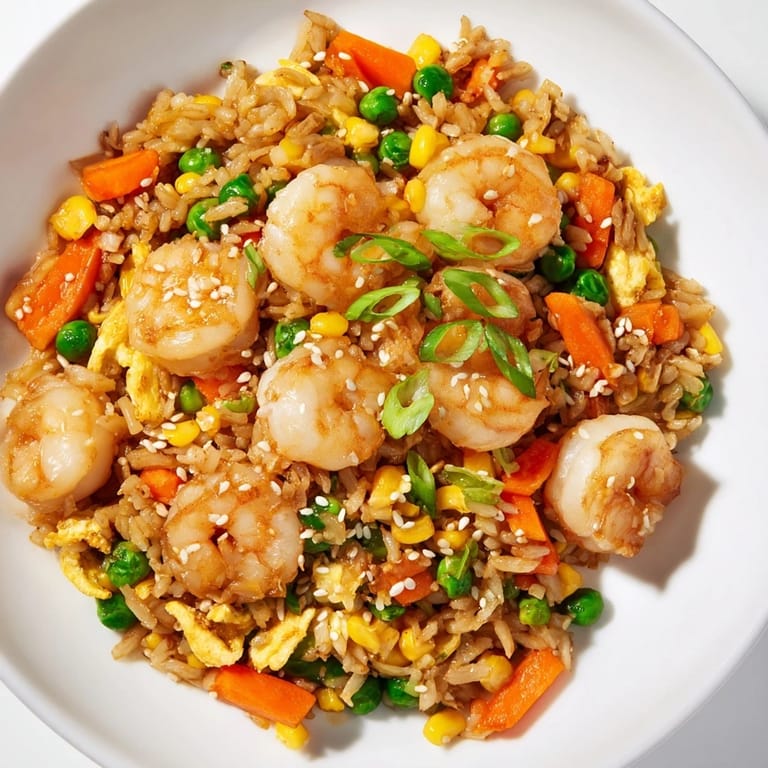
- Return the shrimp to the pan and add your soy sauce, oyster sauce if you're using it, sesame oil, and white pepper, stirring everything together so the sauce coats every grain evenly. The rice will darken slightly and smell absolutely incredible—this is the moment where it stops being just ingredients and becomes something people want to eat.
- Finish with the Greens:
- Toss in your sliced scallions and stir-fry for one more minute, letting them soften slightly but still hold their bright color. Taste a bite and adjust the seasoning if it needs more soy sauce or a pinch more pepper—this takes 30 seconds and makes the difference between good and actually memorable.
 Save
Save My daughter once asked why homemade fried rice tasted so much better than the takeout version we used to order, and I realized it was because she could see it being made, smell every ingredient as it hit the pan, and taste the care in the seasoning. That's when food stops being fuel and becomes a moment we're sharing together, even if the moment only lasts 20 minutes.
Why Day-Old Rice Is Your Secret Weapon
When rice sits in the fridge overnight, the starches firm up and each grain becomes distinct and separate instead of clinging to its neighbors. This is why a fresh pot of rice will turn into a sticky mess under the heat and wooden spoon, while day-old rice breaks apart easily and fries up crispy. I learned this the hard way by trying to make fried rice on the same day I cooked the rice, and I spent way too much time fighting clumps that would not cooperate. Now I save my rice specifically for fried rice days, treating leftover rice like the treasure it actually is.
The Equipment That Actually Matters
A wok is ideal because of its sloped sides and concentrated heat, but honestly, a large nonstick skillet works just fine if that's what you have. The nonstick surface matters more than the shape because it means you can toss and stir without things sticking and burning, and you can move faster without worrying about scraping the bottom constantly. A wooden spatula or flat-edged turner is better than a regular spoon because it helps you break up rice clumps and scrape the bottom of the pan efficiently.
Variations and Flavor Play
This recipe is basically a framework that invites you to improvise based on what's in your fridge and what your mood is asking for. I've made it with chicken when I didn't have shrimp, with cashews when I wanted crunch, with a drizzle of chili oil when I needed heat, and even as a completely vegetarian version when my friend came over and asked if I could make it without seafood. The beauty is that the technique stays exactly the same—you're just swapping proteins and adjusting seasoning—so once you've made it once, you can make it a hundred different ways.
- Swap shrimp for chicken breast sliced thin, tofu cubed, or leave it out entirely for a vegetarian version.
- A splash of chili sauce, sriracha, or a pinch of cayenne transforms it into something spicy if that's your speed.
- Finish with a fried egg on top if you want extra richness and an Instagram-worthy presentation.
 Save
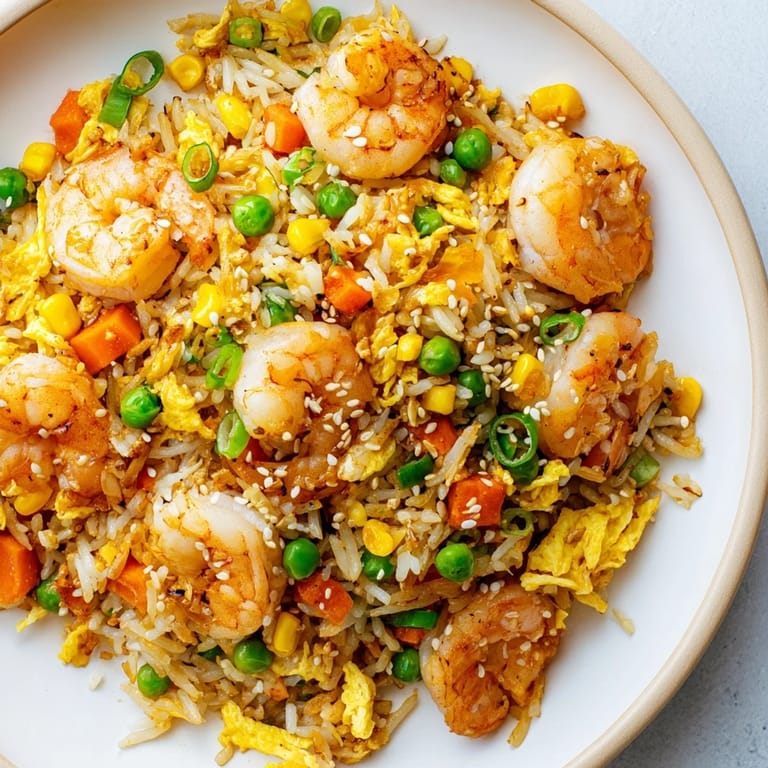
Save This is the fried rice I make when I want something that feels indulgent but actually comes together in the time it takes to wait for a delivery driver. It's the recipe that proved to me that busy nights don't have to mean compromise, and that the fastest meals can still taste like they came from somewhere that knows what they're doing.
Recipe Questions & Answers
- → What type of rice works best for this dish?
Day-old chilled jasmine rice is recommended to keep grains separate and prevent clumping during stir-frying.
- → Can I substitute the shrimp with other proteins?
Yes, chicken, tofu, or other seafood can be used as alternatives to shrimp depending on preference.
- → Why is sesame oil added at the end?
Sesame oil is added last to preserve its aroma and impart a nutty, fragrant finish to the dish.
- → Is it important to use frozen mixed vegetables?
Frozen mixed vegetables offer convenience and maintain texture and color after quick cooking, complementing the dish well.
- → How do I avoid overcooking the shrimp?
Cook shrimp just until pink and opaque, usually 2-3 minutes, then remove from heat to prevent rubbery texture.