 Save
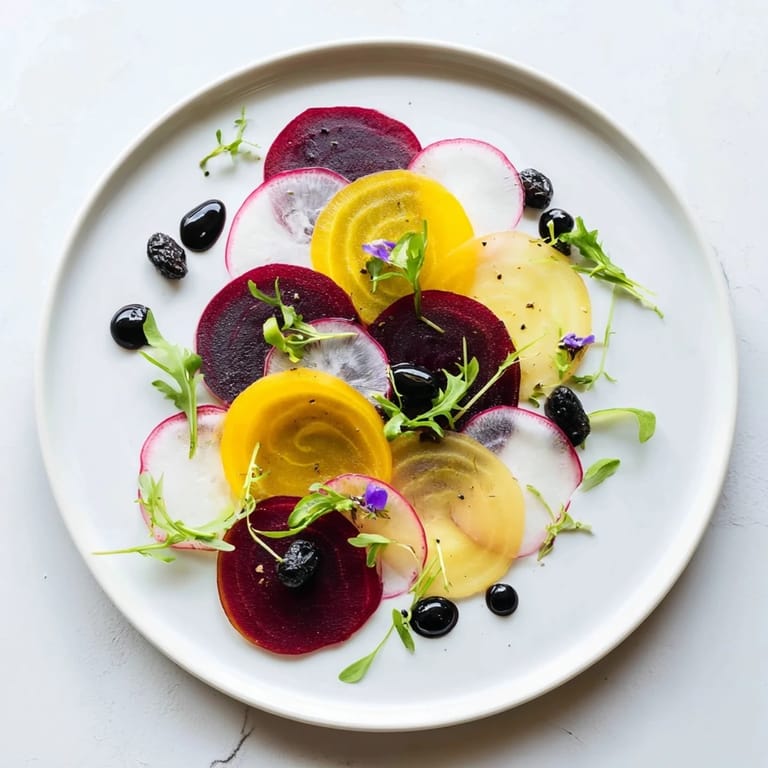
Save I discovered this dish by accident while rearranging my cutting board one quiet evening, watching how the dark beets cast shadows across the white plate under kitchen light. There's something mesmerizing about layering colors intentionally, letting each ingredient tell its own story through contrast and silhouette. My first attempt felt like painting with vegetables, and I realized that restraint and precision could transform a simple salad into something that stops conversation. The name came later, after a friend said it looked like shadows dancing across marble. Now every time I make it, I'm chasing that same moment of discovery.
I made this for my sister's dinner party when she said she wanted something that looked like it belonged in a gallery. Watching her face when I set the plate down, before anyone even tasted it, told me the visual moment mattered as much as the flavor. She took a photo before touching it, which I'd never seen her do with food before. That evening shifted how I think about appetizers—they're not just the warm-up act, they're the overture.
Ingredients
- Golden and red beets: Slice them paper-thin on a mandoline if you have one, otherwise a sharp knife works but takes patience and a steady hand.
- Watermelon radish: The moment you cut into these, you'll see why they're called that—those pink and white rings are pure visual magic.
- Baby arugula: Its peppery bite cuts through the earthiness, and those tender leaves wilt just slightly from the warm dressing.
- Blackberries and black olives: These are your shadow-makers, placed deliberately to create depth and visual intrigue.
- Black tahini: If you can find it, use it; if not, regular tahini mixed with a tiny bit of squid ink gives you that dramatic dark element without changing the taste.
- Extra virgin olive oil, lemon juice, and honey: This simple dressing needs to be balanced—the honey softens the acidity while the oil carries the flavors.
- Microgreens and edible flowers: These are your final whisper of sophistication, adding texture and those unexpected bursts of flavor.
Tired of Takeout? 🥡
Get 10 meals you can make faster than delivery arrives. Seriously.
One email. No spam. Unsubscribe anytime.
Instructions
- Get your beets ready:
- Peel them first—I learned this the hard way with stained hands—then slice them so thin you can almost see light through them. A mandoline makes this meditative rather than exhausting.
- Build the foundation:
- Overlap the golden and red beet slices like roof shingles on your plate, letting the colors talk to each other. This is where you're setting the stage.
- Layer in the brightness:
- Fan out your watermelon radish slices, then scatter arugula around and between them. You're creating pockets of light and air in the composition.
- Place your shadows:
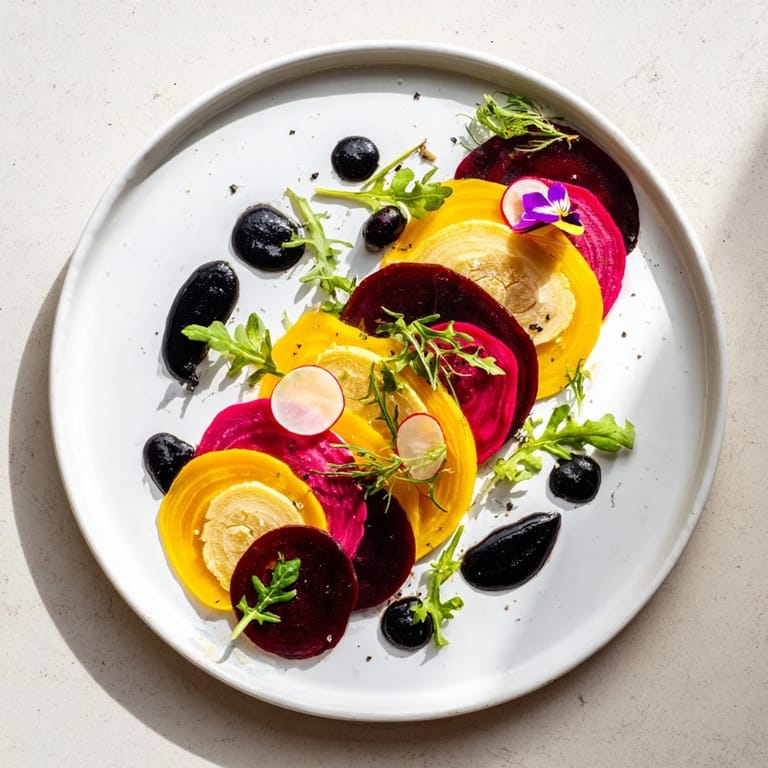
- Tuck blackberries and olives into the spaces, positioning them so they seem to emerge from behind the brighter ingredients. This is the moment the dish gets its name.
- Mix your dressing:
- Whisk oil, lemon juice, honey, salt, and pepper until it feels silky. Taste it before you dress—this is your chance to adjust the balance.
- Add the dark accents:
- Dollop black tahini around the plate with intention, then smear it slightly with the back of your spoon for that artistic, shadow-like effect. Don't overdo it; less is more.
- Finish with flourish:
- Scatter microgreens and edible flowers as your final touch, then serve right away before anything wilts or shifts.
 Save
Save There's a moment right before serving when you step back and see the whole plate—the golden rings catching light, the dark tahini smears creating actual shadows, the pink watermelon radish glowing like it's backlit. That's when you know the food has become something beyond nutrition. It becomes experience.
The Art of Color Contrast
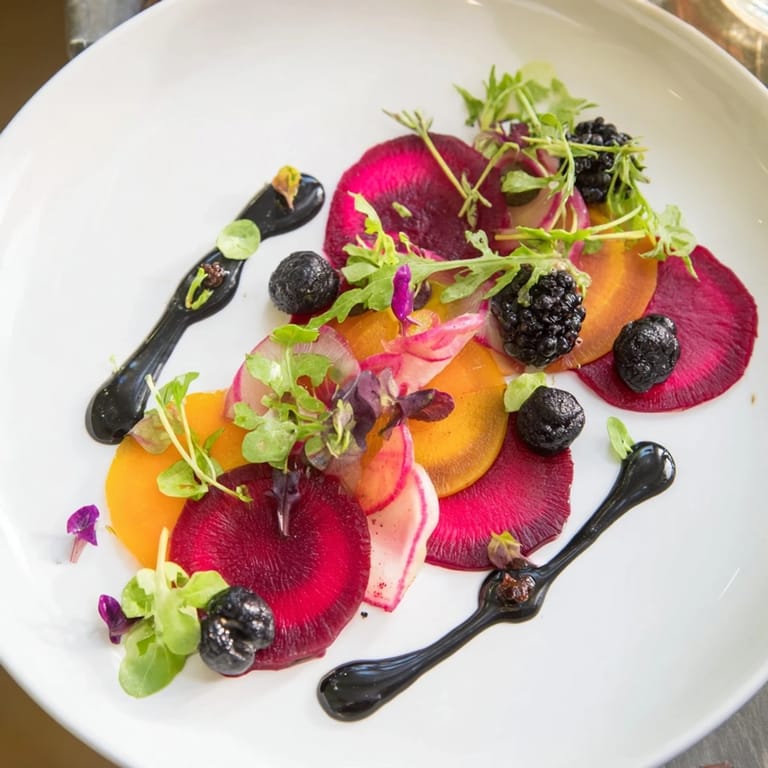
I spent weeks obsessing over which vegetables would photograph well together before I realized I was chasing the wrong thing. The power isn't in what looks good on Instagram; it's in how the flavors change when you eat colors together. Earthy beets next to peppery arugula, then a burst of watermelon radish and blackberry tartness—your mouth gets the same sense of discovery your eyes did. The contrast is the point, and it works on your palate as much as it does on the plate.
Timing and Prep Strategy
You can prep everything ahead of time and store it separately in the fridge, which means the actual plating is just a fifteen-minute assembly at the end. I keep my dressing in a small jar so I can shake it up just before drizzling. The one thing you cannot do ahead is arrange the final plate—vegetables start sweating and colors blur together if you let them sit. Make this your last step, right before guests sit down.
Pairing and Serving Ideas
This dish speaks a quiet, elegant language, so pair it with wines that have the same thoughtfulness—a crisp Sauvignon Blanc or a delicate Pinot Noir both work beautifully. I've also served it alongside a light white fish or a soft cheese course, and each time it felt like part of a conversation rather than an interruption. You could multiply the recipe for a dinner party, creating one large platter instead of individual plates, which lets guests see the full composition before you portion it out.
- Try adding crumbled feta or goat cheese if you want a savory anchor, though the vegetarian version stands completely on its own.
- Adjust the honey in your dressing down if you prefer a sharper taste, or add a touch more if your beets feel particularly earthy.
- Remember that edible flowers are optional but they're the jewelry of this dish—skip them if they're hard to find, but seek them out if you can.
 Save
Save This isn't the kind of dish you make when you're hungry and rushing—it's the one you make when you want to remind yourself and the people you're feeding that eating can be an art form. Every time you make it differently, and that's exactly as it should be.
Recipe Questions & Answers
- → How do I achieve the thin beet slices?
Use a mandoline slicer or a very sharp knife to cut the beets paper-thin, ensuring even layering and delicate texture.
- → Can I substitute black tahini for a vegan option?
Yes, regular tahini with squid ink can create the same shadow effect. For vegan versions, replace honey in the dressing with agave syrup.
- → What is the purpose of layering dark ingredients under brighter ones?
Placing dark elements behind bright vegetables creates a silhouette effect that adds artistic contrast and depth to the presentation.
- → Are blackberries and olives essential to the dish?
They provide the dark accents for visual drama and flavor contrast, but you can experiment with other dark fruits or vegetables like black garlic or roasted purple carrots.
- → How should I plate this for best effect?
Arrange the colorful slices in alternating patterns on a large platter, then strategically place dark accents underneath or beside to emphasize shadows.
- → What wine pairs well with this dish?
A crisp Sauvignon Blanc or a light Pinot Noir complements the fresh, layered flavors and balance of the dish.