 Save
Save My grandmother used to say that lutefisk wasn't just food—it was a passport to understanding her childhood in a small Norwegian village where every household prepared this dish with reverence during the darkest months of winter. The first time I watched her transform those stiff, intimidating dried fish into something tender and delicate, I realized she was teaching me more than a recipe; she was passing down a quiet ritual that connected us across generations and oceans.
Years ago, I made this for a dinner party on a snowy December evening, and I was terrified nobody would eat it—the rehydrated fish still looked unfamiliar to me even after all those years watching my grandmother. But something magical happened when that golden mustard sauce hit the plate: the entire room smelled warm and welcoming, and suddenly everyone was leaning in, tasting, asking for seconds, and the nervousness dissolved into pure joy.
Ingredients
- Dried cod (lutefisk), 1 kg: This is your foundation—buy it from a Nordic market if possible, and don't be discouraged by its appearance; soaking transforms it completely into something tender and almost delicate.
- Cold water and coarse salt: The water must stay cold during soaking or you'll risk spoiling the fish; changing it daily isn't just tradition, it's what makes the texture right.
- Unsalted butter, 2 tbsp: Use real butter here—it makes a difference in how the sauce feels on your tongue.
- All-purpose flour, 2 tbsp: This creates the silky base for your sauce; cooking it just briefly prevents floury taste.
- Whole milk, 300 ml: Whole milk matters because it gives the sauce body and richness that skim milk simply cannot deliver.
- Dijon and whole-grain mustard, 2 tbsp combined: The two mustards together create complexity—the Dijon gives heat while the whole-grain adds texture and a mild, grainy warmth.
- Sugar, 1 tsp: This tiny amount balances the mustard's sharpness without making the sauce sweet.
- Salt and white pepper to taste: White pepper keeps the sauce pale and refined; it's a small detail that respects the dish's elegance.
Tired of Takeout? 🥡
Get 10 meals you can make faster than delivery arrives. Seriously.
One email. No spam. Unsubscribe anytime.
Instructions
- Rehydrate the fish slowly:
- Rinse the dried cod thoroughly, then submerge it completely in cold water in a large container. You'll watch it gradually soften and swell over 5 to 6 days; change the water daily so it stays fresh and clean. This patience is non-negotiable—it's what allows the fish to become tender rather than tough.
- Salt and dry the fish:
- Once soaked, drain it completely and sprinkle it generously with coarse salt. Let it sit for 30 minutes—this firms it up slightly and seasons it from the inside out. Rinse off the salt thoroughly and pat the fish dry with paper towels so it bakes evenly.
- Bake until just opaque:
- Preheat your oven to 200°C, place the fish pieces in a baking dish, cover with foil, and bake for 25 to 30 minutes. The moment the fish turns opaque and flakes easily with a fork, it's done; any longer and you risk drying it out. Listen for that gentle sizzle when you lift the foil—that's the sound of it being perfectly cooked.
- Build the sauce from a roux:
- Melt butter over medium heat, whisk in flour, and cook for just one minute, stirring constantly so it never browns. This brief cooking removes the raw flour taste while keeping the roux pale and refined. Gradually pour in milk while whisking to avoid lumps—patience here prevents a grainy sauce.
- Season with mustard and restraint:
- Once the sauce thickens slightly, stir in both mustards, sugar, salt, and white pepper. Taste as you go, because mustard's intensity varies; you want it to complement the mild fish, not overpower it. The sauce should taste creamy with a warm mustard undertone, nothing harsh or aggressive.
- Plate and serve while everything is hot:
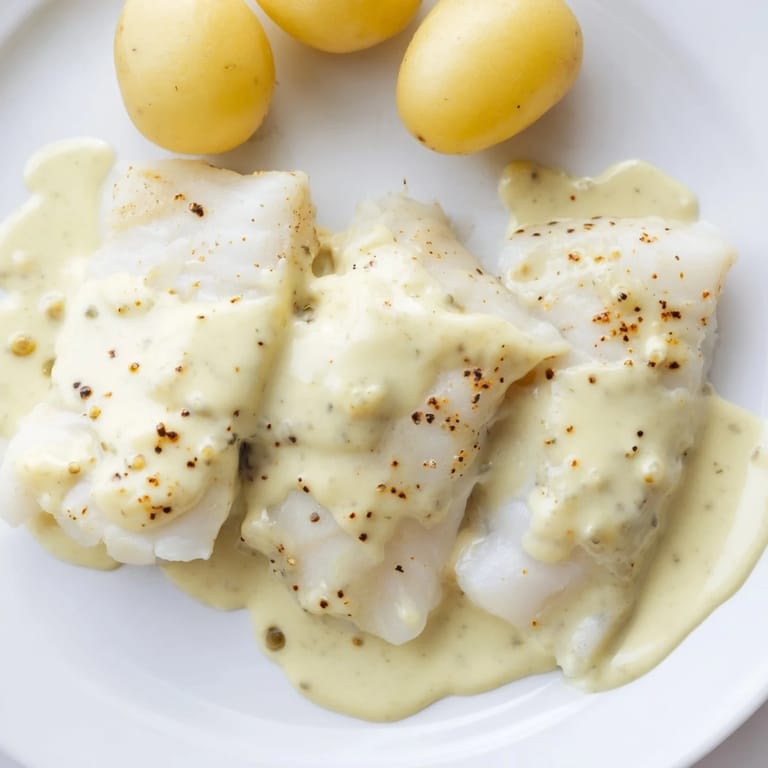
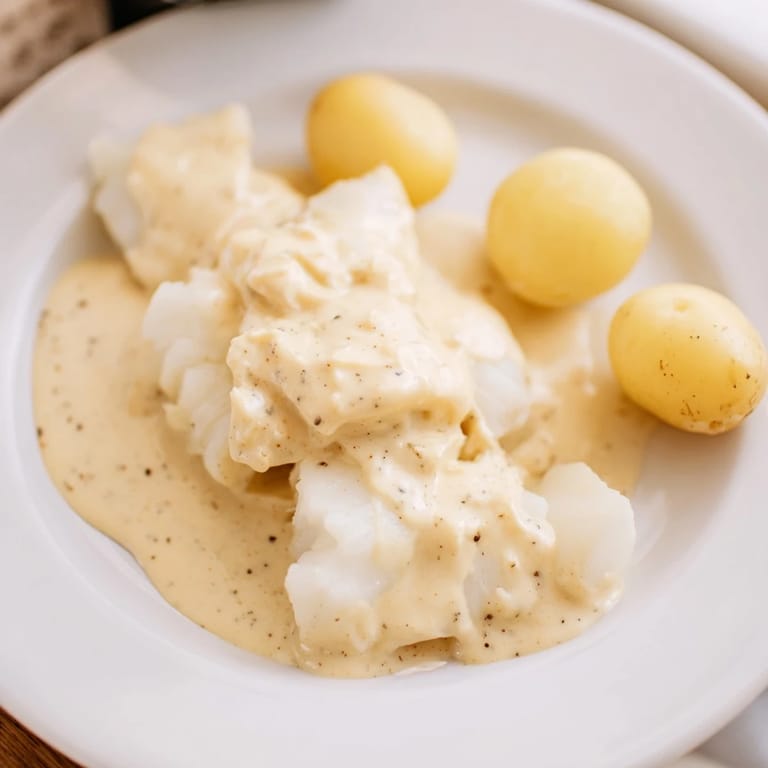
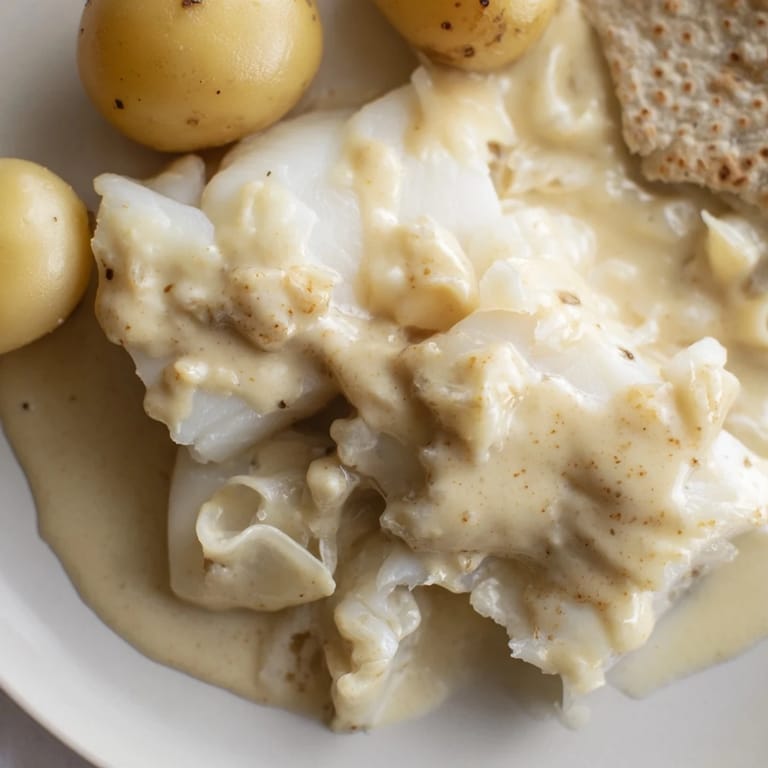
- Arrange the flaky fish with boiled potatoes and crispbread on warm plates. Spoon the sauce generously over the fish so every bite gets that creamy, tangy richness. A light sprinkle of fresh parsley adds color and a subtle freshness that lifts the whole dish.
 Save
Save I remember my cousin tasting this dish for the very first time at a family gathering, her expression shifting from skepticism to genuine delight as she tasted how the creamy sauce made the mild fish feel luxurious and complete. That moment taught me that lutefisk isn't about being trendy or shocking; it's about creating something that feels grounding and deeply nourishing, especially when shared with people who are willing to be surprised.
Why This Dish Matters
Lutefisk occupies a strange and beautiful place in Scandinavian culture—it's polarizing, deeply traditional, and unapologetically itself. There's no pretense here; you're either drawn to the mild, delicate flavor and silky texture or you're not, and that honesty is refreshing in a culinary world often obsessed with pleasing everyone. Making it yourself connects you to centuries of Norwegian families who gathered around tables during winter, transforming humble preserved fish into something ceremonial and meaningful.
Building Your Mustard Sauce
The sauce is where technique truly matters, and it's worth understanding each step rather than rushing through it. A proper béchamel—that's what you're making when you whisk flour into butter—has a subtle elegance; it's the foundation of so many classic dishes, and mastering it here will serve you well forever. When you add the mustards, you're not just adding flavor; you're adding a complexity that makes people pause and ask what's in the sauce, which is always a good sign at the dinner table.
Serving and Pairing Suggestions
Traditionally, lutefisk arrives with boiled potatoes and crispbread because they provide texture and substance that balance the fish's delicate nature. The cool, crisp bread against the warm, creamy fish creates a textural conversation that feels deliberately designed. Some families add peas or bacon bits for color and richness, while others keep it minimal and pure—both approaches honor the dish equally.
- Pair with a chilled glass of aquavit, a caraway-forward spirit that's almost medicinal in its ability to cut through richness.
- A crisp lager works beautifully if you prefer beer, with its clean finish and slight bitterness balancing the sauce's creaminess.
- If serving without alcohol, a slightly tart lingonberry beverage or even strong black coffee complements the meal's warmth and simplicity.
 Save
Save Making lutefisk is an act of trust and patience, a quiet conversation with tradition that reminds us that good food often comes from unexpected places and requires us to slow down. When you sit down to eat this dish, you're not just tasting fish and sauce; you're tasting winter, family, and the knowledge that some meals matter more because of what they represent.
Recipe Questions & Answers
- → How is the dried cod prepared before cooking?
The cod is soaked in cold water for 5 to 6 days, with daily water changes, to rehydrate and soften it before baking.
- → What gives the mustard sauce its creamy texture?
The sauce combines melted butter and flour to form a roux, then milk is added and simmered until thickened, creating a smooth base for the mustard flavors.
- → Can the flour in the sauce be substituted for dietary needs?
Yes, using gluten-free flour allows the dish to be suitable for gluten-free diets without compromising the sauce's texture.
- → What sides are traditionally served with this dish?
Boiled potatoes and crispbread or flatbread commonly accompany the dish, enhancing its rustic and hearty character.
- → How should the fish be baked for optimal texture?
After soaking and salting, the fish is baked covered with foil at 200°C for about 25–30 minutes until opaque and flaky.
- → Are there common allergens to be aware of?
This dish contains fish, milk, mustard, and potentially gluten if not using gluten-free flour, so allergies should be considered.