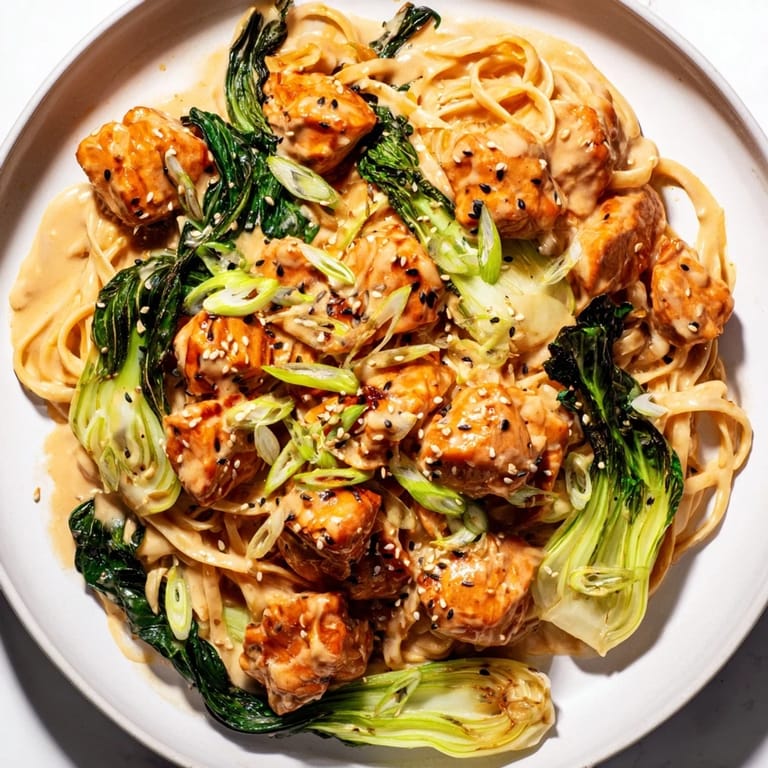
 Save
Save There's something about the way miso and butter merge in a hot pan that stopped me mid-stride one Tuesday evening. I'd been experimenting with leftover miso paste, wondering if it belonged anywhere near cream, when the aroma hit—nutty, slightly sweet, impossibly savory. That's when this pasta came together, almost by accident, and it became the dish I make when I want to feel like I'm cooking something both familiar and entirely unexpected.
I made this for my sister on a rainy Saturday, and she actually pushed her plate back to ask for the recipe before finishing it. That moment of someone stopping mid-bite to acknowledge the flavors—that's when I knew this wasn't just dinner, it was something I'd be making again and again.
Ingredients
- Salmon fillets (400g): Buy the freshest you can find and cut them into bite-sized pieces so they cook evenly and stay tender in the sauce.
- Linguine or spaghetti (300g): Al dente is non-negotiable here—the pasta needs enough texture to stand up to the rich sauce without turning mushy.
- Baby bok choy (2 heads): Chop them roughly so they wilt slightly but stay crisp enough to balance all that richness.
- Garlic (2 cloves): Mince it finely so it dissolves into the butter and doesn't overpower the delicate miso.
- Scallions (2): Save these for garnish—they add a fresh bite right at the end that keeps the dish from feeling too heavy.
- Unsalted butter (60g): Use real butter, not substitutes; it's the foundation of the sauce and worth the quality.
- White miso paste (2 tbsp): This is your umami anchor—stir it in gently so it dissolves smoothly into the cream without lumps.
- Soy sauce (2 tbsp): The saltiness ties everything together, so taste as you go and adjust if needed.
- Mirin (2 tbsp): A touch of sweetness that rounds out the savory notes and makes the sauce glossy.
- Heavy cream (100ml): This transforms the miso mixture into something silky and luxurious without drowning the other flavors.
- Sesame oil (1 tsp): Just a teaspoon, but it's what makes people pause and ask what you did differently.
- Black pepper (½ tsp): Freshly ground makes all the difference—pre-ground tastes flat here.
- Toasted sesame seeds (1 tbsp, optional): The final garnish that adds texture and an extra layer of toasted flavor.
- Lemon wedges (optional): A squeeze right before eating brightens everything and cuts through the richness beautifully.
Tired of Takeout? 🥡
Get 10 meals you can make faster than delivery arrives. Seriously.
One email. No spam. Unsubscribe anytime.
Instructions
- Get Your Pasta Going:
- Bring a large pot of salted water to a rolling boil and add the pasta, stirring occasionally so it doesn't stick. While it cooks, you'll have time to prep everything else. Reserve half a cup of starchy pasta water before draining—you'll thank yourself when it comes time to adjust the sauce consistency.
- Wake Up the Pan:
- Heat a tablespoon of butter with the sesame oil in a large skillet over medium heat. Add the minced garlic and let it sizzle for about a minute until the smell makes you lean closer—that's when you know it's ready.
- Gentle with the Salmon:
- Place the salmon pieces in the pan and resist the urge to move them around constantly. Let them sit for two to three minutes per side so they develop a soft golden surface while staying tender inside. You want them just cooked through, not flaking into nothing.
- Build the Sauce:
- Once the salmon comes out, add the remaining butter to the same skillet. When it melts, whisk in the miso paste slowly—think of it like making a paste first, then letting it loosen into the fat. Add the soy sauce and mirin next, stirring until everything is smooth and silky.
- The Cream Comes In:
- Pour the heavy cream into the pan and sprinkle in the black pepper. Stir gently to combine everything, then add the chopped bok choy. Let it soften for just a couple of minutes—you want it wilted but still with a slight snap when you bite it.
- Bring It Together:
- Return the salmon to the skillet and toss everything gently to coat. Add the drained pasta and toss again, adding splashes of that reserved pasta water until the sauce feels silky and clings to every strand without being soupy.
- Finish and Serve:
- Transfer to serving bowls immediately while everything's still warm and the flavors are singing. Top with sliced scallions, a scatter of toasted sesame seeds, and a lemon wedge on the side for anyone who wants a brightness boost.
 Save
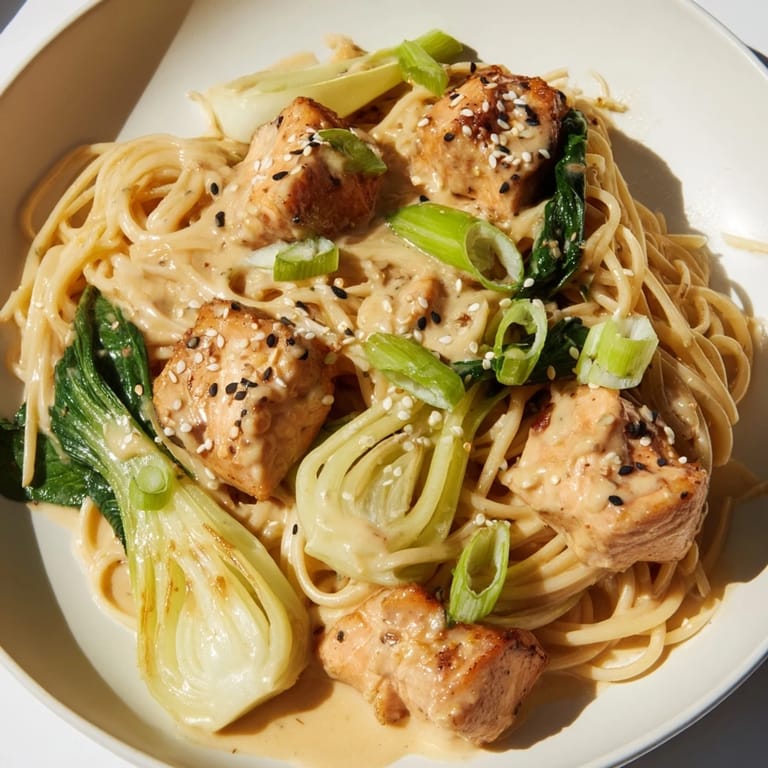
Save What strikes me most about this dish is how it bridges two worlds—the umami comfort of Japanese flavors wrapped around something as Italian as pasta. That moment when those tastes collide on your tongue feels like a small kitchen victory.
Why Miso and Butter Work So Well Together
Miso is fermented depth; butter is richness and silk. When they meet in a hot pan, the miso's salty funk mellows into something almost sweet, and the butter carries that flavor everywhere. I discovered this by accident, but it's become my secret for deepening simple sauces. The white miso here is gentler than red or dark varieties, so it doesn't overpower the salmon's delicate flavor.
The Bok Choy Decision
Bok choy has this slight bitterness that actually plays beautifully against the creamy sauce, and it wilts down without turning into mush. I've tried spinach when bok choy wasn't available, and while it works, bok choy has a texture that feels intentional here. The stems stay crisp while the leaves soften, creating a little contrast in every bite that keeps the dish interesting.
Small Details That Make the Difference
The sesame oil is a whisper, not a shout—just a teaspoon, but people notice it without always knowing what they're tasting. The lemon wedges matter too; they're not mandatory, but a squeeze right before eating wakes everything up and reminds you of the freshness under all that richness. One last thing: toasting your own sesame seeds if you have time transforms them from a garnish into something you'll taste and remember.
- Taste the sauce before the pasta goes in and adjust the salty elements if needed; every miso paste is slightly different in intensity.
- If your sauce feels too thick, thin it with pasta water, not cream—you want it to coat, not coat thickly.
- Serve immediately in warm bowls so the pasta stays silky and the salmon stays warm through to the last bite.
 Save
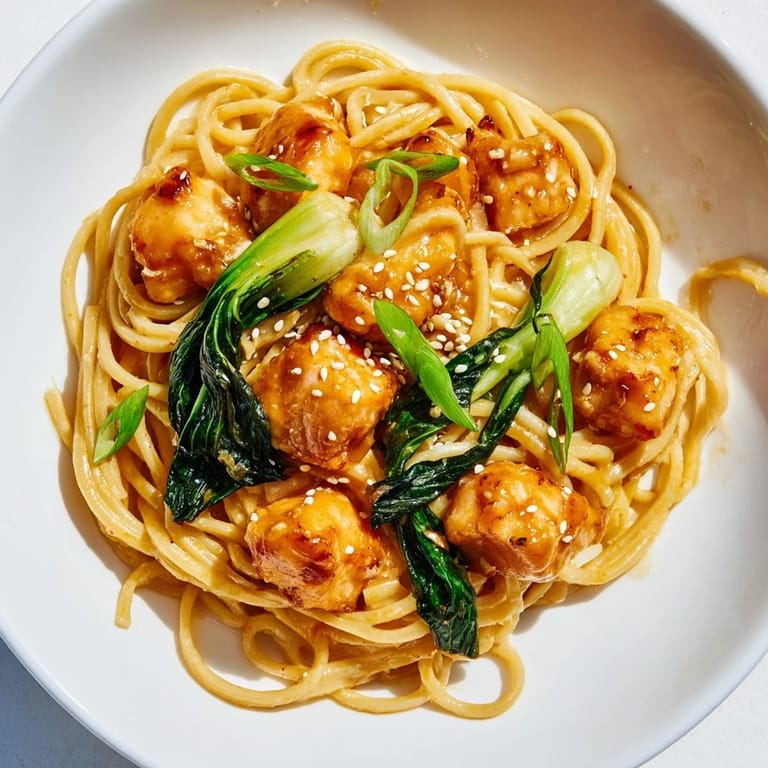
Save This is the kind of meal that feels both simple and special, the kind you make for yourself on an ordinary night and suddenly your evening feels a little less ordinary. Once you make it, you'll understand why I keep coming back to it.
Recipe Questions & Answers
- → What type of pasta works best for this dish?
Linguine or spaghetti are ideal choices as they hold the creamy miso butter sauce well without overpowering the salmon.
- → How can I ensure the salmon stays tender?
Cook salmon pieces gently over medium heat just until opaque to maintain moistness and a tender texture.
- → Can bok choy be substituted?
Yes, spinach or other leafy greens can replace bok choy if unavailable, providing similar texture and color.
- → What does the miso butter sauce contribute to the dish?
The miso butter sauce adds a rich, savory umami flavor along with a creamy texture that complements both the salmon and pasta beautifully.
- → Are there recommended garnishes to enhance flavor?
Scallions, toasted sesame seeds, and a squeeze of lemon add freshness, crunch, and brightness to balance the dish.
- → Is this dish suitable for pescatarians?
Yes, it features seafood and plant-based ingredients, aligning well with pescatarian preferences.