 Save
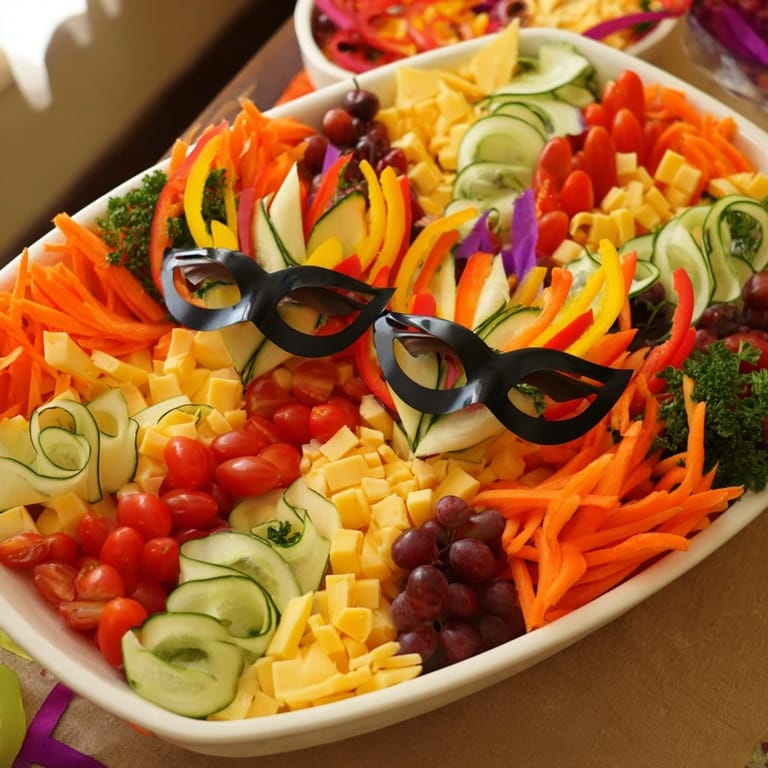
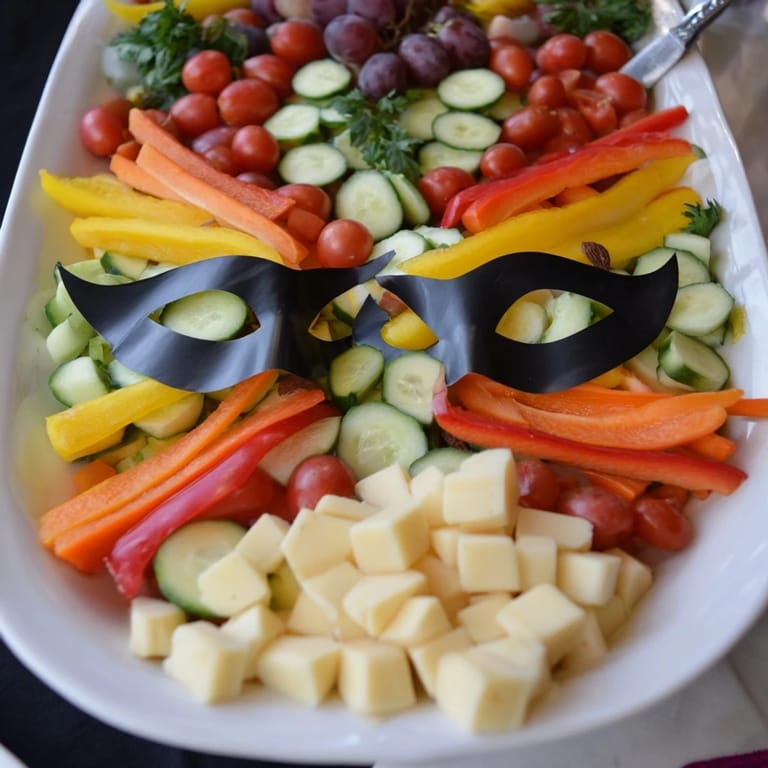
Save I still remember the moment I decided to turn a simple appetizer board into a work of art. It was New Year's Eve, and I wanted to create something that would make my guests gasp the moment they walked into the kitchen. That's when the idea struck me—why not arrange everything to look like an elegant masquerade mask? I'd seen these stunning displays online, but I never imagined how easy and magical it would actually be to create one myself. The first time I made this, my daughter said it was too pretty to eat. Of course, that lasted about thirty seconds.
The moment that really sealed this recipe for me was watching my mother-in-law's face light up when she saw the platter at our holiday gathering. She actually took photos before anyone touched it. That's when I knew this wasn't just food—it was a conversation starter, a centerpiece, and a delicious excuse to gather around something beautiful.
Ingredients
- Large green or black olives (2), pitted or firm cheese cubes (2): These become your mask's eyes, so pick ones that look good from across the room. I prefer olives for that dramatic dark contrast, but cheese works beautifully too.
- Cucumber slices (1 cup): Keep them thin and uniform—they're some of your base feathered edges and add a cool, crisp freshness that balances richer ingredients.
- Colorful bell pepper strips (1 cup): Mix red, yellow, and orange for maximum visual drama. The varied colors are what make this platter sing.
- Cherry tomatoes, halved (1/2 cup): Their natural roundness and bright color fill gaps beautifully and add a pop of sweetness.
- Red radish slices (1/2 cup): Underrated and stunning—they add crunch and that gorgeous pink hue that photographs incredibly well.
- Baby carrots, halved lengthwise (1/2 cup): The natural orange is cheerful, and halving them lengthwise makes them easier to grab and arrange.
- Seedless grapes (1/2 cup): Red or green, they add whimsy and fill odd spaces. They're also the first thing guests reach for.
- Assorted cheese cubes (1 cup): Cheddar, gouda, and Swiss create a mix of colors and flavors. Don't shy away from slightly unusual cheeses—they add personality.
- Mini mozzarella balls (1/2 cup): Creamy, mild, and they nestle perfectly between vegetables. Some people call these pearls of joy.
- Nuts—walnuts, almonds, or pistachios (1/2 cup): They add textural contrast and fill gaps. I'm partial to pistachios for their jewel-like green color.
- Dried fruits—apricots, cranberries, or figs (1/4 cup): These burst with concentrated sweetness and add warmth to the color palette.
- Crackers or breadsticks (1/2 cup, optional): Include them if your crowd prefers something to hold, but honestly, the produce is substantial enough on its own.
- Fresh herbs—parsley, basil, dill: A final flourish that says you care. Parsley is traditional, but basil adds an unexpected sophistication.
- Edible flowers (optional): Pansies or nasturtiums make this feel truly special, though fresh herbs alone are beautiful.
Tired of Takeout? 🥡
Get 10 meals you can make faster than delivery arrives. Seriously.
One email. No spam. Unsubscribe anytime.
Instructions
- Pick Your Canvas:
- Choose a large oval or rectangular serving board—something that feels elegant and has enough space for drama. I like to use a wooden board or a white ceramic platter for contrast.
- Create the Eyes:
- Position your two olives or cheese cubes near the center-top of the board, spaced about 4 to 5 inches apart horizontally. These are your mask's eyes, so imagine where they'd sit on an actual face. This is the anchor point for everything else.
- Build the Upper Mask Edge:
- Starting above and around those eyes, begin fanning out your vegetable slices in wide, graceful arcs. Think of it like feathers on a mask—symmetrical and flowing outward. Cucumber slices work beautifully here, alternating with pepper strips. Let each piece overlap slightly, like scales or feathers.
- Create Depth and Color:
- As you work your way down the sides and lower portion of the mask, alternate between vegetables, fruits, and cheese. Place radish slices next to bell peppers, tuck cherry tomatoes between cucumbers, arrange carrot halves in gentle curves. This is where you start playing with color theory—opposite colors on the wheel (like purple radishes next to orange carrots) create visual pop.
- Fill the Center and Sides:
- Distribute your cheese cubes and mozzarella balls throughout the arrangement, nestling them into the gaps between vegetables. They shouldn't be random—they should feel intentional, like jewels in a crown.
- Add Texture and Warmth:
- Sprinkle nuts and dried fruits across the board. The dried apricots and cranberries add warmth, while nuts add earthy crunch. Don't scatter them—group them thoughtfully in clusters of 3 or 4 for visual interest.
- Frame with Crackers (Optional):
- If you're including them, arrange crackers or breadsticks along the bottom edge or sides, like a border that defines the mask's shape.
- Finish with Flourish:
- Sprinkle fresh herbs—especially parsley stems and basil leaves—across the board. Tuck edible flowers into gaps if using them. Step back, take a breath, and admire what you've created.
- Serve Right Away:
- This is a fresh arrangement, so serve it within 30 minutes of completing it. The vegetables stay crisp, and everything looks at its most vibrant.
 Save
Save There's something almost magical about watching people approach this platter. They pause. They pull out their phones. They comment on how beautiful it is before they even taste anything. That moment—when food becomes art for just a second—that's what keeps me making this year after year.
Arranging Like an Artist
The secret I learned from my third masquerade mask is that you're not just arranging food—you're channeling a mosaic artist. Think in terms of color families and visual weight. The dark olives or cheese cubes are your anchor, so everything radiates from there. Work in concentric patterns or flowing lines rather than random placement. When you place something, ask yourself if it balances what you've already arranged. Does that tomato need a nut nearby for contrast? Should that yellow pepper have a green grape beside it? This mindfulness transforms a platter into a painting.
Adapting for Dietary Needs
I've made this platter for vegans, people with nut allergies, and folks who avoid gluten, and every version has been stunning. Replace dairy cheese with cashew-based alternatives or tofu cubes. If nuts are a concern, double down on seeds instead—sunflower seeds, pumpkin seeds, and sesame seeds are colorful, crunchy, and just as elegant. Skip the crackers or use certified gluten-free ones. The beauty of this recipe is that your guests' dietary needs don't diminish the visual impact—they just shift which ingredients play the lead role.
Making It Feel Festive
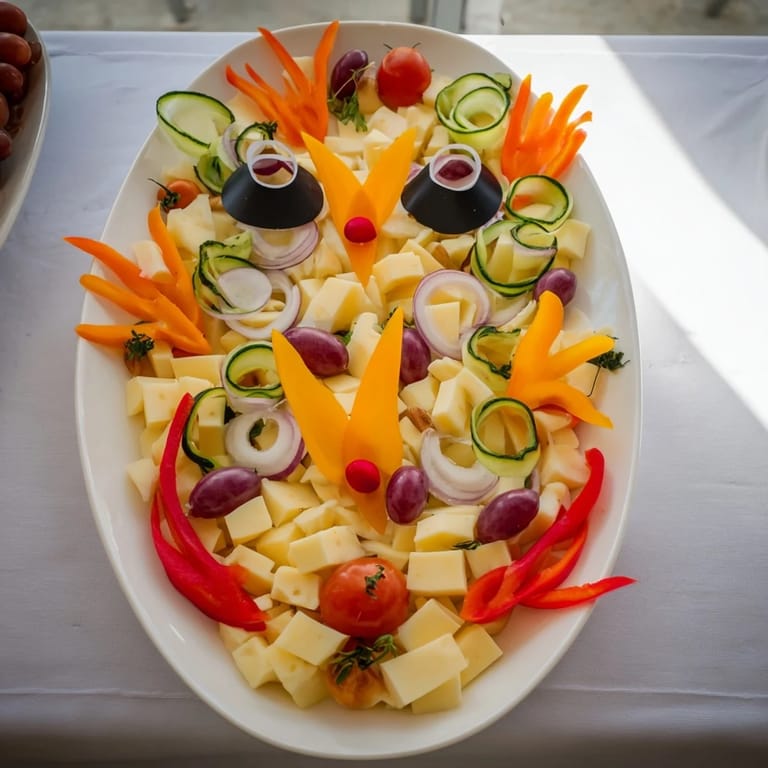
Beyond the obvious masquerade theme, this platter works for any celebration that calls for something special. I've made it for Valentine's Day using reds and deep purples, for spring brunches with pastels and fresh herbs, and for summer parties loaded with berries and stone fruits. The structure stays the same—that oval mask shape—but the personality shifts with the season and the occasion. Add a small bowl of herbed cream cheese or hummus nearby, and suddenly it's not just a platter, it's an experience. Edible flowers are my secret weapon for that final touch that makes people feel like you've outdone yourself, even though you haven't worked any harder than usual.
- Set out small plates and cocktail napkins nearby so guests don't feel shy about nibbling
- Keep a bowl of dips on the side—hummus, ranch, or a whipped goat cheese—for those who want a little something extra
- Arrange everything no more than 30 minutes before serving to keep vegetables at peak crispness and colors looking vibrant
 Save
Save This platter reminds me that the most impressive dishes often require the least cooking—just attention, intention, and a willingness to play. Your guests will remember how it looked long after they've forgotten what else was served.
Recipe Questions & Answers
- → What ingredients create the eye openings in the platter?
Two large olives or small cubes of firm cheese like cheddar or gouda are placed to mimic the mask's eye openings.
- → Can this platter be adapted for vegan diets?
Yes, omit the cheeses and substitute with marinated tofu cubes to keep it plant-based.
- → How should the fruits and vegetables be arranged?
Slices and strips are fanned out symmetrically around the eyes, resembling ornate feathered edges of a masquerade mask.
- → Are there suggestions for adding protein options?
Adding cooked shrimp, smoked salmon, or cured meats can enhance the platter for non-vegetarian guests.
- → What garnishes finish the platter for a festive touch?
Fresh herbs such as parsley, basil, dill, and optional edible flowers are used to add color and aroma.
- → Is cooking required to prepare this platter?
No cooking is needed; the platter assembles fresh and ready to serve in about 20 minutes.