 Save
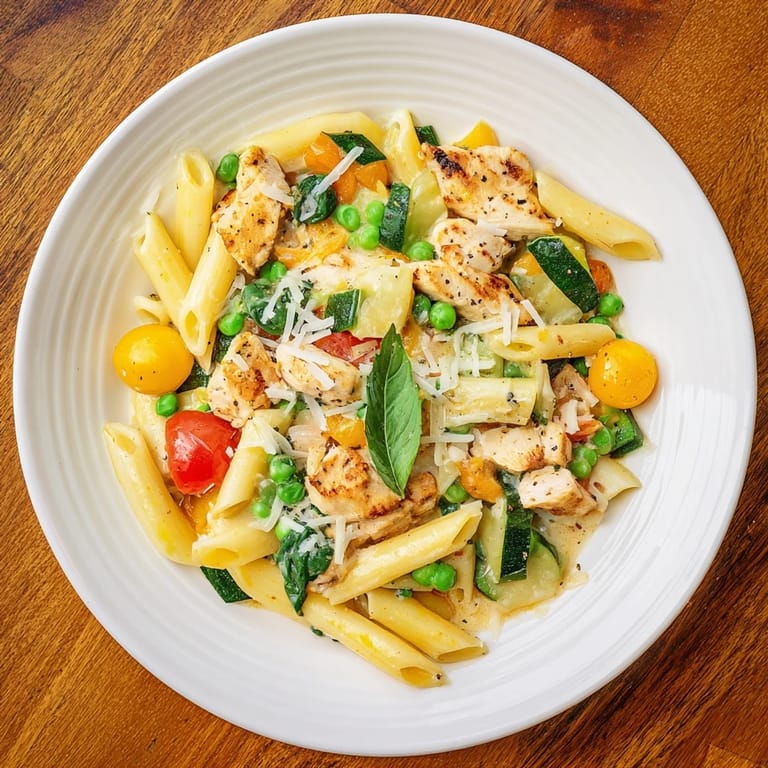
Save There's something deeply satisfying about opening your fridge at 6 PM on a weeknight and realizing you actually have everything you need to make something delicious. That's when The Last Bite Chicken Pasta was born—not from a craving, but from a moment of creative desperation. I'd been meaning to go grocery shopping and had accumulated that random collection every home cook knows: half a bell pepper, a sad handful of spinach, leftover cream, and the last bit of chicken in the freezer. Instead of ordering takeout, I grabbed a pen and sketched out this 5-4-3-2-1 formula right on the back of an envelope, and what emerged was this creamy, veggie-loaded pasta that somehow felt like the most intentional dish I'd made all week.
I made this for my sister on a random Tuesday when she'd had a rough day at work, and I watched her face shift from exhausted to genuinely happy with that first bite. She asked for the recipe immediately, but I realized there wasn't one to give—just a feeling and a formula. That's when I knew this wasn't just a pantry-clearing hack; it was something I wanted to share exactly as it happened.
Ingredients
- Chicken breast: Diced and cooked until golden, it anchors the whole dish with protein and keeps things satisfying without being heavy.
- Pasta: Penne or fusilli holds onto the sauce beautifully; I love reserving pasta water because it's liquid gold for loosening everything at the end.
- Cherry tomatoes: They burst into sweetness as they cook and give the sauce natural brightness you can't bottle.
- Frozen peas: They thaw perfectly during cooking and add sweetness and color without any prep work.
- Bell pepper: Diced fine, it softens quickly and brings a gentle sweetness that balances the herbs.
- Zucchini: Sliced thin so it cooks through in minutes and adds volume without overwhelming the other flavors.
- Spinach: Added at the end so it stays bright green and wilts into the sauce, bringing a subtle earthiness.
- Olive oil: Two tablespoons is enough to build your flavor base without making everything slick.
- Garlic: Minced fine and cooked briefly, it's the quiet foundation that makes people say, 'This tastes like someone who knows what they're doing made this.'
- Dried Italian herbs: A teaspoon goes a long way here; fresh herbs are lovely, but dried ones actually hold their flavor better in a creamy sauce.
- Canned diced tomatoes: They add acidity and depth, and honestly, canned are consistent year-round in a way fresh ones aren't.
- Heavy cream: This is what transforms everything into something luxurious, turning sautéed vegetables into a silky sauce that clings to every strand.
- Parmesan cheese: Half goes into the sauce to melt into it, and the rest gets sprinkled on top for texture and bite.
- Mozzarella: It melts into the sauce and adds a soft, mild creaminess that balances Parmesan's sharp edge.
- Fresh basil: A handful torn at the very end, it's your reminder that this dish is both comforting and bright.
- Lemon zest: Just a whisper of it lifts everything and makes people wonder what that subtle brightness is.
Tired of Takeout? 🥡
Get 10 meals you can make faster than delivery arrives. Seriously.
One email. No spam. Unsubscribe anytime.
Instructions
- Get your pasta going:
- Bring a large pot of salted water to a boil and add your pasta, stirring once so nothing sticks. You want it al dente, which means when you bite a piece, it has a tiny bit of resistance in the center. This takes about 8 to 10 minutes depending on the shape, so check the package instructions and aim for a minute or two under that time. Before you drain it, scoop out and reserve about half a cup of that starchy pasta water—you'll use it later to help everything come together.
- Sear your chicken until it's golden:
- In a large skillet, heat two tablespoons of olive oil over medium-high heat until it's shimmering and almost smoking. Add your diced chicken, season it generously with salt and pepper, and don't touch it for the first minute or two so it can develop a golden crust. After about 5 to 6 minutes total, it should be cooked through with a light golden edge, and that's when you transfer it to a plate and let it rest.
- Build your aromatic base:
- In the same skillet (don't wash it—those browned bits are flavor), add your minced garlic and diced bell pepper, stirring constantly for about 2 minutes until the whole kitchen smells like something wonderful is about to happen. The garlic should be fragrant but not browned, and the pepper should start to soften and turn slightly translucent at the edges.
- Add your tomatoes and heartier vegetables:
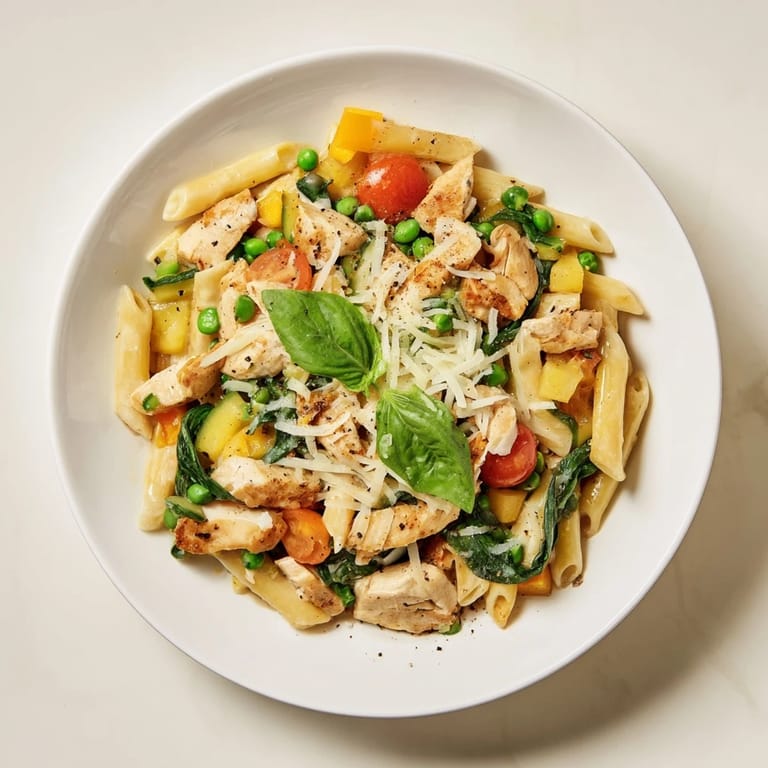
- Stir in your cherry tomatoes, sliced zucchini, and dried Italian herbs, cooking for another 3 to 4 minutes while you stir occasionally. You'll notice the tomatoes starting to collapse and release their juices, and the zucchini becoming tender but not mushy. This is when the whole skillet becomes a painting of gold and red.
- Finish with greens and simmer:
- Pour in your canned diced tomatoes (with their juice), add your frozen peas and spinach, and stir it all together. Let it simmer gently for 3 to 4 minutes until everything is tender and the spinach has melted into the sauce, turning it a beautiful deep color.
- Bring it all together:
- Lower the heat to medium-low and add your cooked chicken back into the skillet, then pour in the heavy cream. Add half of your Parmesan and all of your mozzarella, stirring constantly so the cheeses melt smoothly into the sauce instead of clumping. This should take about 2 minutes, and you'll watch it transform into something silky and luxurious.
- Toss and adjust:
- Add your drained pasta to the skillet and toss everything together gently but thoroughly, making sure every strand gets coated in sauce. If it seems too thick, add a splash of that reserved pasta water and stir again. Taste and add salt and pepper as needed.
- Plate and finish:
- Divide the pasta among bowls while it's hot, then top each one with the remaining Parmesan, a few torn basil leaves, a crack of black pepper, and a light sprinkle of lemon zest. Serve immediately and watch people's faces light up.
 Save
Save The real magic of this dish happened when my neighbor, who'd been struggling with cooking confidence, asked if she could watch me make it. Halfway through, she realized she already had everything in her kitchen and made it herself that same night. She sent me a photo of her own version, slightly different because she used what she had, and it looked absolutely beautiful. That's when I understood this recipe isn't just about clearing your pantry—it's about giving people permission to cook without following orders.
The 5-4-3-2-1 Formula Explained
This dish works because it follows a simple mathematical balance: five types of vegetables, four pantry staples, three dairy ingredients, two garnish options, and one final zest of brightness. It sounds rigid, but it's actually the opposite—it's a framework that gives you freedom. You could swap zucchini for mushrooms, use arugula instead of spinach, or reach for cheddar instead of mozzarella, and the structure holds because the ratio of vegetables to cream to cheese stays balanced. This formula became my secret weapon for weeknight cooking, not because I'm a mathematician, but because I'd learned the hard way that cooking with intention beats cooking with panic.
Ways to Customize This Without Breaking It
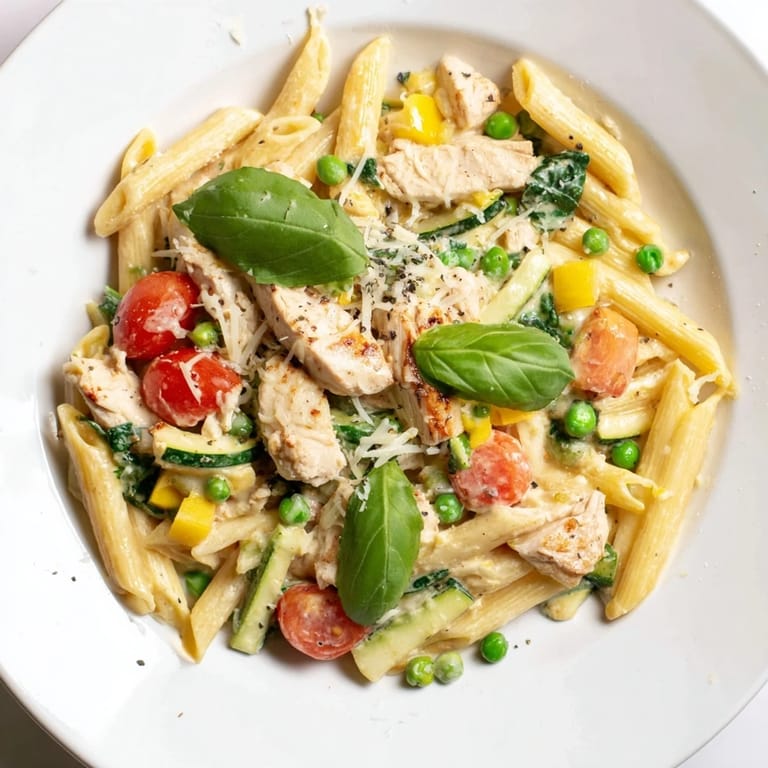
The first time I made this with shrimp instead of chicken, my whole family asked if I'd learned something new at a cooking class. I hadn't—I just followed the same formula and let the ingredient swap do the work. Sausage brings a smoky, salty richness that makes the sauce feel deeper, while keeping it vegetarian with chickpeas or extra mushrooms creates this earthy, substantial version that honestly holds its own against the meat versions. The beauty is that you're not inventing a new recipe each time; you're working with the same blueprint and swapping the starring role. Lighter versions benefit from half-and-half instead of heavy cream, and you lose almost nothing in comfort but gain room for an extra glass of wine.
- Try spicy sausage if you want heat, or use smoked sausage for a whole different mood.
- Swap cream for Greek yogurt stirred in at the end for a tangier, lighter finish.
- Double the garlic if you're the type who loves it, and don't feel bad about that.
What Wine Plays Well With This
A crisp Pinot Grigio is the obvious choice, and it works beautifully because the acidity cuts through the cream and keeps your palate refreshed between bites. But I've also had this with a light Sauvignon Blanc and it was unexpectedly perfect, probably because the herbaceous notes echo the Italian herbs in the sauce. Honestly, any white wine that tastes good to you will pair with this, and if you don't drink wine, a squeeze of lemon into sparkling water gives you that same bright, cleansing effect that makes the meal feel complete.
The Moments This Became More Than a Recipe
I've made this pasta on nights when I was cooking for people I loved but didn't know very well yet, and watched it become a conversation starter. I've made it when I had exactly zero energy but needed to prove to myself I could still create something with care. I've made it so many times now that my hands know the rhythm without my brain having to check a list. That envelope I sketched the formula on is still in a drawer, and I don't need it anymore, but I keep it because it reminds me that sometimes the best things come from working with what you have instead of waiting for perfect ingredients.
- Save one envelope or note from your first time making something special—you'll smile every time you find it.
- This pasta tastes even better the next day, so don't hesitate to make extra.
- If someone asks for the recipe, share it, but also share the story of why it matters to you.
 Save
Save This recipe is proof that the best meals don't come from perfection or planning—they come from working with what's in front of you and cooking with intention. Make it tonight.
Recipe Questions & Answers
- → Can I substitute the chicken with other proteins?
Yes, you can replace chicken with cooked sausage, shrimp, or even chickpeas for a vegetarian option without losing flavor.
- → What pasta types work best for this dish?
Penne, fusilli, or similar shapes hold the sauce well and provide a good texture contrast with the vegetables and chicken.
- → How can I make the sauce creamier or lighter?
Use heavy cream for richness or substitute half-and-half for a lighter, less dense sauce with still satisfying creaminess.
- → Can I prepare this dish ahead of time?
It's best served fresh, but you can cook and refrigerate it, reheating gently while adding a splash of pasta water to loosen the sauce if needed.
- → What fresh garnishes enhance the flavors?
Fresh basil leaves and a zest of lemon brighten the flavors and add a fragrant, zesty finish to the dish.