 Save
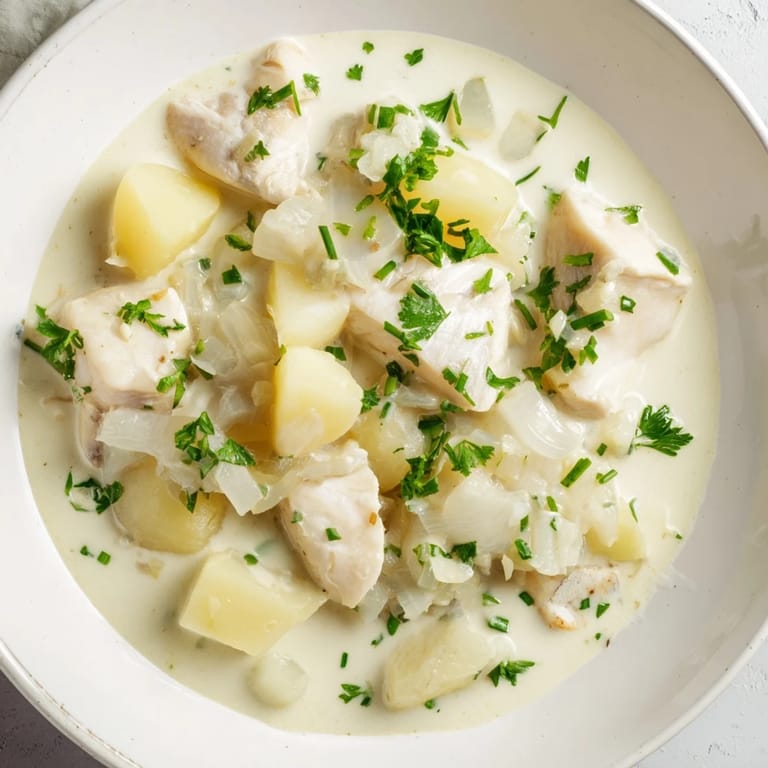
Save There's something about a bowl of creamy fish stew that stops time. I discovered this Icelandic version on a grey afternoon when a friend from Reykjavik mentioned how her grandmother made it without fuss, just good fish, soft potatoes, and cream that didn't need to apologize. The first time I tried to recreate it, I was nervous about overcooking the fish, but the gentle simmering taught me patience. Now it's the dish I make when I want the kitchen to feel warm and lived-in.
I made this for my sister on a January evening when she needed something that felt like a hug. We sat at the kitchen counter while it simmered, talking about everything and nothing, and she asked for the recipe before the bowl was empty. That's when I knew it wasn't just dinner—it was the kind of dish that gives people permission to slow down.
Ingredients
- Cod or haddock fillets (500 g): Use the freshest fish you can find; the gentler you are with it, the more tender it stays.
- Butter (60 g): This builds the base for everything else, so don't skip it or rush melting it.
- Whole milk (500 ml): The backbone of the creaminess; full-fat makes a real difference.
- Heavy cream (100 ml): Just enough to make it luxurious without feeling heavy.
- Potatoes (500 g): Cut them small enough to cook through in 12 minutes, but not so small they disappear.
- Onion (1 medium): Chop it fine so it melts into the broth and flavors everything.
- Fresh parsley and chives: These are not decoration—they're what makes you taste Iceland in a spoonful.
- Bay leaf, salt, white pepper, and nutmeg: The bay leaf flavors the fish, the white pepper keeps things delicate, and a whisper of nutmeg lifts the whole thing.
Tired of Takeout? 🥡
Get 10 meals you can make faster than delivery arrives. Seriously.
One email. No spam. Unsubscribe anytime.
Instructions
- Start the potatoes first:
- Dice your potatoes into small cubes and put them in a pot of salted water. Bring it to a boil and let them cook for 12 to 15 minutes until they're tender enough to break easily with a fork but not falling apart. This timing matters because they'll soften more once they hit the cream.
- Poach the fish gently:
- While the potatoes cook, place your fish fillets in a saucepan with just enough water to cover them, along with a bay leaf and a pinch of salt. The water should barely simmer—if it boils hard, the fish toughens. In 6 to 8 minutes, it'll turn opaque and flake when you nudge it with a fork. Save that poaching liquid; it's liquid gold for the stew.
- Build the base:
- Drain the potatoes and set them aside. In your large pot, melt butter over medium heat and add the chopped onion. Let it soften and turn translucent, about 5 minutes, stirring occasionally so it doesn't color.
- Mash gently:
- Add the cooked potatoes to the pot and press them with a potato masher, but leave plenty of chunks—this isn't a purée, it's a stew with texture. You want some soft potato dust mixed with bigger pieces.
- Combine everything:
- Flake the cooked fish into large, tender pieces and scatter them into the pot with the reserved poaching liquid. Stir gently so nothing breaks apart further.
- Make it creamy:
- Pour in the milk and cream, then turn the heat to low. Stir frequently while it warms through, never letting it boil—boiling will make the fish tough and the dairy separate. When it's hot and creamy, usually about 5 minutes, you're almost done.
- Season and finish:
- Add salt, white pepper, and a tiny pinch of nutmeg if you have it. Stir in half the parsley and chives, saving the rest to scatter over each bowl when you serve it.
 Save
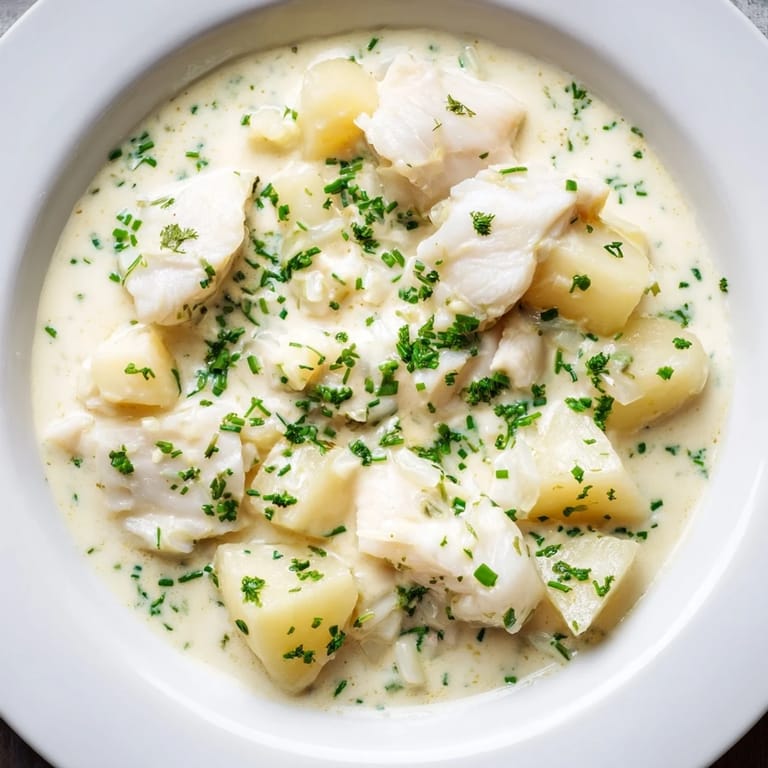
Save One night, a friend who thought she didn't like fish tried this without knowing what it was. She had two bowls and asked if there was more. That moment made me realize it's not about being fancy—it's about taking ordinary ingredients seriously and letting them be themselves.
Why This Stew Works
Icelandic cooking comes from working with what's fresh and abundant, without pretense. This stew is that philosophy in a bowl. The cream mellows the fish without drowning it, the potatoes become almost part of the liquid, and the herbs arrive at the end like a bright thought. It's simple, but that simplicity is hard-won.
Variations Worth Trying
Once you make this a few times, you'll start to see possibilities. Smoked fish adds a deep note that feels especially good on winter mornings. A mix of white fish—haddock, pollock, halibut—makes the stew more interesting than one fish alone. If cream feels too rich, use all milk, and the stew becomes lighter and more brothy, which some prefer.
Serving and Storing
Serve this hot, with dark rye bread and good butter on the side for soaking up the broth. The stew keeps in the refrigerator for three days and reheats gently over low heat, though it never tastes quite as silky the second time. This is a dish best eaten fresh, while the fish is still tender and the cream still tastes like itself.
- If you're doubling the recipe, don't rush the cooking—a larger batch needs more time to heat through evenly.
- Dark rye bread is traditional, but any good bread works if that's what you have.
- Leftovers are better thinned with a splash of milk and turned into a lighter soup.
 Save
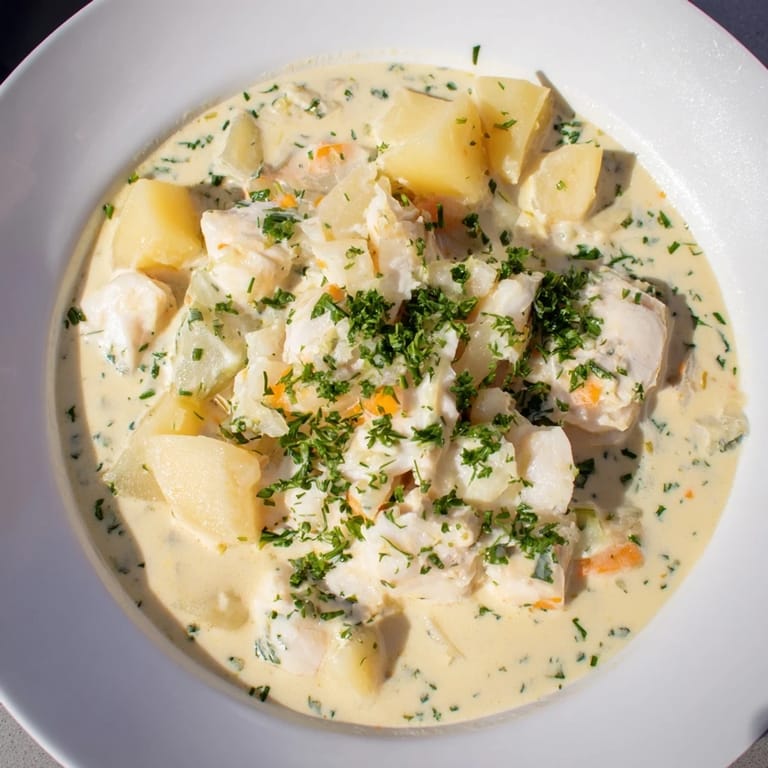
Save This is the kind of recipe that gets better with repetition, not because the recipe changes, but because your hands remember what the right texture feels like. Make it once for comfort, make it twice for confidence, and by the third time, you'll own it.
Recipe Questions & Answers
- → What type of fish works best in this stew?
Cod or haddock fillets without skin and bones provide a tender texture and mild flavor that blends well with creamy potatoes.
- → How do you achieve the creamy texture?
The combination of whole milk, heavy cream, and butter creates a rich, smooth base that gently coats the potatoes and fish.
- → Can this stew be served with bread?
Yes, traditional Icelandic rye bread complements the creamy fish and potato flavors, adding a hearty element to the meal.
- → What herbs enhance the flavor here?
Fresh parsley and chives add a bright, fresh note that balances the richness of the dairy and fish components.
- → Is it possible to lighten the dish?
Using only milk and skipping the heavy cream reduces fat content while maintaining a creamy consistency.
- → How is the fish cooked to maintain texture?
The fish is gently poached in water with bay leaf and salt until opaque and flaky, ensuring it stays tender without falling apart.