 Save
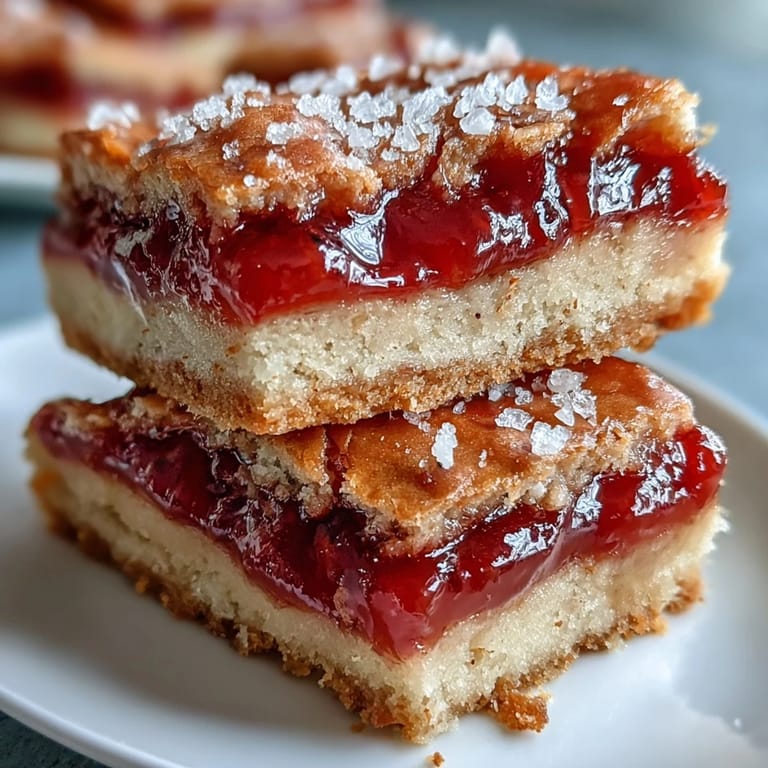
Save My neighbor Maria brought these to a potluck one humid summer evening, and I watched them disappear faster than anything else on the table. When I finally asked for the recipe, she laughed and said it was her abuela's secret, though not really a secret at all—just butter, eggs, and that glorious guava paste that somehow tastes like the Caribbean in bar form. The first time I made them, my kitchen filled with this warm, almost floral sweetness that had my partner wandering in from the other room asking what smelled like heaven. Now whenever I need to bring something to a gathering, these are my go-to because they're foolproof enough for a weeknight but impressive enough to feel special.
I made these for my daughter's school bake sale last spring, and one parent came back specifically asking for the recipe because her own daughter wouldn't stop asking for seconds. That moment—when you realize something you made brought genuine joy to someone—that's when you know you've found a keeper recipe.
Ingredients
- All-purpose flour (2 cups): This is your structure, so don't sift unless you're feeling fancy—the whisking during mixing does the work.
- Baking powder (1½ teaspoons): Gives the cake a tender crumb that contrasts beautifully with the jammy guava filling.
- Fine sea salt (¼ teaspoon): A pinch that brightens the sweetness and makes the butter flavor pop.
- Unsalted butter (½ cup, softened): Room temperature is non-negotiable here—cold butter won't cream properly and you'll lose that light, airy texture.
- Granulated sugar (¾ cup): The sweetness partner to guava paste, so don't reduce it thinking you're being healthy.
- Large eggs (3, room temperature): Temperature matters more than you'd think—cold eggs won't emulsify smoothly into the butter.
- Vanilla extract (1 teaspoon): A whisper of vanilla that keeps the guava from being one-dimensional.
- Whole milk (⅓ cup): The moisture that keeps these from drying out, especially important since they sit for days.
- Guava paste (12 oz, sliced into strips): The star ingredient—look for the kind that's just guava and sugar, not the bright pink stuff.
Tired of Takeout? 🥡
Get 10 meals you can make faster than delivery arrives. Seriously.
One email. No spam. Unsubscribe anytime.
Instructions
- Get your pan ready and heat the oven:
- Line that 8x8 pan with parchment paper and let it overhang the edges—you're setting yourself up for easy removal later. Preheat to 350°F while you gather everything.
- Mix your dry team:
- Whisk the flour, baking powder, and salt together in a medium bowl and set it aside. This ensures the leavening distributes evenly throughout.
- Cream butter and sugar until it's fluffy clouds:
- Beat them together for a solid 2-3 minutes until the mixture is pale and airy, like a cloud you could nestle into. This is where you build the foundation for a tender crumb.
- Add eggs one at a time like you mean it:
- Drop an egg in, beat it until you can't see any yellow streaks, then add the next one. This takes patience but creates an emulsion that makes the cake texture incredible.
- Fold in vanilla:
- One teaspoon of vanilla goes in here, and just a quick mix does it.
- Alternate dry and wet ingredients in three parts:
- Start with about a third of the flour mixture, mix gently, then half the milk, then another third of flour, then the rest of the milk, then the final flour. The alternating method keeps you from overmixing and toughening the batter.
- Spread the first layer:
- Pour half the batter into your prepared pan and use a spatula to smooth it into an even layer. You want it level so the guava paste sits nicely.
- Lay down the guava paste strips:
- Arrange them in an even single layer across the batter. You can lay them side by side or slightly overlapping—both work.
- Top with the remaining batter:
- This is the trickiest part because you don't want to drag the guava around. Use a damp spatula or your damp fingertips to gently spread the remaining batter over the top, working carefully.
- Bake until golden and set:
- This takes 38-42 minutes depending on your oven. When the top is golden and a toothpick poked into the cake (not the guava) comes out clean, you're done.
- Cool completely before cutting:
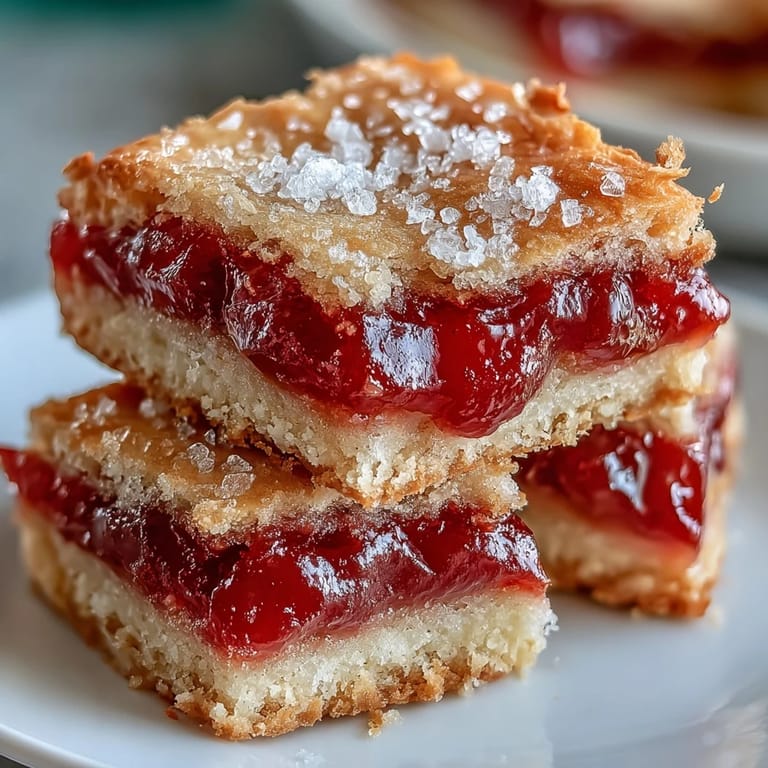
- This is crucial—if you cut them warm, they'll fall apart. Let them sit in the pan until they're completely cool, then use the parchment to lift them out and slice into 16 bars.
 Save
Save One afternoon, my friend's mother (who grew up eating these in Havana) tried one and got quiet for a moment—the kind of quiet that means something. She told me it tasted like her childhood kitchen, and that's when I understood why these bars are worth making again and again.
The Guava Paste Decision
Finding the right guava paste makes all the difference. The stuff in those bright pink blocks at regular grocery stores is fine, but if you can get to a Latin market, seek out the real thing—it's usually in a darker red-pink, just guava and sugar, sometimes with a thin layer of quince paste mixed in. It tastes more complex, less artificially sweet, and honestly, it's the same price. I've learned to check the ingredient list before I buy because some brands add corn syrup and it changes everything about the final taste.
Tropical Tweaks That Work
Maria's note about lime zest isn't just a suggestion—it's a revelation. Grate a little lime zest into the batter and suddenly you've got this brightness that plays against the guava like they were always meant to be together. I've also played around with adding a tablespoon of lime juice to the batter and it only made things better. For something richer, you can slice some cream cheese and layer it under the guava paste, creating this sweet-tangy situation that feels luxurious.
Storage and Make-Ahead Magic
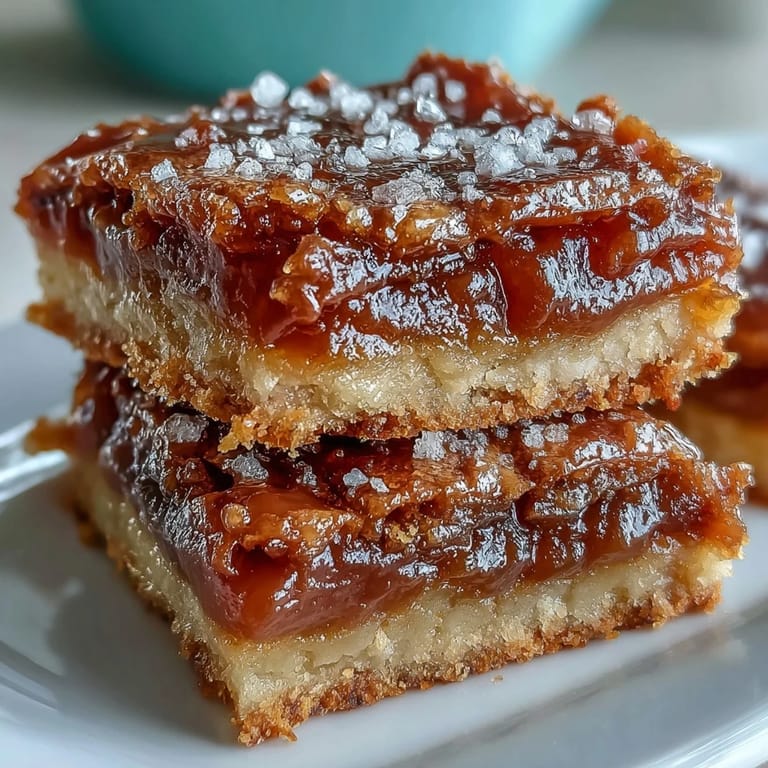
These bars live well in an airtight container at room temperature for up to three days, and honestly, they taste even better on day two when everything settles and the flavors get friendlier with each other. You can also freeze them for up to a month—wrap them individually in parchment and then foil, and they thaw in about an hour at room temperature. The beauty of these is they're not fussy about timing, so if you make them on Sunday, they'll be ready for Wednesday's gathering without any drama.
- Store them in a container with parchment between layers so they don't stick together.
- If you're making these for a crowd, you can double the recipe and use a 9x13 pan—just add about 5 minutes to the baking time.
- These travel beautifully, so they're perfect for potlucks, picnics, or just bringing to someone's house when you want to show up with something homemade.
 Save
Save These bars have become my answer to almost every occasion—a thank you gift, a Sunday afternoon treat, something to bring when visiting. There's something about a recipe that feels homey and uncomplicated but tastes like someone spent real time thinking about you.
Recipe Questions & Answers
- → What makes guava paste special in these bars?
Guava paste provides an intense tropical sweetness and vibrant color that perfectly balances the buttery, vanilla-scented dough. The thick, concentrated fruit filling creates distinct layers and adds authentic Cuban flavor.
- → Can I use fresh guava instead of paste?
Fresh guava won't work well as it's too juicy and would make the bars soggy. Guava paste is essential because it's concentrated, thick, and holds its shape during baking, creating the perfect sweet layer.
- → How do I know when the bars are done baking?
The bars are ready when the top is golden brown and a toothpick inserted into the cake portion (avoiding the guava center) comes out clean. This typically takes 38-42 minutes at 350°F.
- → What's the best way to cut these bars neatly?
Allow the bars to cool completely in the pan before lifting them out using the parchment paper overhang. Use a sharp knife and wipe it clean between cuts for perfect edges. Chilling briefly helps too.
- → Can I add cream cheese to the filling?
Absolutely! Many bakers love adding thin strips of cream cheese alongside the guava paste for a richer, creamier version that provides tangy contrast to the sweet fruit filling.
- → How should I store these guava bars?
Store in an airtight container at room temperature for up to 3 days. The bars actually improve slightly as the flavors meld together. For longer storage, refrigerate for up to a week or freeze for up to 3 months.