 Save
Save My neighbor Klaus taught me how to make schnitzel on a rainy Sunday afternoon, and I've been hooked ever since. He stood at his stove with the kind of calm confidence that only comes from making the same dish a hundred times, tapping the pounded meat with his mallet in this satisfying rhythm. The moment those golden cutlets hit the hot oil, the whole kitchen filled with this incredible smell that made everything feel like a celebration. I learned that day that schnitzel isn't fancy—it's honest food, the kind that brings people together without any fuss.
I made this for my partner's parents on our first dinner together, and I'll never forget how they both reached for seconds without saying a word—just quiet, satisfied chewing with the occasional squeeze of lemon. That's when I realized schnitzel is the kind of dish that speaks louder than small talk, that builds connection through its pure, unpretentious deliciousness. The way my partner's dad held up a bite and nodded at me told me everything I needed to know about whether I'd gotten it right.
Ingredients
- 4 boneless pork chops or chicken breasts (about 150 g each): Look for pieces that are evenly thick so they cook at the same rate; if some are chunky, pound them to that consistent 1/4-inch thickness so every bite is perfect.
- 100 g all-purpose flour: This isn't just coating—it creates a base layer that helps the egg stick and gives you that delicate, crispy first layer.
- 2 large eggs: Fresh eggs make a difference here because the fresher they are, the better they cling to your meat and breadcrumbs.
- 2 tbsp milk: This thins the egg slightly so it coats evenly and doesn't create thick, clumpy patches.
- 150 g fine dry breadcrumbs: Use panko or Japanese-style breadcrumbs if you want extra crispiness, but traditional fine crumbs give you a more delicate, refined crust.
- 120 ml vegetable oil or clarified butter (Butterschmalz): Clarified butter is traditional and gives you that authentic German flavor, but neutral oil works beautifully too—just make sure it's hot enough.
- Salt and freshly ground black pepper: Season generously; these humble seasonings are doing all the flavor work here.
- Lemon wedges and fresh parsley: The brightness cuts through the richness and makes each bite feel fresh, even on the third cutlet.
Tired of Takeout? 🥡
Get 10 meals you can make faster than delivery arrives. Seriously.
One email. No spam. Unsubscribe anytime.
Instructions
- Get your meat ready:
- Place each cutlet between two sheets of plastic wrap and pound with a meat mallet or rolling pin until it's about 1/4 inch thick—you're looking for even, tender slices that cook through quickly. The sound of the pounding is actually satisfying, and you'll know you're done when the meat looks uniform and spreads across your work surface.
- Season boldly:
- Sprinkle salt and freshly ground black pepper on both sides; don't be shy because this is your only real seasoning. A pinch of garlic powder or paprika can go here if you're feeling it, but honestly, the meat and the golden crust are the stars.
- Set up your station:
- Arrange three shallow plates in a line: flour in the first, beaten eggs mixed with milk in the second, and breadcrumbs in the third. This assembly-line approach keeps your hands relatively clean and makes the whole process flow smoothly.
- Bread with intention:
- Dredge each cutlet in flour, shaking off the excess, then dip it into the egg mixture so it's fully coated but not dripping. Press it gently into the breadcrumbs, coating both sides evenly, but don't press too hard—you want the crumbs to adhere, not get flattened into a thick, dense shell.
- Get the oil singing:
- Heat your oil or clarified butter in a large skillet over medium-high heat until it shimmers and a small piece of breadcrumb dropped in sizzles immediately. You can't rush this step; cold oil means greasy, soggy schnitzel, and that's heartbreaking after all your work.
- Fry to golden:
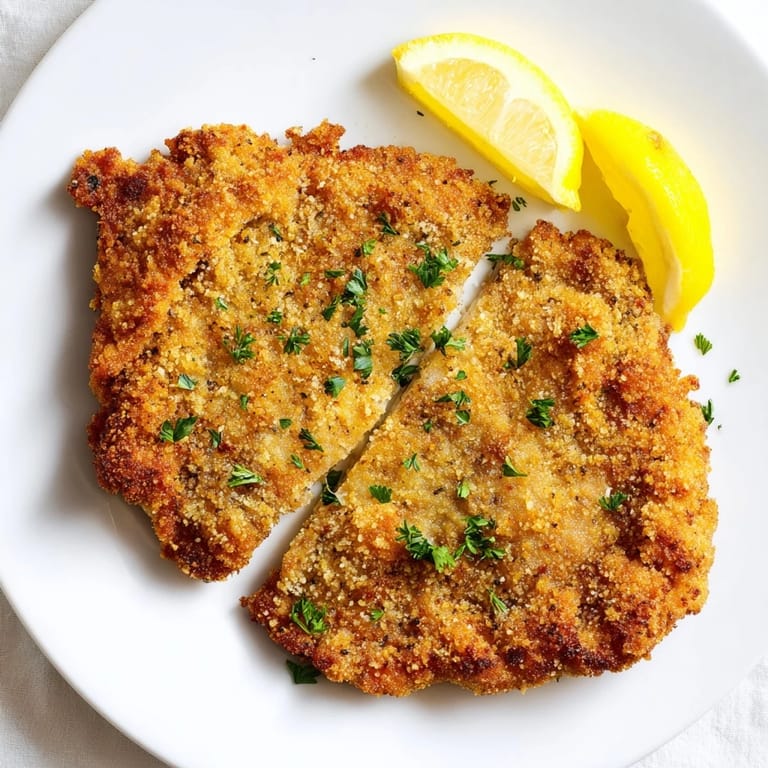
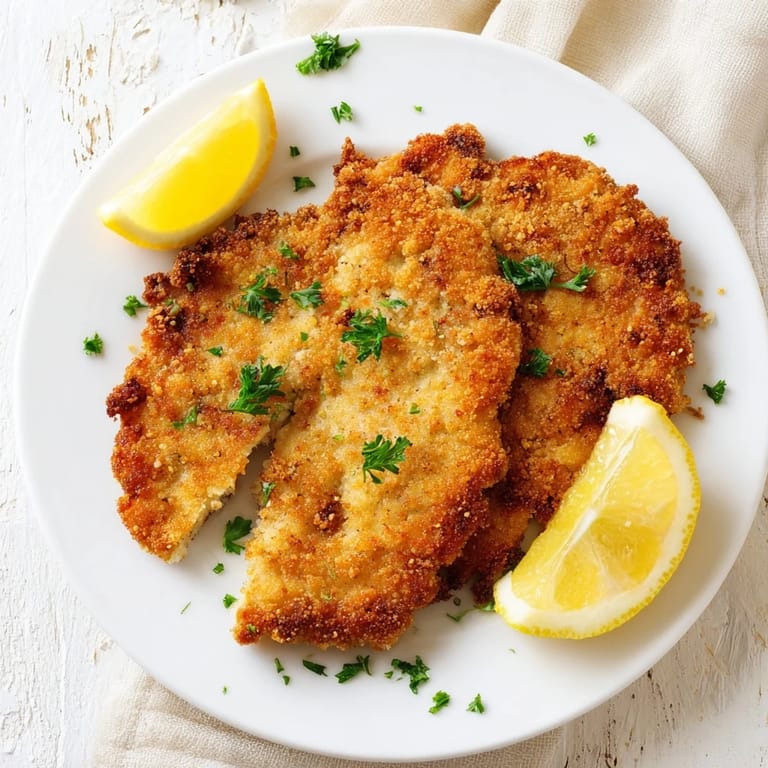
- Carefully place the breaded cutlets in the hot oil—work in batches if your skillet is crowded—and fry for 2 to 3 minutes per side until the exterior is deep golden brown and sounds crispy when you tap it with your spatula. The meat is done when it's cooked through, which happens pretty quickly at this temperature.
- Drain and serve:
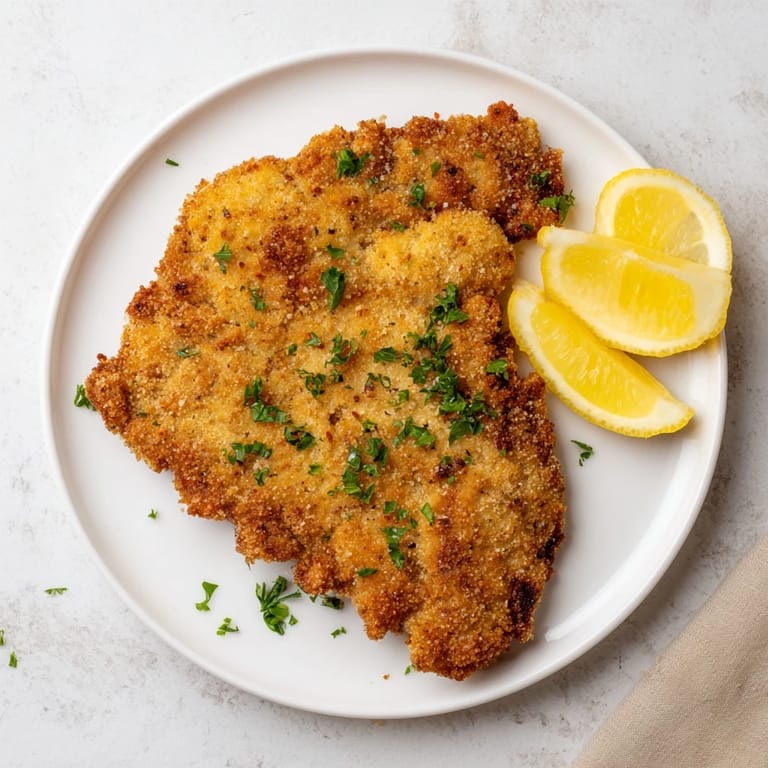
- Transfer the schnitzels to a paper towel-lined plate for just a minute to shed excess oil, then move them to a serving plate. Serve immediately with lemon wedges and a shower of fresh parsley, squeezing the lemon over the top right as people sit down.
 Save
Save There's a moment when the schnitzel first hits the hot oil where it sizzles and the smell rises up, and if you're paying attention, you catch this little waft of golden, savory perfection. That's when you know you've got the temperature right, that you're on your way to something genuinely delicious. I've learned to stop whatever I'm doing and just breathe that in—it's a small thing, but it's the kind of moment that reminds me why I love cooking.
The Sides That Matter
Schnitzel never stands alone, and the traditional German sides aren't arbitrary—they're chosen because they contrast beautifully with the richness of the fried cutlet. A sharp potato salad with vinegar dressing cuts through the oil, a crisp cucumber salad brings brightness, and hot fries offer comfort. I've served it with warm red cabbage slaw and it was just as good, so don't be afraid to work with what you have. The key is adding something acidic and fresh to balance out the golden, savory main event.
Why This Dish Feels like Celebration
Schnitzel has this quality where it makes ordinary nights feel special without requiring fancy ingredients or techniques—just good meat, proper breading, hot oil, and attention. I think it's because it appeals to something primal in all of us: the desire for crispy, golden, delicious food that tastes like someone cared enough to do it right. Serve it with lemon and good bread, and you've got the kind of meal that people remember.
Troubleshooting Your Schnitzel
If your schnitzels come out pale or greasy, the oil wasn't hot enough—let it heat for a full minute after it starts shimmering before you add meat. If the coating falls off, either your egg layer was too thin or your oil temperature dropped when you added the meat, so keep it hot and don't crowd the pan. If the meat is raw inside but the coating is burning, pound it thinner next time so it cooks through faster.
- Pound your meat thin and even so it cooks all the way through in the short frying time.
- Let breaded cutlets sit uncovered for just a few minutes before frying so the coating can set slightly and adhere better.
- If you're making this for a crowd, you can bread everything ahead and fry to order, keeping the finished schnitzels warm in a low oven while you work through batches.
 Save
Save Schnitzel is the kind of dish that becomes part of your regular rotation once you master it, and it never gets old because it's just that good. Make it with confidence, and the people you feed will thank you by asking for it again.
Recipe Questions & Answers
- → What type of meat works best for schnitzel cutlets?
Pork chops or chicken breasts are ideal when pounded thin for tender, even cooking and a delicate texture.
- → How can I achieve a crispy breading on cutlets?
Use fine dry breadcrumbs and avoid pressing them too firmly to maintain a light, crispy coating after frying.
- → What fat is recommended for frying cutlets?
Vegetable oil or clarified butter (Butterschmalz) works well to create a golden, crunchy crust without burning.
- → Why pound the meat to 1/4-inch thickness?
Pounding ensures uniform thickness for quick, even cooking and tender results throughout the cutlet.
- → What sides traditionally accompany this dish?
Classic sides include potato salad, cucumber salad, or fries, which complement the delicate flavors and textures.
- → How should cutlets be served after cooking?
Drain briefly on paper towels to remove excess oil, then serve immediately with lemon wedges and fresh parsley for brightness.