 Save
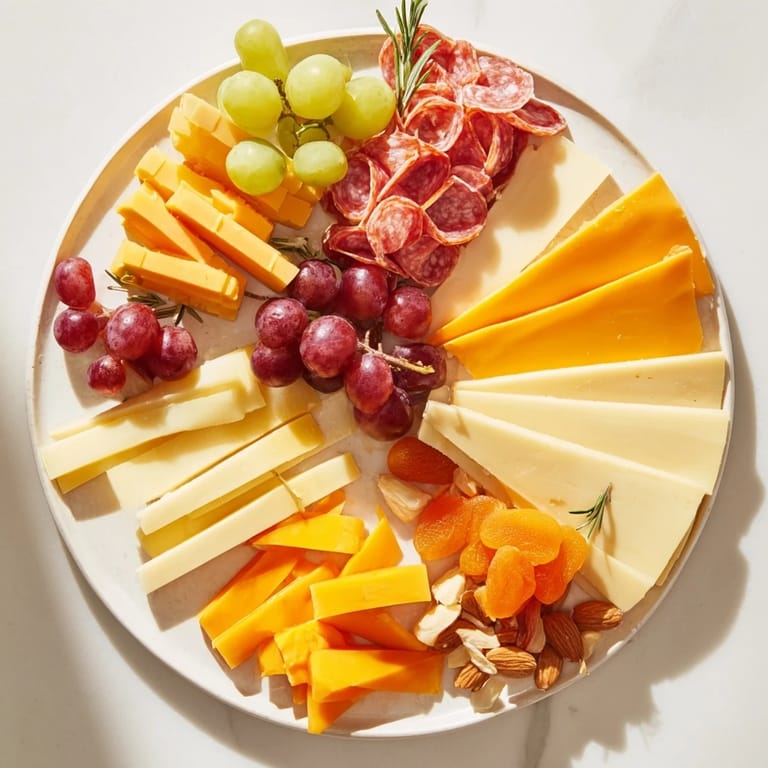
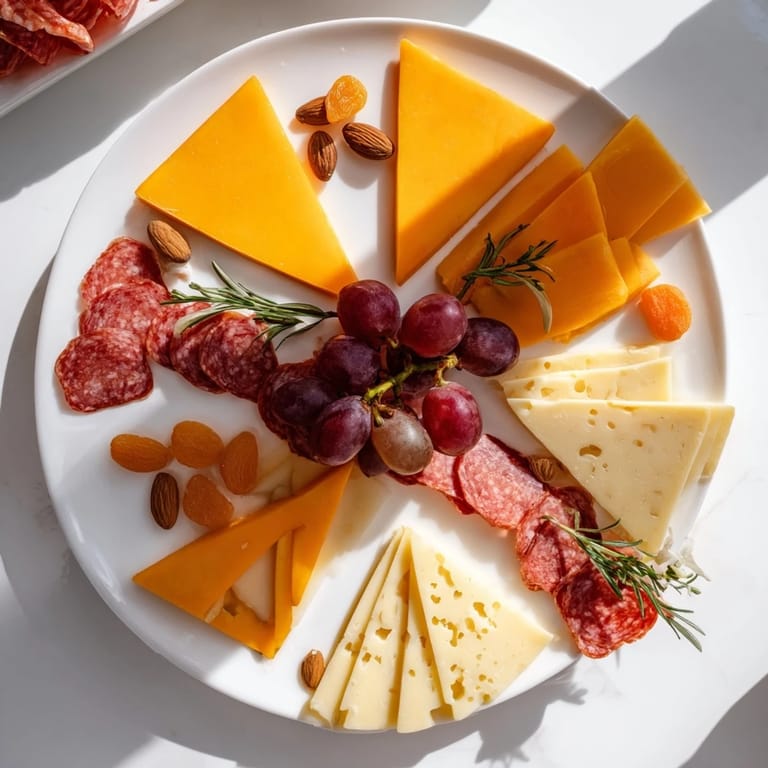
Save I discovered the power of geometry at a dinner party that almost didn't happen. My friend had just moved into a tiny apartment with barely enough counter space, so I decided to bring something that looked restaurant-worthy without needing a kitchen. I spent an afternoon with a sharp knife and a bunch of beautiful cheeses, cutting everything into triangles and rhombuses just to see if it would feel intentional instead of random. It did. The guests kept remarking on how the shapes made ordinary ingredients feel like art, and I realized that sometimes the most impressive thing you can do is simply apply a little thought to presentation.
The real moment this board became something memorable was when my brother brought his new partner to dinner and she gasped at the table setup before we'd even sat down. She spent the first ten minutes just photographing the board from different angles, and I watched her genuinely enjoy the anticipation of choosing which shape to grab first. That's when I understood that this isn't really about the knife skills—it's about giving people permission to play with their food again, like they're kids discovering something wonderful.
Ingredients
- Manchego cheese: Buy a wedge that's firm enough to hold a clean cut, and slice it while it's cool so the shards don't crumble.
- Aged cheddar: The longer it's aged, the easier it cuts into neat shapes without falling apart.
- Brie: Chill it in the freezer for 30 minutes before cutting so it stays firm and doesn't ooze everywhere.
- Gruyère: Its crystalline texture actually makes rhombuses easier to cut than triangles—trust the natural fault lines.
- Prosciutto: Let it sit at room temperature for a minute before folding so it's pliable and won't tear.
- Soppressata: A good, dry cured sausage holds its shape better than softer varieties when you trim it into rhombuses.
- Chorizo: The diagonal slice makes it look intentional and catches the light beautifully on a board.
- Seedless red and green grapes: They're the punctuation marks that keep your eye moving across the board.
- Dried apricots: Cutting them diagonally into little diamonds takes 30 seconds but makes the entire board feel considered.
- Marcona almonds: Their buttery texture and roasted flavor fill empty spaces and add richness without heaviness.
- Fig jam: A small bowl keeps it contained, or dab tiny amounts directly on the board for a sophisticated touch.
- Gluten-free seed crackers: Breaking them into triangles feels like finishing a puzzle and keeps the whole theme cohesive.
- Fresh rosemary or thyme: Scatter it last so the aroma is still alive when people lean in to grab something.
Tired of Takeout? 🥡
Get 10 meals you can make faster than delivery arrives. Seriously.
One email. No spam. Unsubscribe anytime.
Instructions
- Sharpen your knife and set the scene:
- A dull knife will drag through cheese and tear delicate meats, so take a minute to run your blade across a steel. Having everything chilled and your board ready means the actual cutting feels calm instead of rushed.
- Cut the cheeses into triangles and rhombuses:
- Use one clean motion for each cut—hesitation creates uneven edges. If you're nervous about precision, you can very lightly score guide lines with the back of a knife first.
- Prepare the cured meats:
- Fold the prosciutto into loose triangles that catch light, and carefully trim the soppressata and chorizo into clean rhombuses. Meat shapes don't need to be perfect—slight variations actually add to the artisanal feel.
- Cluster the fruit and nuts:
- Group the grapes and apricots in little neighborhoods across the board, leaving room for the eye to rest. Scatter almonds into the gaps like you're being intentional but not rigid.
- Add the spreads and crackers:
- If using small bowls, nestle them into the board itself. If adding jam directly, use a small spoon to place tiny dollops in strategic spots that balance the composition.
- Break and arrange the crackers:
- Keep them separate until the last minute so they stay crisp. Stand them in small fans or stacks to echo the geometric theme.
- Finish with herbs and serve immediately:
- Fresh sprigs of rosemary or thyme add aroma and a whisper of green that makes everything feel alive. Serve it right away so every shape is still sharp and every flavor is still bright.
 Save
Save I'll never forget the quiet moment after everyone had settled with their plates, when the conversation shifted from the presentation to the flavors, and someone said it reminded them of a meal from their childhood but somehow more refined. That's what this board does—it makes people feel both delighted and comfortable at the same time.
The Art of Thoughtful Presentation
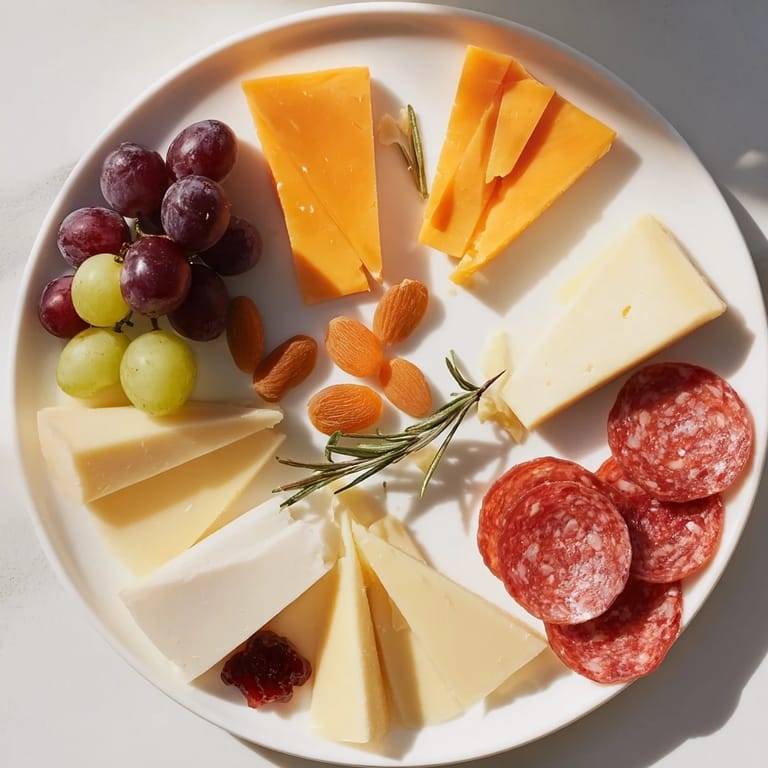
There's something deeply satisfying about taking ordinary ingredients and arranging them in a way that makes people pause before eating. The geometric shapes aren't just for looks—they actually make the board easier to navigate because your eye naturally follows the lines. It's a lesson that works everywhere in the kitchen: when you apply intention to even small details, everything feels elevated.
Pairing and Flavor Balance
The beauty of this board is how each element plays its role without demanding attention. The aged cheddar brings earthiness, the brie adds creaminess, and the soppressata provides salt and subtle heat. The grapes and apricots offer sweetness and brightness, while the almonds anchor everything with richness. If you're pouring wine, a crisp Sauvignon Blanc cuts through the richness, or a dry rosé echoes the board's modern feel.
Making It Your Own
This is not a board that demands exact ingredients—it demands only that you think about what you're including. Swap in your favorite cheeses, try different cured meats like bresaola or coppa, or add nuts you prefer. The geometric shapes are what make it memorable, so keep that theme and let everything else bend to your taste.
- Choose firm cheeses that can hold their shape, and chill them before cutting so they cooperate.
- If you don't have small bowls, tear a piece of paper into a diamond shape and place jam on it for a clever presentation moment.
- Cut everything about 30 minutes before serving so flavors reach room temperature but shapes stay sharp.
 Save
Save This board is proof that a little geometry and good ingredients can turn an ordinary moment into something people remember. Serve it with confidence and watch how it changes the energy of the table.
Recipe Questions & Answers
- → How are the cheeses cut to achieve the geometric look?
Cheeses are sliced into precise triangles and rhombuses using a sharp knife to maintain clean edges and uniform shapes for a striking presentation.
- → Can I substitute other meats for the ones listed?
Yes, cured meats like bresaola or coppa can be used as alternatives, cut similarly into triangles or rhombuses to keep the geometric theme.
- → What accompaniments complement this board?
Seedless grapes, dried apricots cut diagonally, Marcona almonds, and fig jam dollops enhance the flavors and textures on the board.
- → Is this suitable for gluten-free diets?
Yes, using gluten-free seed crackers ensures the board remains gluten-free while preserving the intended crunch and flavor.
- → How can I ensure uniform geometric shapes when cutting?
Using a ruler or guide helps achieve precise, consistent triangle and rhombus shapes for a polished, artistic look.