 Save
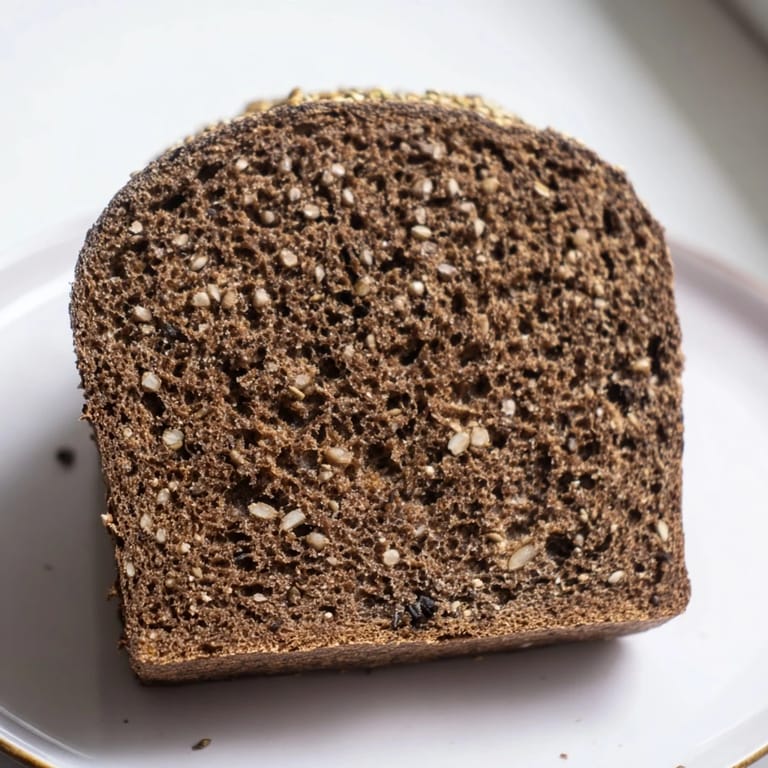
Save I discovered Estonian leib while walking through a Baltic market on a grey November afternoon, drawn by the unmistakable earthy aroma of rye and caraway wafting from a corner bakery. The baker, a quiet woman with flour dusting her apron, cut me a thick slice and watched as I tasted it—dense, dark, and alive with a subtle sweetness that lingered long after I swallowed. That first bite sparked an obsession that led me to her kitchen for lessons, and eventually to mastering this ancient sourdough in my own home. The bread became my anchor, a way to ground myself in something real and slow when life moved too fast. Now, whenever I bake it, I'm transported back to that moment of discovery.
I baked this loaf for the first time with my partner on a quiet Sunday morning, and when the smell filled our kitchen, he stopped what he was doing and just stood there breathing it in. We didn't say much—we didn't need to—but when we finally sliced into it and spread it with cold butter, something shifted. It became our bread, the one we'd reach for when we wanted to slow down together, to sit at the table without rushing.
Ingredients
- Rye sourdough starter (100 g): The living heart of this bread—make sure yours is bubbly and active before you start, fed within a few hours so it's at peak strength.
- Dark rye flour (400 g): Don't skip this or substitute light rye; the dark stuff has more flavor and character, and it's what gives Estonian leib its signature depth.
- Bread flour (100 g): This adds just enough gluten structure to prevent the dough from becoming a dense brick, balancing the heaviness of the rye.
- Lukewarm water (300 ml): Temperature matters here—too cold and fermentation stalls, too hot and you'll kill the starter.
- Dark rye malt (50 g): If you can't find this, barley malt powder works beautifully and adds that toasted, slightly sweet note that makes people ask what your secret ingredient is.
- Molasses or dark honey (2 tbsp): Beyond sweetness, this brings subtle bitterness and a glossy richness that deepens as the bread ages.
- Caraway seeds (1 tbsp, plus optional topping): Toast them if you have time—it wakes up their flavor and makes the entire experience more intentional.
- Fine sea salt (2 tsp): Use fine salt so it dissolves evenly; coarse salt can create bitter pockets.
Tired of Takeout? 🥡
Get 10 meals you can make faster than delivery arrives. Seriously.
One email. No spam. Unsubscribe anytime.
Instructions
- Build your base:
- In a large bowl, stir together your active starter, lukewarm water, and molasses until the molasses dissolves into thin ribbons. You want it to feel alive and slightly foamy—that's your starter saying hello.
- Bring it together:
- Add the rye flour, bread flour, malt powder, caraway seeds, and salt all at once. Use a wooden spoon to stir until everything is incorporated into a thick, shaggy mass that clings to itself.
- Let time do the work:
- Cover with a damp cloth and leave it at room temperature for 10–12 hours, ideally overnight. You'll watch it transform from dense and sluggish into something bubbly and alive, the smell becoming more complex by the hour.
- Shape and proof:
- Line a loaf pan with parchment or grease it lightly, then turn the dough into the pan using a wet spatula to smooth the top. Sprinkle caraway seeds on top if you like the visual drama, then cover and let it rise for 2–4 hours until it climbs toward the rim.
- Prepare for the oven:
- Preheat to 220°C (430°F) and place a pan of hot water on the bottom rack—steam is essential for that deep, caramelized crust Estonian leib is famous for.
- Bake with confidence:
- Bake at 220°C for 15 minutes, then drop the temperature to 190°C (375°F) and continue for 30 minutes more until the crust is nearly black and the loaf sounds hollow when you tap its bottom.
- Honor the cool-down:
- Remove to a wire rack and let it cool completely—I know it's torture, but cutting into warm bread releases all the steam you worked to build, leaving it gummy inside.
 Save
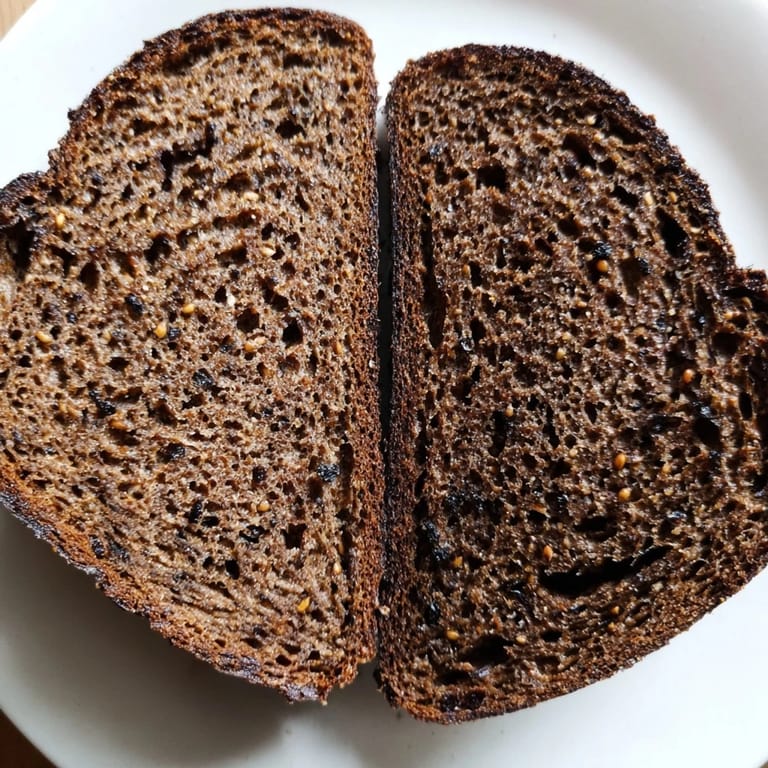
Save One evening, a friend who'd been skeptical about sourdough asked for a slice, mostly to be polite. Twenty minutes later, she was asking me to teach her how to bake it, realizing that bread this good couldn't be something she just bought anymore. That's when I understood that leib isn't just sustenance—it's an invitation to slow down and create something that matters.
The Estonian Story Behind This Bread
Leib means simply 'bread' in Estonian, but it carries the weight of centuries—a staple that sustained people through long, dark winters and celebrated harvest festivals with equal grace. Dark rye flourished in Baltic climates where wheat struggled, so Estonians built their entire bread culture around it, developing techniques and flavor profiles that feel almost sacred. When you bake this loaf, you're not just following a recipe; you're touching a tradition that's been passed hand to hand through generations, and that matters.
Timing and Patience
The total time looks intimidating on paper, but most of it is passive—the dough rises while you sleep or work or live your life. The actual hands-on time is surprisingly brief, which is the beauty of sourdough: it teaches you that the best things rarely demand your constant attention, just your presence at the right moments. If your kitchen is cold, the rise might stretch toward 16 hours; if it's warm, it could finish in 10. Watch the dough, not the clock—it will tell you when it's ready.
Serving and Storage
Serve this bread still slightly warm with cold butter, smoked fish, or aged cheese, letting each element shine on its own. It keeps wrapped in a towel at room temperature for up to a week, and honestly, it tastes better on day three than day one, the flavors settling and deepening as the crumb structure continues to evolve. You can also slice and freeze it, toasting slices directly from frozen for a quick breakfast that tastes like you've been thinking about bread all morning.
- A thin scrape of salted butter and a few slices of smoked salmon is the tasting menu version.
- If you find yourself with stale slices, cube them and toast gently for a rye-based crouton that elevates simple soups.
- Store it upside down under a towel to prevent the crust from softening on the exposed side.
 Save
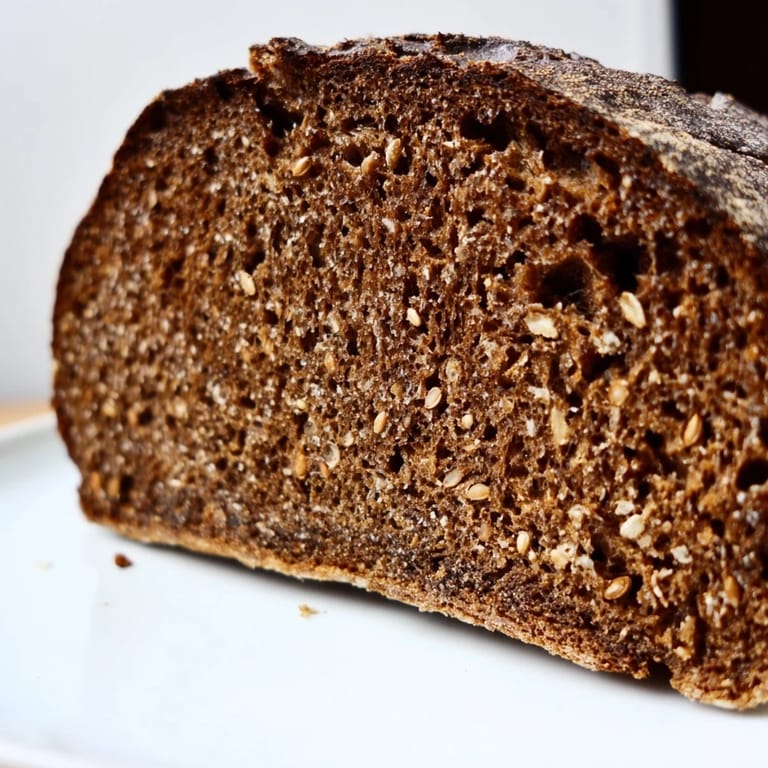
Save Every time I pull this loaf from the oven, I'm reminded that the most rewarding things in life require patience, care, and a willingness to trust a process you can't fully control. That's what leib teaches, slice by slice.
Recipe Questions & Answers
- → What type of flour is used in this loaf?
The loaf is primarily made with dark rye flour combined with some wheat bread flour for structure.
- → How does molasses affect the flavor?
Molasses adds a subtle sweetness and deepens the bread’s caramelized notes, enhancing malt flavors.
- → Why use caraway seeds in the dough?
Caraway seeds provide a distinctive aromatic, slightly peppery element that complements rye perfectly.
- → What is the benefit of a long rising time?
Extended fermentation develops complex flavors and improves the dough’s texture and digestibility.
- → How do you achieve a crisp crust on this bread?
Baking with steam in the oven creates a crispy crust while keeping the interior moist and tender.