 Save
Save I'll never forget the first time I assembled a charcuterie board with purpose—not just a scattered collection of cheeses and cured meats, but something intentional and architectural. It was for a dinner party that felt important, and I wanted the presentation to match the occasion. That's when I discovered the magic of working with the board itself, letting its shape become part of the design. An elegant rim became my canvas, and leaving the center dramatically empty transformed something simple into something that made guests pause before reaching in. That night, I learned that sometimes the most sophisticated presentations come from restraint.
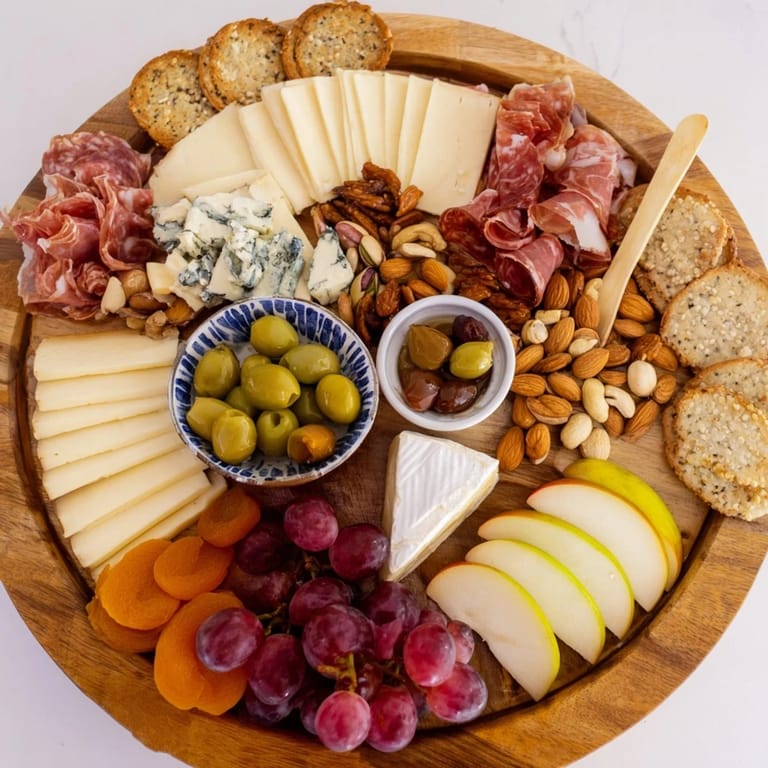
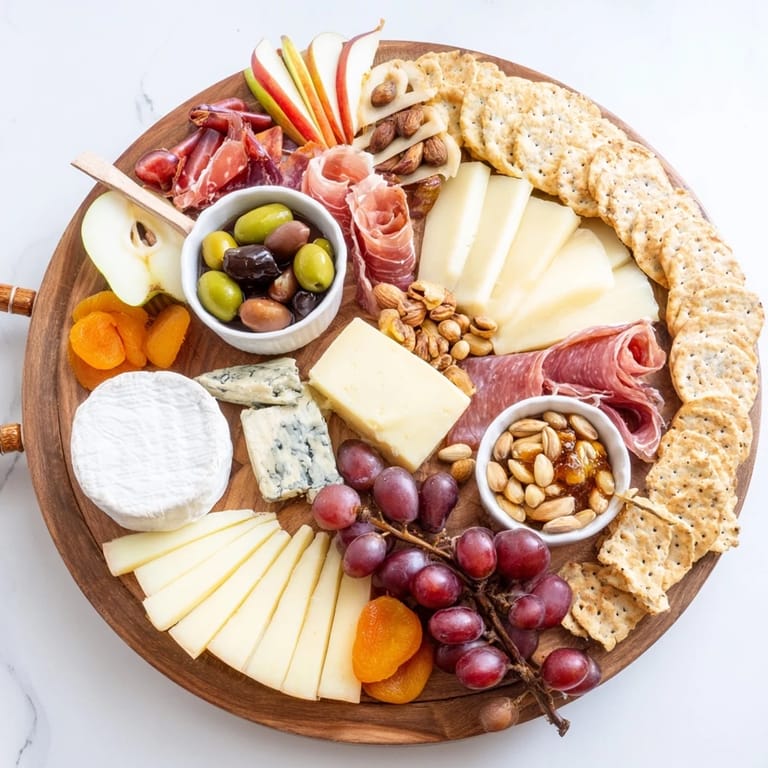
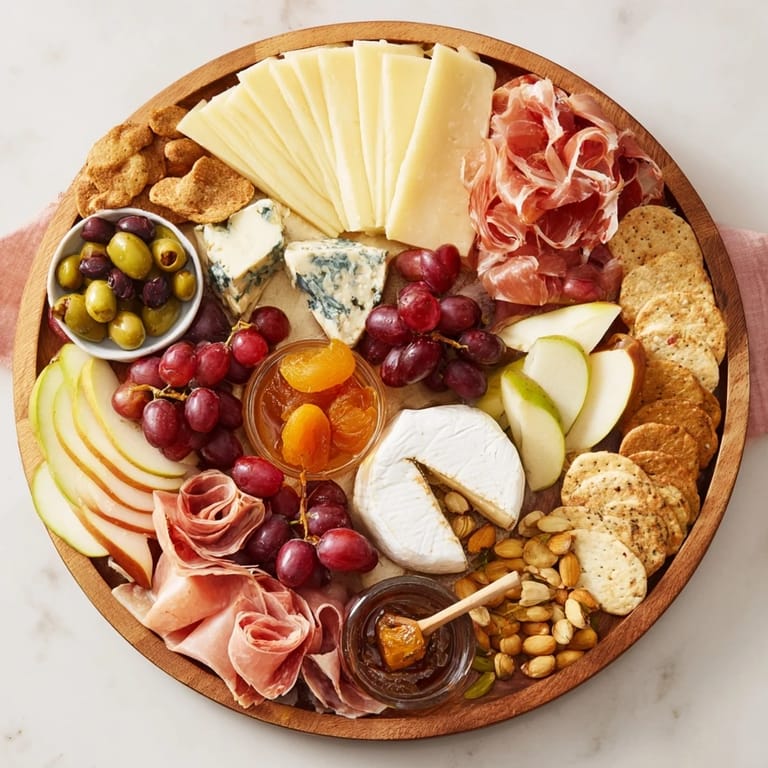
I remember setting this board out for a holiday celebration, and the room went quiet for just a moment when everyone saw it. The gold-tinged cheeses caught the light, the jewel-toned grapes glowed against the dark marble, and that empty center created this perfect sense of balance. Someone said it looked almost too beautiful to touch—but of course, they couldn't resist reaching for a slice of prosciutto within seconds. That's when I knew this approach worked. The board had become part of the celebration itself.
Ingredients
- Triple-cream Brie, 120g cut into slim wedges: Choose one that's ripe but not oozing—you want it to hold its shape as you slice. The creamy richness is your anchor cheese, the one that makes people close their eyes a little when they taste it.
- Aged Manchego, 120g sliced: This Spanish cheese has a buttery nuttiness that pairs beautifully with the other bold flavors. Slice it just before assembling so it stays fresh and hasn't dried at the edges.
- Blue cheese, 100g crumbled or sliced: Don't shy away from this—even skeptics seem to find themselves drawn to it once it's beautifully presented. It adds a sophisticated edge.
- Goat cheese, 100g formed into small rounds: The tanginess cuts through the richness of the other cheeses. If it's crumbly, use a small ice cream scoop or melon baller to make perfect little spheres—presentation matters here.
- Prosciutto, 100g folded into ribbons: Buy it sliced to order if you can, and fold each piece loosely just before you arrange it. The way it catches the light is part of the visual magic.
- Thinly sliced salami, 120g: Choose a good quality variety with visible fat marbling—it's more flavorful and looks more luxurious when arranged in overlapping layers.
- Coppa or bresaola, 100g: One of these adds depth. Coppa is spiced and slightly sweet; bresaola is leaner and more delicate. Either choice brings sophistication.
- Red and green grapes, 1 small bunch each: These provide color contrast and a refreshing sweetness. Keep them whole—there's beauty in their round simplicity.
- Pear and apple, 1 each thinly sliced: Slice these just before serving to prevent browning. The key is thin slices that look almost translucent—they photograph beautifully and eat so easily.
- Dried apricots, 1 small handful: These add chewiness and a sophisticated sweetness. Their warm color bridges the gap between the brights and the deeper tones on the board.
- Marcona almonds, 1/4 cup: These Spanish almonds are buttery and less sharp than regular ones. They're worth the splurge for boards like this.
- Salted pistachios, 1/4 cup: Their green color is a visual pop, and the salt makes people reach for them repeatedly.
- Castelvetrano olives, 1/4 cup: These buttery green olives are milder than others and won't overpower the board. Their color is stunning.
- Cornichons, 1/4 cup: These tiny pickles provide acidity and crunch. They're like little flavor bombs that refresh the palate.
- Fig jam or quince paste, 1/4 cup: This is your sweet-savory bridge. Place it in a small ramekin at the rim—people will use more than you expect.
- Honeycomb or honey drizzle: If you can find honeycomb, it's worth it for the texture and visual interest. Otherwise, good quality honey in a small bowl works beautifully.
- Baguette, 1 thinly sliced and lightly toasted: Toasting it lightly adds crunch and helps it hold up longer without getting stale once it's been out a while.
- Assorted crackers, 1 box: Choose varieties with different shapes and colors—some delicate, some hearty. They're the foundation that everything else rests on.
Tired of Takeout? 🥡
Get 10 meals you can make faster than delivery arrives. Seriously.
One email. No spam. Unsubscribe anytime.
Instructions
- Choose your stage:
- Start with a large board—marble or wood with a prominent rim is ideal. The rim will be your entire working canvas, and the empty center will do the visual work for you. Set it on your table where you'll assemble it, because moving it once it's full is a recipe for disaster.
- Arrange the foundation:
- Begin by placing your crackers and toasted baguette slices around the outer edge first. These are your anchor pieces. Position them standing slightly at an angle, creating a visual rhythm as you work around the board. This gives structure to everything that follows.
- Build with cheeses:
- Now place your cheese selections, spacing them out evenly around the rim. The brie wedges, manchego slices, and goat cheese rounds should be positioned so you can see each one clearly. Think of it like musical notes spaced on a staff—there should be rhythm and breathing room.
- Weave in the charcuterie:
- Fold and position your prosciutto ribbons between the cheese selections. Lay the salami and coppa in thin, overlapping circles like you're creating little rose-like formations. The way these meats catch light is important, so position them thoughtfully.
- Add the fresh elements:
- Nestle your grapes, pear slices, and apple slices around the board, letting them nestle against the cheeses and cured meats. The fruit adds color and freshness visually. Scatter your dried apricots among the fresh fruit for warmth and texture contrast.
- Fill in with nuts and vegetables:
- Drop your almonds, pistachios, olives, and cornichons into the gaps, working around the perimeter. These are your flavor punctuation marks. Don't spread them thin—let them cluster slightly in certain areas to create visual interest.
- Place the condiments:
- Set small bowls or ramekins for jam, honey, and any extra elements around the rim as well, like they're part of the design. This keeps everything in the perimeter and maintains the striking empty center.
- Step back and adjust:
- Walk around your board and look at it from above and from the side. Do the colors flow? Are there any gaps or dead zones? Move pieces slightly until it feels balanced. The arrangement should feel almost like a still life painting.
- Serve immediately:
- Have cheese knives and small tongs nearby. Set out small plates and let people build their own combinations. The beauty of this approach is that as people take pieces, the arrangement naturally evolves.
 Save
Save There was a moment during that first dinner party when someone took a photo of the board before anyone ate from it, and that small gesture told me everything. They saw it as something worth preserving, not just consuming. That's when I realized that this approach—the dramatic empty center, the careful rim arrangement—transforms a charcuterie board from sustenance into art. Food became memory before anyone took a bite.
The Art of the Empty Center
The most elegant parties I've hosted have taught me that what you leave out is just as important as what you put in. By keeping the center of the board empty, you're not being minimalist—you're being intentional. The emptiness draws the eye and makes the arrangement feel curated rather than crowded. It also serves a practical purpose: that clear center becomes a visual rest point for the eye, and it invites people to admire the board rather than immediately dive in. It's the difference between a spread and a presentation, between casual snacking and a moment worth pausing for.
Building Flavor Harmony
Every great charcuterie board tells a story of balance. You want the richness of the cream cheeses balanced by the tang of blue and goat cheese. The salty umami of the cured meats needs the brightness of fresh grapes and the tang of cornichons. The complex flavors of manchego and aged cheeses shine when contrasted with the simple sweetness of honey and fig jam. As I've assembled more of these boards, I've learned that the best ones don't have chaos—they have conversation between flavors. Each element is there because it either deepens or brightens something else on the board. That's what makes people keep reaching back for more: not because they're hungry, but because the flavors keep surprising them in the best way.
Making It Your Own
While I've given you a specific formula here, the beauty of a board like this is how adaptable it is to what you love and what you have available. If you're vegetarian, skip the charcuterie and add marinated artichoke hearts, roasted red peppers, or even some olives in a different style. If you love sweet more than savory, add a bit more fruit and honeycomb. If you're serving it in winter, maybe you lean into deeper colors and richer cheeses. The structure stays the same—the rim, the empty center, the intentional arrangement—but the contents become a reflection of your palate and the occasion.
- For extra festivity, dust some of your nuts or the brie with edible gold leaf—it catches the light beautifully and makes the board feel celebratory
- If you're making this ahead, you can arrange everything except the apples, pears, and fresh herbs 2-3 hours in advance, then add those tender items 30 minutes before serving
- Always taste your jam and cheese together before serving—sometimes you might want to try a different pairing or add a drizzle of honey somewhere unexpected to create a new flavor combination
 Save
Save There's something timeless about gathering around a beautiful board—it's part charcuterie, part ceremony. I hope this one brings that same magic to your table.
Recipe Questions & Answers
- → How should the ingredients be arranged on the board?
Arrange all cheeses, meats, fruits, nuts, and accompaniments exclusively along the board's outer rim, leaving the center empty to showcase the board’s form.
- → What cheeses are ideal for this elegant board?
Use a variety including triple-cream Brie, aged Manchego, blue cheese, and goat cheese for diverse flavors and textures.
- → Can this board be adapted for vegetarian guests?
Yes, simply omit cured meats and add marinated artichokes, roasted peppers, or extra cheese varieties to maintain richness.
- → What accompaniments enhance the presentation and flavor?
Incorporate Marcona almonds, pistachios, Castelvetrano olives, cornichons, fig jam or quince paste, and honey for varied tastes and textures.
- → What beverages pair well with this spread?
Champagne, sparkling wines, or crisp Sauvignon Blanc complement the flavors beautifully, enhancing the overall experience.
- → How to serve and present this board for a festive occasion?
Use a large wooden or marble board with a rim, place small bowls for spreads along the edge, and serve with cheese knives and tongs for an elegant presentation.