 Save
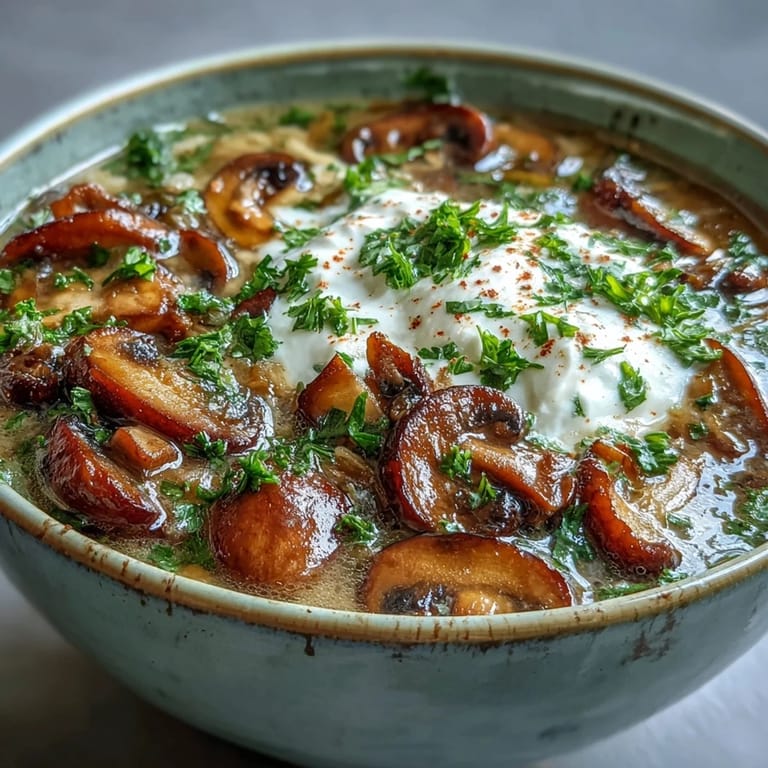
Save There's something about the aroma of mushrooms caramelizing in butter that makes everything else fade away. I discovered this soup on a rainy Tuesday when I was standing in my kitchen, staring at a pile of mushrooms from the farmers market and thinking about stroganoff—that Russian comfort food I grew up eating but never thought to turn into soup. The moment I added that spoonful of miso and watched the broth deepen into something almost velvety, I realized I'd stumbled onto something special. This is the kind of soup that tastes like both effort and ease at once.
I made this for my sister during her first winter in the city, when she was homesick and exhausted from her new job. She came over and I ladled it into bowls while crusty bread toasted in the oven, and watching her shoulders relax as she tasted it was worth every minute of chopping. She's made it twice since then, once for a dinner party where it became the conversation starter, and once just for herself on a Sunday when she needed comfort in a bowl.
Ingredients
- Mixed mushrooms (cremini, shiitake, button), 500 g sliced: The variety matters—cremini brings earthiness, shiitake adds deep umami, and button mushrooms keep things light; if you can only find one type, don't skip the soup, just use what you have.
- Medium onion, finely chopped: This is your flavor foundation, and chopping it fine helps it melt into the broth rather than stay chunky.
- Garlic, 2 cloves minced: Don't be shy with the garlic here; it marries beautifully with the mushrooms and miso.
- Medium carrot and celery stalks, diced: These create a gentle sweetness and body that rounds out all the deep, savory notes.
- Olive oil and unsalted butter, 1 tbsp each: The combination gives you flavor and helps everything sauté without sticking; butter alone can burn too quickly at higher heat.
- Vegetable broth, 1 L: Use a good quality broth—it's not just a vehicle here, it's a main player in the final flavor.
- Dry white wine, 2 tbsp optional: It adds brightness and helps lift the soup so it doesn't feel too heavy, but if you skip it, add an extra splash of broth.
- Soy sauce and white miso paste, 2 tsp and 1 tbsp: These two are the secret handshake of this soup; the soy adds saltiness and depth, while miso brings that creamy umami that makes people wonder what you did.
- Smoked paprika and dried thyme, 1 tsp and 1/2 tsp: Smoked paprika gives it a whisper of smokiness that feels sophisticated; thyme keeps it grounded and herbaceous.
- Sour cream or crème fraîche, 200 ml: Full-fat is non-negotiable here because it creates that silky mouthfeel and won't break when heated; use whatever you can find, they both work beautifully.
- All-purpose flour, 1 tbsp: This is your thickening agent and also cooks out to remove any raw flour taste that would muddy the broth.
- Fresh parsley for garnish, 2 tbsp chopped: It adds color and a pop of freshness that cuts through all the richness at the end.
Tired of Takeout? 🥡
Get 10 meals you can make faster than delivery arrives. Seriously.
One email. No spam. Unsubscribe anytime.
Instructions
- Build your base with the aromatics:
- Heat the olive oil and butter together over medium heat until they're foaming and fragrant, then add your onion, carrot, and celery. Let them soften for about 5 minutes, stirring occasionally—you want them tender but not brown, which is when their natural sweetness starts to develop.
- Develop the mushroom depth:
- Add your minced garlic and let it bloom for just 30 seconds until it's fragrant, then tumble in all your sliced mushrooms. This is where the magic starts—cook for 7 to 8 minutes, stirring now and then, and you'll watch as the mushrooms go from pale to golden brown and release their moisture into the pot, creating an instant fond on the bottom that's pure umami.
- Create a paste to thicken:
- Sprinkle the flour over everything and stir until every vegetable is coated. Cook for just 1 minute, which removes that raw, chalky flour taste and transforms it into something that will thicken your soup without any graininess.
- Deglaze and build the broth:
- If you're using wine, pour it in now and scrape up all those caramelized bits clinging to the bottom of the pot with your wooden spoon—they're liquid gold. Add your vegetable broth, soy sauce, smoked paprika, thyme, salt, and pepper, then bring everything to a gentle simmer, cover, and let it cook for 15 minutes so the flavors get to know each other.
- Miso-ify without breaking it:
- While the soup simmers, whisk your white miso paste with 2 tablespoons of hot broth in a small bowl until it's completely smooth and creamy—this prevents clumps from forming in your finished soup. Stir this back into the pot thoroughly.
- Go creamy with care:
- Reduce your heat to low, then slowly stir in the sour cream until the soup is silky and homogeneous. This is crucial: never let it boil after you add the sour cream because heat will cause it to separate and curdle, turning your velvety soup grainy.
- Taste and adjust:
- Give it a final taste and adjust salt, pepper, or even a touch more miso if you want it earthier. Some soups need a little tuning, and there's no shame in that.
- Serve with intention:
- Ladle the soup into bowls, scatter parsley over the top, and add a small dollop of sour cream to each if you like. The contrast of cold cream melting into hot soup is one of those small pleasures that makes eating feel intentional.
 Save
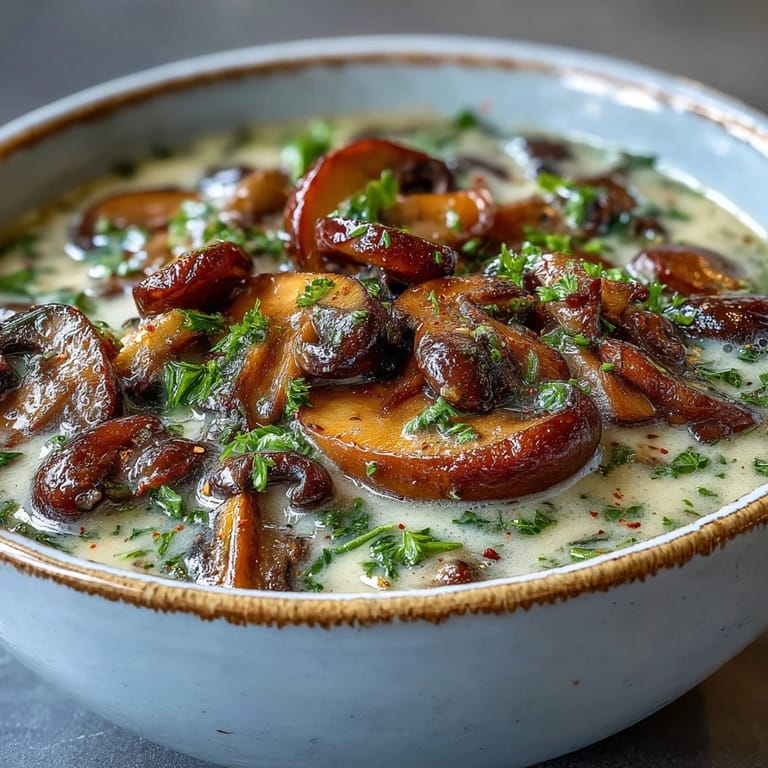
Save What struck me most about making this soup regularly is how it became a love language in my kitchen—something I could make for people I cared about when words weren't quite enough. It's nourishing without being fussy, comforting without being heavy, and somehow it always brings people back to the table for seconds.
Variations and Add-Ins
I've learned that this soup is actually a blank canvas disguised as a finished dish. Sometimes I add a handful of fresh spinach at the very end, which wilts into the creamy broth and adds brightness, or I'll stir in some cooked egg noodles if I want something more substantial that feels like a meal rather than a starter. Once I even added roasted potato cubes, and while it's not traditional stroganoff anymore, it became something I've made three times since. The point is: trust your instincts and your pantry, because this soup is forgiving and loves a little improvisation.
Serving and Pairing
There's a reason crusty bread exists—it's meant to soak up every spoonful of soup left in the bowl. I always serve this with a slice of good bread, something with a crispy exterior and an open crumb, and I never apologize for the soup-soaked plate that results. If you want wine, reach for a light-bodied red like Pinot Noir, which won't overpower the delicate, creamy flavors but will complement the earthiness of the mushrooms.
Adapting for Dietary Needs
Making this soup for people with different dietary needs taught me that the core of what makes it special—the mushrooms, the miso, the caramelization—doesn't depend on animal products. For a vegan version, swap the butter for a good plant-based alternative and replace sour cream with vegan sour cream, which is now readily available, or make a quick cashew cream by soaking cashews in hot water and blending them smooth. For gluten-free diets, use tamari instead of soy sauce and swap all-purpose flour for a one-to-one gluten-free blend; the soup won't know the difference, and neither will your guests.
- Always taste plant-based sour cream products before using them, as brands vary widely in flavor and texture.
- Cashew cream made fresh tastes fresher and richer than store-bought versions, though it requires a blender and a few minutes of patience.
- Check your miso paste label for gluten content, as some brands add grains even though pure miso is naturally gluten-free.
 Save
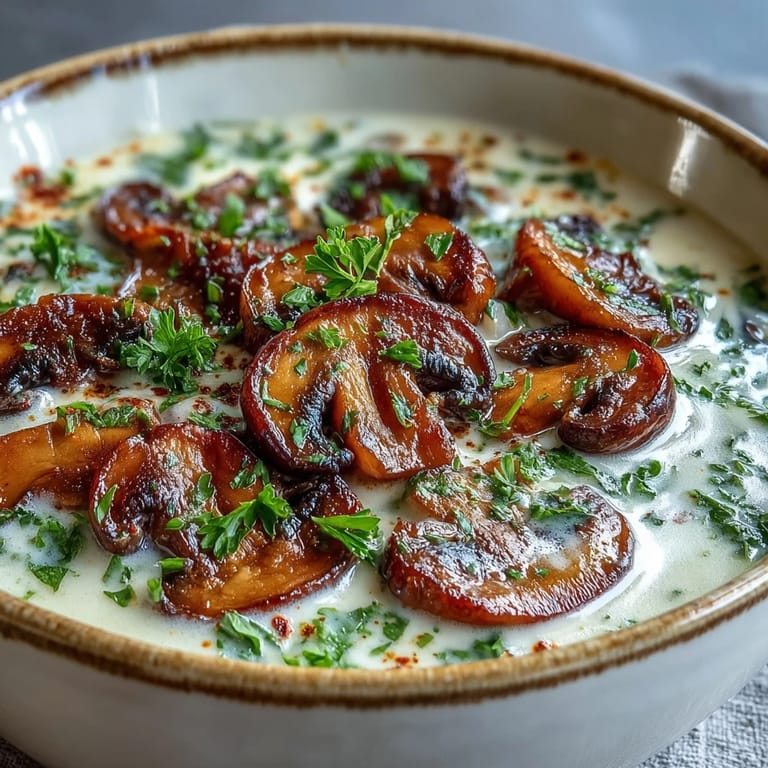
Save This soup has become the recipe I reach for when I want to feel like I'm taking care of someone, including myself. There's something profound about a bowl of soup that tastes like you spent hours making it but asks for less than an hour of your actual time.
Recipe Questions & Answers
- → Can I make this soup vegan?
Yes. Replace the butter with plant-based alternative, use vegan sour cream or cashew cream instead of dairy sour cream, and ensure your miso paste is vegan. The flavor profile remains equally satisfying.
- → What mushrooms work best?
A mix of cremini, shiitake, and button mushrooms provides excellent depth. Shiitake adds pronounced umami, cremini offers meaty texture, while button mushrooms contribute a mild, familiar flavor that balances the blend.
- → Why does the soup curdle sometimes?
Curdling occurs when sour cream is added to boiling liquid. Always reduce heat to low before stirring in sour cream, and never return the soup to a boil after adding it. Whisking a small amount of hot broth into the sour cream first can also help prevent separation.
- → Can I freeze leftovers?
The soup freezes well for up to 3 months, though the texture may become slightly grainy upon reheating. For best results, freeze before adding sour cream and stir in fresh sour cream when reheating. Reheat gently over low heat.
- → What can I serve alongside?
Crusty bread or garlic slices are ideal for soaking up the creamy broth. A light green salad with vinaigrette provides refreshing contrast. For heartier meals, serve with boiled egg noodles or roasted potatoes.
- → Is miso paste essential?
While not strictly necessary, miso paste significantly enhances the umami depth. If unavailable, increase soy sauce slightly or add a teaspoon of tomato paste. The miso creates a more complex, rounded flavor that elevates the entire dish.