 Save
Save There's something about the smell of butter and flour coming together in a pan that instantly transports me back to my grandmother's kitchen. That's where I first learned that mac and cheese isn't just comfort food, it's a small act of care. She never followed recipes exactly, but her golden rule was always clear: make the sauce rich, use good cheese, and don't rush it. Now when I make it, whether stovetop or baked, I find myself moving at her same unhurried pace, whisking slowly, tasting as I go.
I made this for my partner on a rainy Tuesday when everything felt a bit heavy, and watching his face light up when he tasted it reminded me why I love cooking. The way the cheese melts into that creamy sauce, how it coats every single piece of pasta—that's the magic that makes people come back to your table.
Ingredients
- 350 g elbow macaroni: Don't skip cooking it just shy of al dente, because it keeps cooking in the sauce and you want each piece tender but still with a whisper of texture.
- 3 tbsp unsalted butter: Quality matters here since it's the foundation of your béchamel, so use something you'd actually spread on toast.
- 3 tbsp all-purpose flour: This is your thickening agent, and whisking it with butter creates the roux that transforms milk into silky sauce.
- 2 cups whole milk and 1 cup heavy cream: Warming the milk first prevents lumps and makes the sauce come together faster and smoother.
- 200 g sharp cheddar, 75 g Gruyère, 50 g Parmesan: The three-cheese blend is the secret. Sharp cheddar for bite, Gruyère for earthiness, Parmesan for that subtle nuttiness that makes people ask what your special ingredient is.
- Dijon mustard, garlic powder, onion powder, salt, pepper, cayenne: These seasonings live in the background but add complexity and prevent the cheese from tasting one-note.
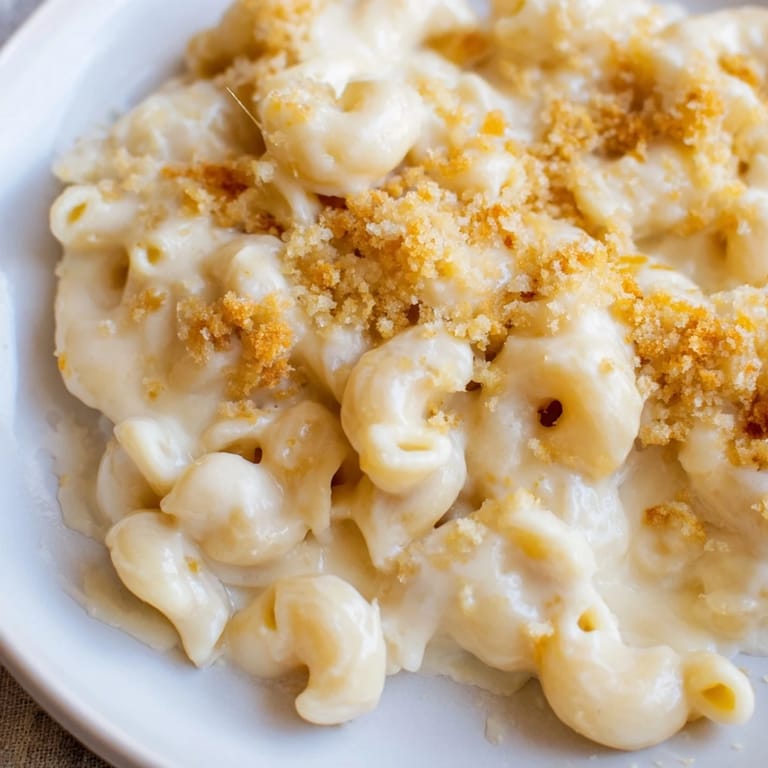
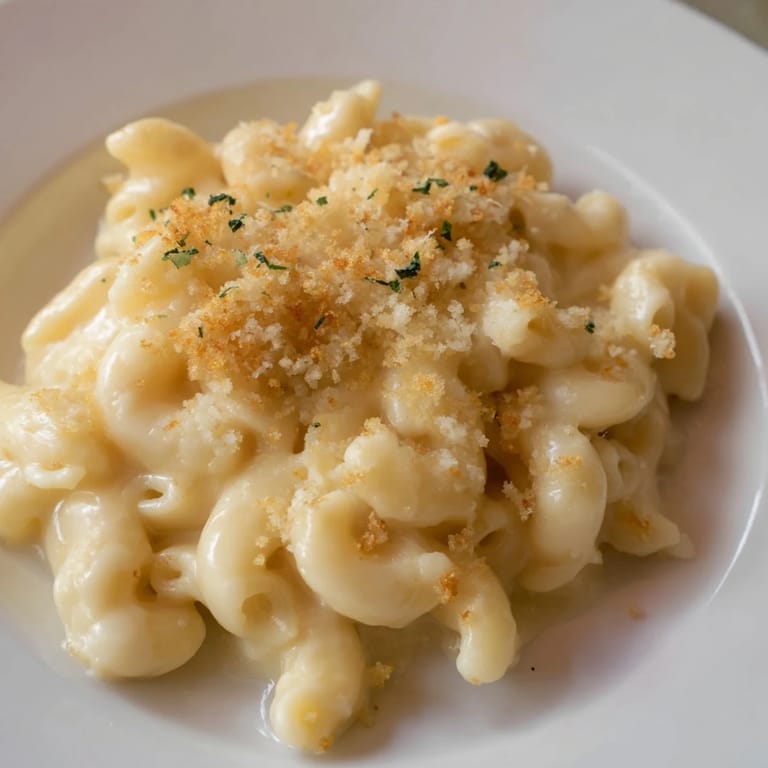
- ½ cup panko breadcrumbs, 2 tbsp melted butter, 2 tbsp Parmesan (for topping): This creates that golden, crunchy contrast if you're baking, which is non-negotiable in my opinion.
Tired of Takeout? 🥡
Get 10 meals you can make faster than delivery arrives. Seriously.
One email. No spam. Unsubscribe anytime.
Instructions
- Prep your stage:
- Preheat the oven to 200°C if you're going the baked route and grease your baking dish. Get your pasta water salted and boiling so you're ready when you need it.
- Cook the pasta:
- Drop your elbow macaroni into the boiling water and cook for about one to two minutes less than the package tells you. You want it to have just a tiny bit of resistance when you bite it, because it will soften further in the sauce.
- Make your roux:
- In a large saucepan, melt the butter over medium heat until it's foaming gently. Whisk in the flour, stirring constantly for about a minute or two until it turns light golden but not brown, which means your flour is cooked out.
- Build the béchamel:
- Slowly pour in your warm milk and cream while whisking steadily to avoid lumps. Keep stirring as it comes to a gentle simmer, and you'll feel it thicken under your whisk in about four to five minutes—that moment is so satisfying.
- Season with intention:
- Lower the heat and stir in the Dijon mustard, garlic powder, onion powder, salt, pepper, and cayenne. Taste it, adjust if needed, because this base needs to be flavorful enough to carry the cheese.
- Melt in the cheese:
- Add your cheddar first, then Gruyère, then Parmesan, stirring each batch until completely melted and smooth. The sauce should look silky and smell incredible.
- Bring it all together:
- Gently fold the drained pasta into the cheese sauce until every piece is coated. The heat of the sauce will continue cooking the pasta slightly, so you want that initial undercooked state.
- Choose your finish:
- For stovetop, serve it right now while it's creamy and at its peak. For baked, pour everything into your prepared dish, mix the panko breadcrumbs with melted butter and Parmesan, scatter it on top, and bake for twenty to twenty-five minutes until golden and bubbling.
- Let it rest:
- If baking, give it five minutes out of the oven before serving, which lets the sauce set slightly and makes it less likely to be a molten lava situation on your spoon.
 Save
Save The first time I made this for a dinner party, I was so nervous about messing up, and then my friend said, 'This is the best mac and cheese I've ever had,' and suddenly it became clear that this dish is about more than just feeding people. It's about showing up with something that tastes like care.
Stovetop Versus Baked
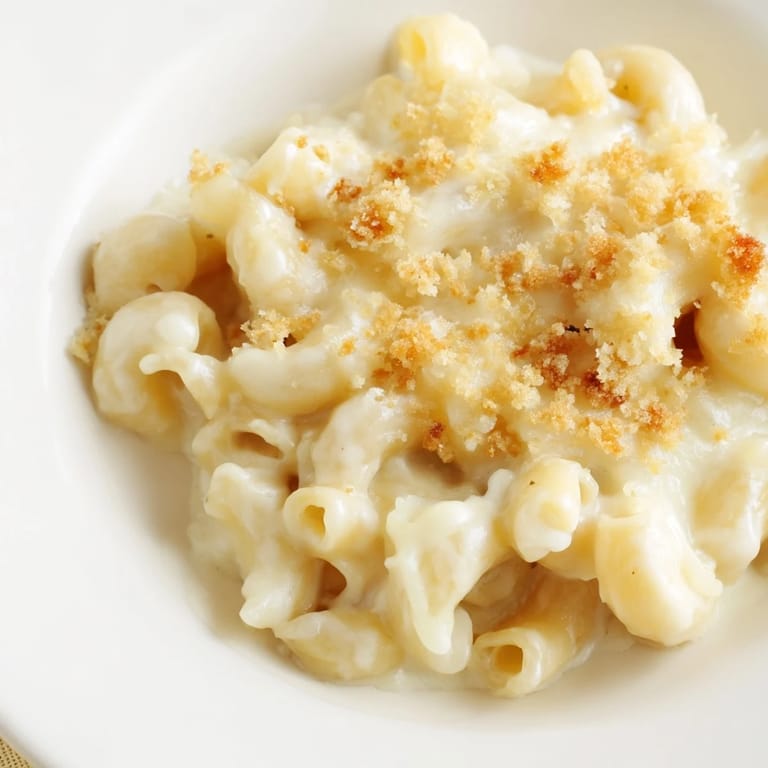
I find myself choosing between the two depending on my energy that day. Stovetop mac and cheese is the weeknight version, creamier and ready to eat immediately, with that luxurious quality that feels indulgent without being fussy. Baked mac and cheese is the weekend or company version, the one with the golden, crunchy topping that gives you texture alongside all that silky sauce underneath. Both are completely legitimate, and honestly, I've never met a person who complained about either version landing in their bowl.
Building Flavor Depth
The reason this recipe uses three different cheeses is because they each bring something different to the party. Sharp cheddar is bold and recognizable, Gruyère has this subtle nuttiness that sits in the background and makes people wonder what they're tasting, and Parmesan adds a salty complexity that rounds everything out. I used to make mac and cheese with just cheddar, and it was fine, but then I understood that great cooking is really just about knowing which small choices make the biggest impact. The Dijon mustard is one of those choices too, just a teaspoon, but it sharpens the cheese flavor and keeps it from being flat.
Variations and Additions
Once you master the base, you can dress it up or keep it simple depending on what you're in the mood for. Some people add crispy bacon bits stirred through at the end, others swear by sautéed mushrooms for earthiness, and I've had a version with blanched broccoli florets folded in that was surprisingly good. The sauce is sturdy enough to carry these additions without losing its identity, so play around and trust your instincts.
- Extra-mature cheddar will give you a sharper, more pronounced cheese flavor if you want to dial up the intensity.
- Monterey Jack or mild mozzarella work if you prefer something more delicate, though you'll lose some of the complexity that makes this version special.
- A crisp green salad and a glass of Chardonnay alongside it turns this into something that feels like dinner, not just a side dish.
 Save
Save This is the kind of recipe that lives in my rotation because it never feels like work and it always feels like love. Make it for the people you want to feel cared for, and they will.
Recipe Questions & Answers
- → What type of pasta works best?
Elbow macaroni is traditional, cooking until just al dente to ensure it holds texture when mixed with the sauce.
- → How is the béchamel sauce prepared?
Butter and flour are cooked briefly to a light golden, then warm milk and cream are whisked in and simmered until thickened.
- → Can I customize the cheese blend?
Yes. Sharp cheddar provides boldness, Gruyère adds nuttiness, and Parmesan enhances savoriness. Alternatives like Monterey Jack or mozzarella work for milder flavors.
- → How do I achieve a crunchy topping?
Mix panko breadcrumbs with melted butter and Parmesan, then sprinkle evenly over the macaroni before baking to a golden, bubbly finish.
- → What variations enhance the dish?
Adding cooked bacon, sautéed mushrooms, or blanched broccoli introduces texture and flavor variety to the creamy base.