 Save
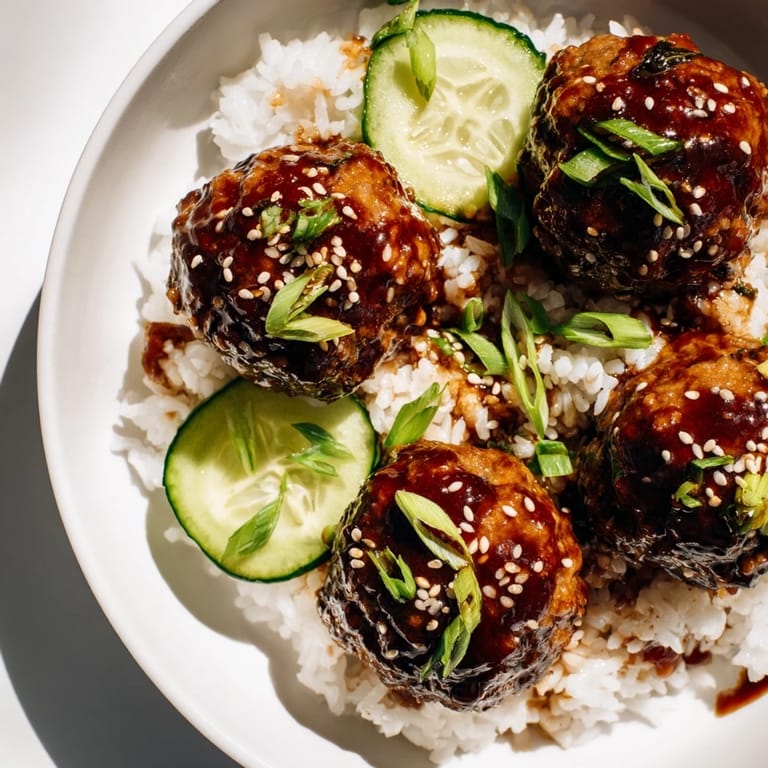
Save My kitchen smelled like a Tokyo street vendor's cart the first time I nailed these teriyaki meatballs—ginger, sesame, that sweet-savory glaze catching the light. I'd been chasing that specific flavor for months, testing variations after a friend casually mentioned how her grandmother made them at home. What struck me was how simple the formula turned out to be: tender meatballs, a glossy sauce that clings like it belongs there, and that refreshing bite of cucumber to cut through the richness. Now they're what I make when I want something that feels both comforting and a little bit special.
I made these for my partner on a random Tuesday when neither of us felt like ordering takeout, and watching them eat in complete silence—just focused on the bowl—told me everything I needed to know. The kitchen was warm, a little steamy from the rice cooker, and there was this moment of pure contentment that only happens when food actually tastes like you put thought into it.
Ingredients
- Ground beef or chicken (500 g): The protein base—beef gives you deeper flavor, chicken keeps it lighter.
- Egg (1 large): Acts as the binder that holds everything together without making the meatballs dense or heavy.
- Panko breadcrumbs (40 g): Use panko specifically, not regular breadcrumbs, because those larger flakes create an airier, more tender texture.
- Garlic and ginger (2 cloves minced, 1 Tbsp grated): These are your umami anchors—don't skip or reduce them.
- Spring onions (2 finely chopped): Fresh, mild onion flavor that melts into the meatball mixture during baking.
- Soy sauce (2 Tbsp for meatballs): Adds depth and salt; use a good quality one if you can.
- Sesame oil (1 Tbsp): This is the secret—it adds a subtle nuttiness that makes people ask what your secret ingredient is.
- Salt and pepper (1/2 tsp, 1/4 tsp): Season conservatively since the sauce adds more salty umami later.
- Soy sauce for sauce (120 ml): The backbone of your teriyaki—no shortcuts here.
- Mirin (60 ml): Sweet rice wine that gives teriyaki its signature gloss and subtle sweetness.
- Brown sugar and honey (2 Tbsp, 1 Tbsp): They work together to deepen the caramel notes without tasting like candy.
- Rice vinegar (1 Tbsp): The acid that brightens everything and keeps the sauce from tasting one-dimensional.
- Cornstarch slurry (2 tsp each): This is what makes the sauce cling to the meatballs instead of pooling at the bottom.
- Jasmine or sushi rice (240 g uncooked): Jasmine rice has a subtle floral note that pairs beautifully with teriyaki.
- Cucumber (1 medium): Slice it thin and add it just before serving so it stays crisp and refreshing.
- Sesame seeds (2 Tbsp toasted): Toasting them yourself makes a real difference—buy them raw and toast in a dry pan for 2 minutes.
- Spring onions for garnish (2 sliced): A fresh, bright finish that ties the whole bowl together.
Tired of Takeout? 🥡
Get 10 meals you can make faster than delivery arrives. Seriously.
One email. No spam. Unsubscribe anytime.
Instructions
- Get your rice started first:
- Rice takes the longest, so start it now and you'll have warm rice waiting when everything else is done. Use a rice cooker if you have one—it's genuinely easier and more reliable.
- Prep your workspace:
- Preheat your oven to 200°C (400°F) and line a baking sheet with parchment paper. Cold meatball mixture is easier to shape, so you might even refrigerate it for 10 minutes if you have time.
- Build your meatball base:
- Combine your ground meat, egg, panko, garlic, ginger, spring onions, soy sauce, sesame oil, salt, and pepper in a large bowl. Mix gently with your hands until just combined—overworking the mixture makes them tough and compact.
- Shape and arrange:
- Roll the mixture into 20–24 small meatballs (about the size of a walnut) and place them on your prepared sheet. They should have a little space between them so heat circulates evenly.
- Bake until golden:
- Bake for 15–18 minutes until they're cooked through and the exterior has some color. A meat thermometer should read 160°C (71°C) if you're checking.
- Make your teriyaki sauce:
- While meatballs bake, combine soy sauce, mirin, water, brown sugar, honey, and rice vinegar in a small saucepan. Bring to a gentle simmer, stirring occasionally until the sugar dissolves completely.
- Thicken the sauce:
- Stir your cornstarch slurry (mixed cornstarch and water) into the simmering sauce and let it bubble for another minute or two until it turns glossy and coats the back of a spoon. This is the moment it transforms from thin to luscious.
- Coat the meatballs:
- Transfer your baked meatballs to the hot sauce and toss gently until every one is coated in that glossy, caramelized glaze. The heat of the sauce and meatballs finishing the cooking process creates something magical.
- Assemble your bowls:
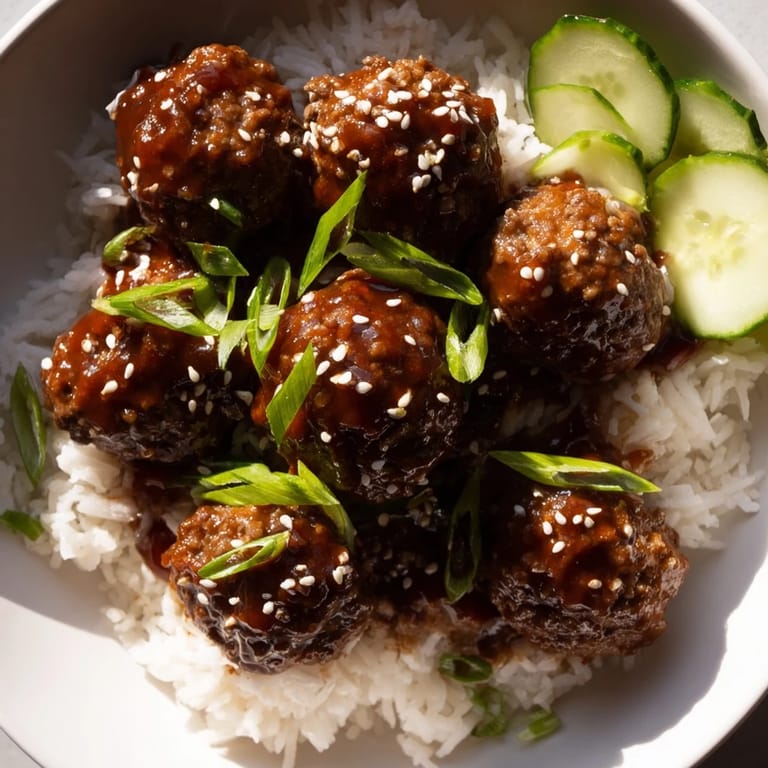
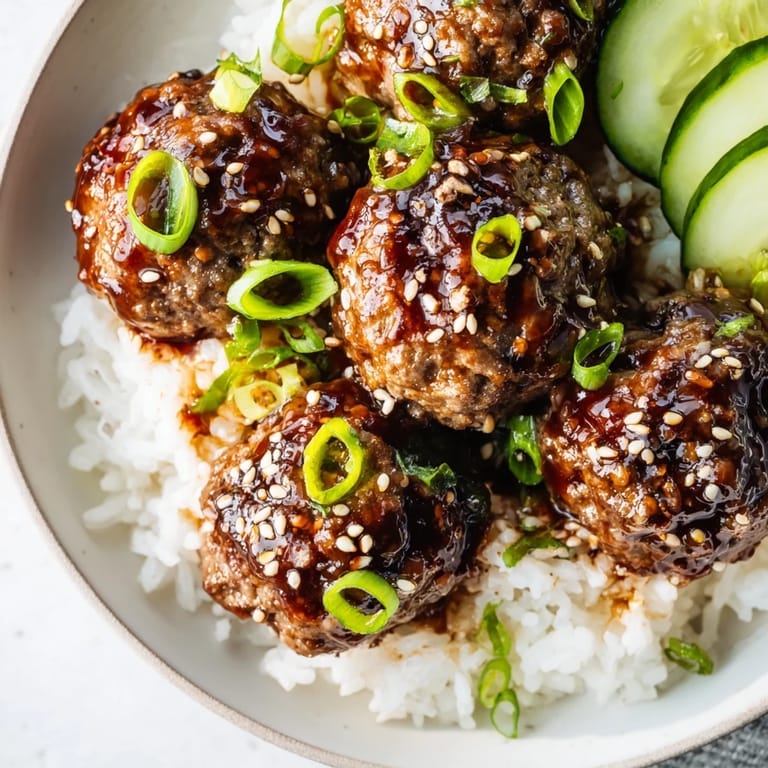
- Divide warm rice among four bowls, top with meatballs and sauce, then add your crisp cucumber slices, a scatter of toasted sesame seeds, and fresh spring onion garnish. Serve immediately while the rice is still warm and the cucumber stays fresh.
 Save
Save There's something about the combination of warm rice, savory meatballs, and that cool, crisp cucumber that feels like a complete meal instead of just dinner. It's the kind of dish where all the components matter equally, where you notice if something's missing.
Why This Sauce Works
Teriyaki isn't just soy sauce and sweetness—it's a balance of umami, acidity, and gloss that requires all the components working together. The mirin adds body and shine, the rice vinegar prevents one-note sweetness, and the brown sugar plus honey create depth instead of just obvious sugar flavor. I learned this the hard way after my first attempt tasted like salty ketchup. Once you understand that each ingredient pulls in a different direction but somehow creates harmony, you stop fearing sauce-making.
Customizing Your Bowl
This base is flexible without losing its identity. I've made it with ground turkey when I wanted something lighter, and with half ground pork for extra richness. The vegetables are just as adaptable—steamed broccoli adds substance, pickled ginger brings a sour punch, and edamame gives you protein if you're stretching the meal further. The one thing I never change is the core ratio of the meatball mixture and the sauce formula, because those are what make it taste like the dish it's supposed to be.
Storage and Reheating Tips
These meatballs keep beautifully in the refrigerator for up to three days—sauce and all. Reheat gently in a saucepan over medium heat rather than blasting them in the microwave, which can turn them rubbery. You can also freeze the cooked, sauced meatballs for up to a month, which makes this dish perfect for meal prep without the effort feeling like a chore.
- Leftover meatballs are excellent cold, straight from the fridge, as a snack or quick lunch without the rice.
- Make extra sauce and store it separately if you think you might reheat—it keeps longer that way and you can adjust consistency when you warm it up.
- Toast your sesame seeds fresh on the day you serve if you can, because that nuttiness fades once they've been sitting in the pantry.
 Save
Save These bowls are the kind of dish that makes you feel like you're actually cooking, not just assembling, even though everything is straightforward. Once you've made them once, they become second nature—and that's when they start appearing on dinner tables more often than you'd expect.
Recipe Questions & Answers
- → What type of meat can I use for the meatballs?
Ground beef or chicken works well, but ground turkey or pork can also be used for different flavors and textures.
- → How do I make the teriyaki sauce glossy?
Simmer the sauce with a cornstarch slurry to thicken and give it a shiny, glossy finish.
- → Can I substitute the rice in this dish?
Yes, jasmine or sushi rice is recommended, but short-grain rice varieties or cauliflower rice can be alternatives.
- → How should I bake the meatballs to keep them juicy?
Bake at 200°C (400°F) for 15-18 minutes until cooked through but still tender inside.
- → Are there gluten-free options for the breadcrumbs and soy sauce?
Use gluten-free breadcrumbs and tamari in place of soy sauce to make the dish gluten-free.