 Save
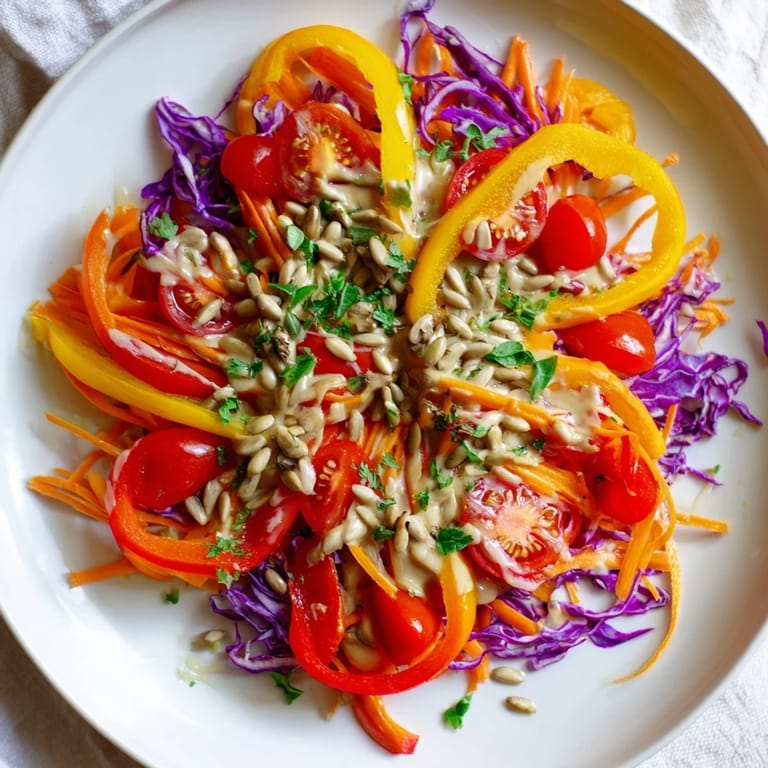
Save There's something magical about the moment when you slice into a rainbow bell pepper and watch the light come through it like stained glass. I stumbled onto this salad one summer when my farmer's market haul was almost too pretty to chop up—red, yellow, orange, purple all piled together—and I realized I didn't want to hide those colors under heavy dressing. Instead of the usual route, I whisked together tahini with lemon and created something that let each vegetable shine. It became the salad I make when I want to feel like I'm eating straight from a garden, even in my tiny city kitchen.
I made this for a potluck once where I wasn't sure what to bring, and I watched people actually get quiet while eating it—not in a polite way, but genuinely absorbed. Someone asked if I'd used some fancy technique, and I realized the trick was just respecting the vegetables enough to let them taste like themselves. That's when it clicked that simple isn't boring; it's just honest.
Ingredients
- Red and yellow bell peppers: These are the stars, so choose ones with thin skins and meaty walls—they'll slice cleaner and stay crisp longer.
- Carrot: Julienning it by hand is meditative, but a box grater works just fine if you're short on patience or knife skills.
- Purple cabbage: The earthiness cuts through the sweetness of the other vegetables; don't skip it even if it seems redundant.
- Cucumber and cherry tomatoes: Buy these last, as close to salad time as possible, because they start weeping moisture the moment they're cut.
- Mixed salad greens: Any combination works, but arugula adds a peppery bite that makes the whole thing feel less one-note.
- Tahini: This is the backbone—get the hulled kind if you can find it, as it's smoother and less bitter than unhulled.
- Lemon juice: Freshly squeezed, always; bottled changes the entire dressing into something chemical-tasting.
- Maple syrup or honey: This balances the earthiness of tahini and the sharpness of lemon, so don't skimp.
- Garlic: Raw and minced, it wakes up the entire dressing—one clove is enough.
Tired of Takeout? 🥡
Get 10 meals you can make faster than delivery arrives. Seriously.
One email. No spam. Unsubscribe anytime.
Instructions
- Slice and prep with intention:
- Lay out each vegetable on your cutting board and work through them one at a time, thinking about how thin you want each slice. This isn't just efficient; it's meditative and keeps your knife sharp because you're not jumping between different textures.
- Build your dressing base:
- In a small bowl, whisk tahini with lemon juice first—this stops it from seizing. Then add the maple syrup, olive oil, garlic, salt, and pepper, whisking until smooth and creamy. It should look like it's already holding together.
- Thin it to the right consistency:
- Add water one tablespoon at a time, whisking after each addition, until the dressing moves like liquid but still coats a spoon. If you add too much water, it'll taste diluted; too little, and it won't coat the salad evenly.
- Assemble with the greens first:
- Lay your mixed greens in the bottom of your salad bowl—this keeps them from getting buried and ensures you get some in every bite. Then layer your sliced and shredded vegetables on top, creating little pockets.
- Dress and toss gently:
- Pour the tahini dressing over the vegetables and fold everything together with your hands or two spoons, moving slowly enough that you see each piece get coated. You want every part to taste like something, not just crunch.
- Finish and serve:
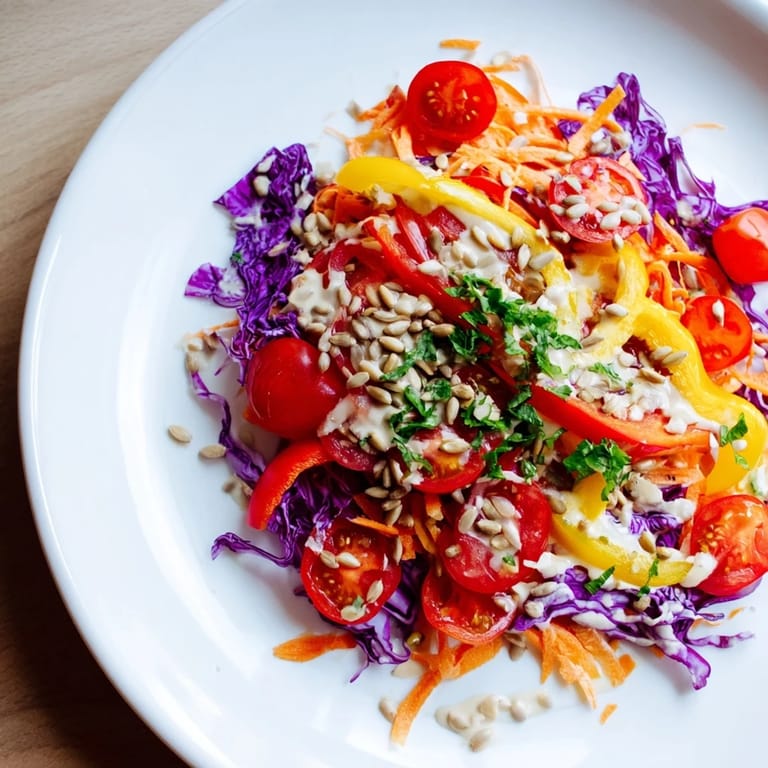
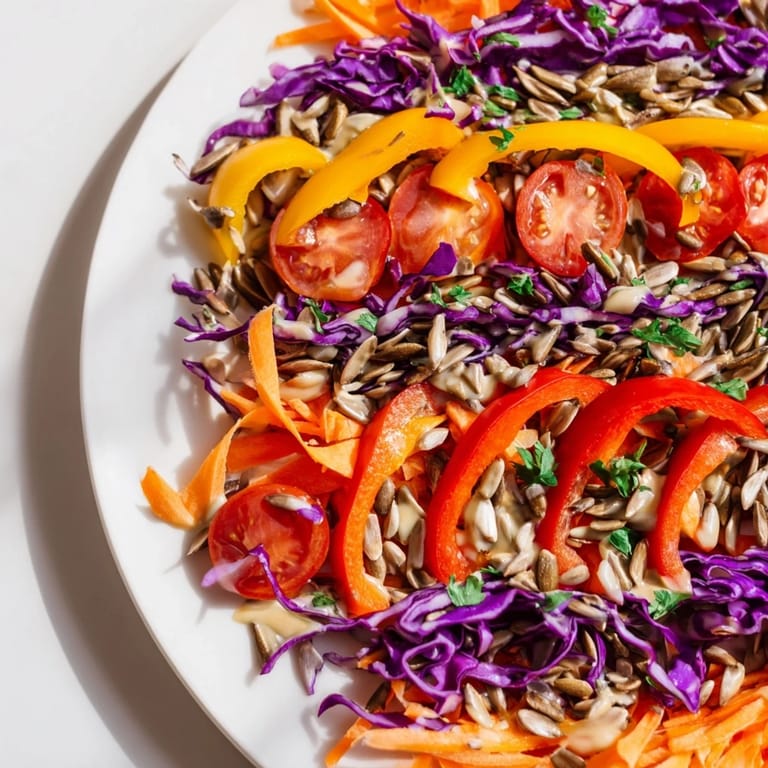
- Top with sunflower seeds and fresh herbs if you're using them, then eat immediately or chill for up to 15 minutes. The longer it sits, the crispier it becomes, but don't wait much longer than that.
 Save
Save My neighbor once asked why I bothered making salad when bagged salad exists, and I realized I don't make this for efficiency—I make it for the ritual of it, the satisfaction of seeing all those colors pile up, and the knowledge that I'm eating something that came from the earth and my own hands, not a plastic container. That matters more to me than I expected it would.
Why Tahini Works Here
Tahini is underrated in Western kitchens, where we default to vinaigrette or ranch. But it has this subtle, roasted nuttiness that becomes a backdrop for vegetables instead of competing with them. It also emulsifies naturally—that's the lemon juice doing the work—which means the dressing clings to vegetables instead of pooling at the bottom of the bowl like an oil-based dressing does. Once you taste how tahini coats your tongue and softens against crisp vegetables, you understand why it's been the dressing of choice in Mediterranean and Middle Eastern cooking for centuries.
Making It a Meal
This salad is genuinely filling on its own, but if you want to serve it as a main course, add chickpeas, grilled tofu cubes, or edamame right into the mix. I've also topped it with crumbled feta or vegan feta when I wasn't being strict about vegan eating, and the salty crumbles against the creamy dressing made it feel almost decadent. The architecture of the salad is sturdy enough to hold up to protein without becoming a chaotic pile.
The Seasonal Spin
This salad is flexible enough to follow the season without losing its identity. In summer, add fresh corn kernels and peaches; in fall, slice in some apple and add toasted seeds; in winter, use shredded beets and raw kale instead of delicate greens. The tahini dressing anchors whatever vegetables you choose, which is exactly what makes it so trustworthy to cook with again and again.
- If your vegetables aren't as colorful as you'd hoped, don't worry—the dressing makes everything taste intentional anyway.
- You can prep all the vegetables hours ahead and store them in separate containers, then toss everything together right before eating.
- This salad travels well to potlucks in a container with the dressing in a separate jar, ready to shake and combine.
 Save
Save Every time I make this salad, I'm reminded that the best meals are the ones where ingredients taste like themselves, not like someone was trying too hard. This is that salad.
Recipe Questions & Answers
- → What vegetables are used in this salad?
The salad features red and yellow bell peppers, carrots, purple cabbage, cucumber, cherry tomatoes, sweet corn, red onion, and mixed salad greens.
- → How is the dressing prepared?
The dressing combines tahini, lemon juice, maple syrup or honey, olive oil, minced garlic, salt, and pepper, thinned with water to a pourable consistency.
- → Can this dish be adapted for extra protein?
Yes, adding chickpeas, grilled tofu, or edamame can enhance the protein content while maintaining its fresh profile.
- → Are there any allergens to be aware of?
Contains sesame from tahini and possibly cross-contamination with nuts. Using honey affects vegan suitability.
- → What optional toppings are recommended?
Toasted sunflower seeds and chopped fresh herbs like parsley, cilantro, or mint add texture and flavor.