 Save
Save I stumbled onto this green goddess moment on a Tuesday afternoon when my farmer's market haul looked too good to waste. The basil was practically glowing, the zucchini felt impossibly fresh, and I had just enough Greek yogurt left over from breakfast to justify making something special. What started as a quick lunch became the dish I kept making all summer, tweaking it here and there until it felt like pure comfort wrapped in herbaceous brightness.
I made this for a friend who was going through a health-conscious phase, and watching her face light up at first bite was everything. She didn't expect real food to taste this good without feeling heavy, and suddenly I was writing out the recipe on the back of a napkin while we sat on my porch. That's when I knew this wasn't just a recipe—it was a little act of care.
Ingredients
- Zucchini: Spiralizing creates that perfect pasta-like texture, but pat them dry with paper towels or they'll weep water into your sauce.
- Savoy cabbage: The slight sauté mellows its rawness and adds a subtle sweetness that rounds out all those fresh herbs.
- Greek yogurt: Use full-fat if you can find it—it makes the sauce richer and more luxurious than you'd expect from something so healthy.
- Fresh basil, parsley, chives, and tarragon: Buy them the day you're cooking if possible; the flavor difference is genuinely noticeable and worth the trip.
- Lemon juice: Don't skip this—it's what keeps the green goddess from tasting one-dimensional and earthy.
- Garlic: Just one small clove prevents the sauce from becoming overpowering or sharp.
- Dijon mustard: This tiny amount adds a subtle depth that makes people ask what your secret ingredient is.
- Cherry tomatoes: Add them last so they stay bright and burst-able rather than breaking down into mush.
- Avocado: Dice it right before serving or it browns and loses that silky appeal.
- Feta and pine nuts: Optional but worth it—they add a salty crunch that transforms the whole dish into something more special.
Tired of Takeout? 🥡
Get 10 meals you can make faster than delivery arrives. Seriously.
One email. No spam. Unsubscribe anytime.
Instructions
- Dry those zoodles:
- Spiralize your zucchini and lay the noodles on paper towels while you prep everything else. They'll release water, and absorbing it now prevents a watery, sad dish later.
- Quick-sauté the vegetables:
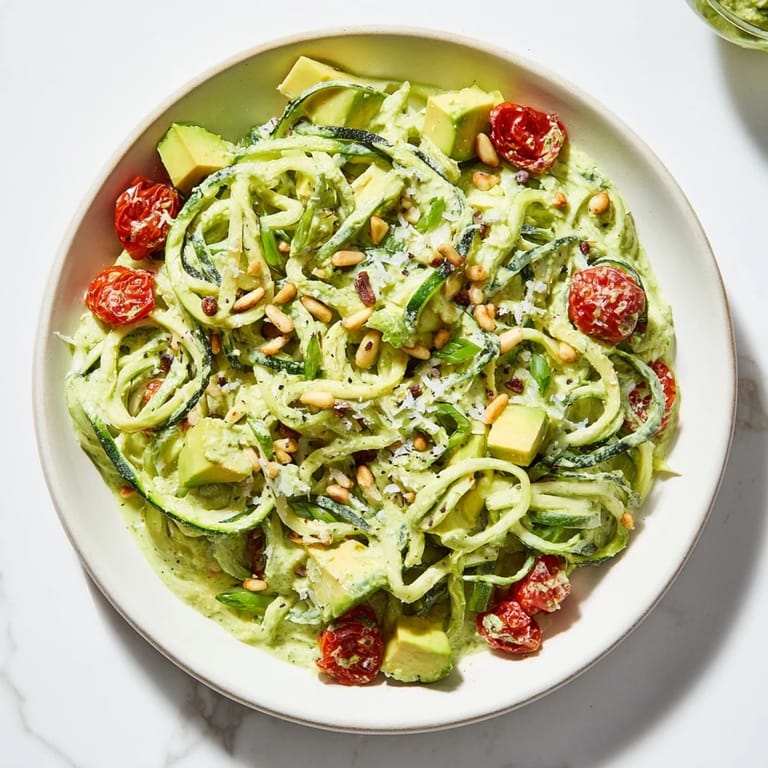
- Heat olive oil in a large skillet over medium heat and sauté the cabbage until it softens and turns slightly translucent, about 3 to 4 minutes. Add the zoodles and cook for just 2 to 3 minutes more—you want them tender but still with a slight bite, not floppy like overcooked pasta.
- Blend the magic:
- Combine all sauce ingredients in a blender or food processor and blend until smooth and creamy. Taste it and adjust the lemon juice, salt, or herbs to your preference—this is where you make it yours.
- Bring it together:
- In a large bowl, toss the warm zoodles and cabbage with the sauce until everything glistens and coats evenly. The warmth will help the sauce cling to the noodles.
- Fold in the fresh bits:
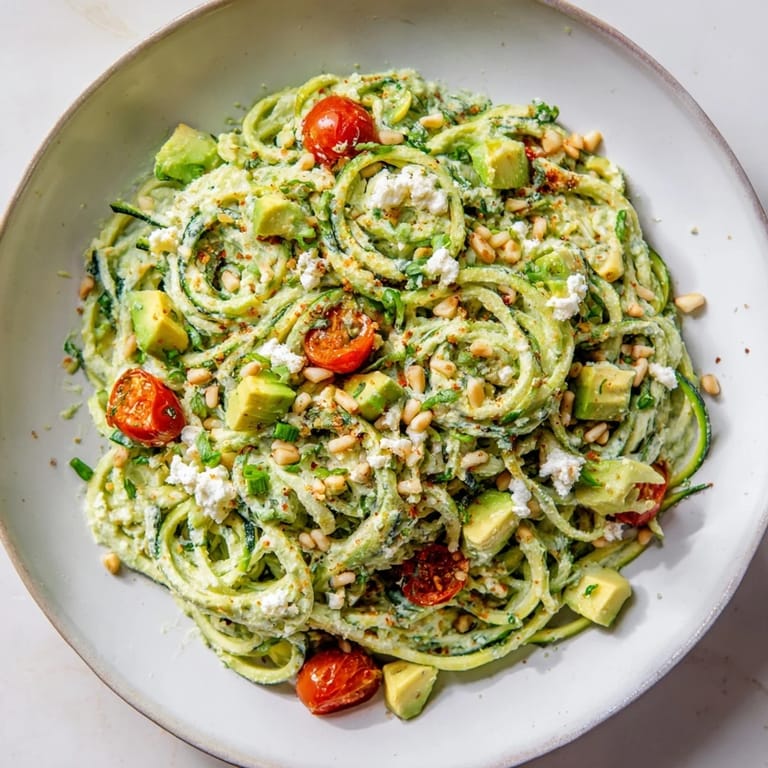
- Gently add the cherry tomatoes, avocado, and scallions without overmixing, so they stay distinct and beautiful. Top with feta and pine nuts if you're using them, and serve right away.
 Save
Save There's something about eating something this green and vibrant that feels like self-care in a bowl. My mom actually asked for the recipe after tasting it, which rarely happens, and I realized this is the kind of dish that makes people feel nourished without feeling like they're being virtuous about it.
Serving Suggestions That Work
Serve this warm straight from the skillet if you're cooking for yourself on a chilly evening, or chill it completely for a refreshing summer lunch. I've paired it with crisp white wine and it disappears fast, but herbal iced tea works beautifully too if you're keeping it lighter. If you want to add protein without overcomplicating things, grilled chicken thighs, pan-seared shrimp, or crispy roasted chickpeas all feel natural alongside it.
Making It Your Own
This recipe is flexible enough to work with what's in your garden or what looked good at the market. Swap spinach or kale in for some of the cabbage, or add diced cucumber and fresh mint if you want a fresher, more salad-like angle. The green goddess sauce is honestly good on everything—roasted vegetables, grilled fish, even as a dip for crudités—so once you make it, you'll find yourself reaching for it constantly.
Storing and Reheating
Leftovers keep in the fridge for about 2 days, though the zoodles will soften a bit over time and the avocado will brown slightly if you slice it ahead. Store everything separately if you can, or add a squeeze of fresh lemon juice to slow down the browning. Reheat gently in a skillet over medium-low heat if you want it warm again, or eat it cold straight from the container—it's honestly just as good.
- Keep extra sauce on hand to drizzle over breakfast bowls, roasted vegetables, or even spread on sandwiches.
- If the sauce seems too thick, thin it with a splash of lemon juice or a tablespoon of water rather than extra yogurt.
- Make the sauce vegan by using dairy-free yogurt and omitting the feta, and it stays just as creamy and delicious.
 Save
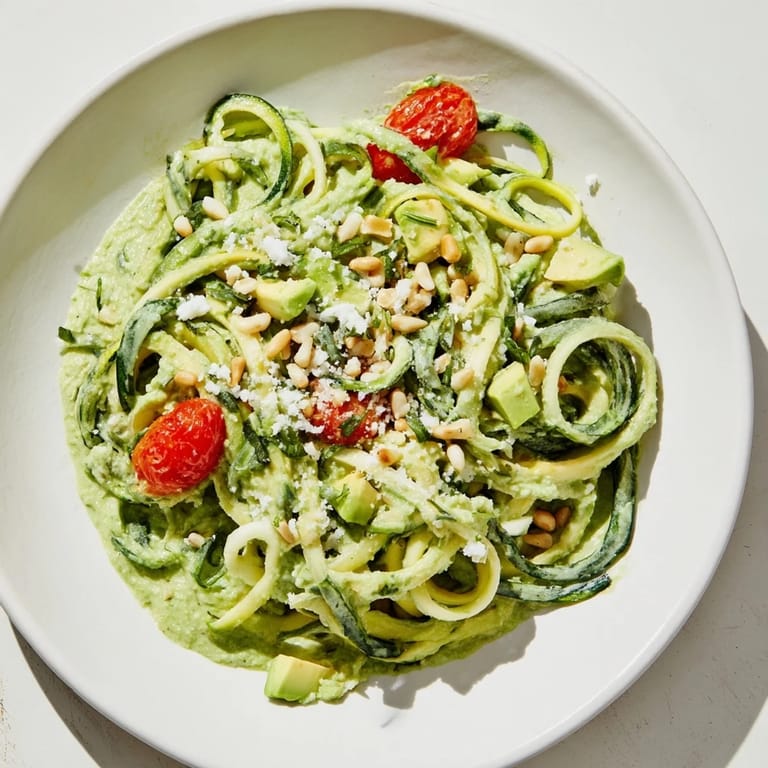
Save This dish somehow tastes like both a splurge and a choice you're making for yourself, which is the best kind of cooking. I hope it becomes something you come back to when you want to feel bright again.
Recipe Questions & Answers
- → What is the best way to prepare zucchini noodles?
Use a spiralizer or julienne peeler to create uniform zucchini noodles. After spiralizing, place them on a paper towel to remove excess moisture before cooking or serving.
- → How can I make the sauce dairy-free?
Substitute the Greek yogurt with a plant-based yogurt alternative such as coconut or almond yogurt to maintain creaminess while keeping it dairy-free.
- → Can I add protein to this dish?
Yes, grilled chicken, shrimp, or chickpeas can be added for extra protein without overpowering the fresh flavors.
- → What vegetables work well besides zucchini and cabbage?
Spinach or kale can replace some cabbage for a different texture and flavor profile, while still complementing the herby sauce.
- → Is this dish best served warm or cold?
It is versatile; serve warm right after tossing for a comforting meal or chilled as a refreshing salad on warm days.