 Save
Save I discovered this salad by accident one afternoon while standing in my kitchen wondering what to do with three half-empty cans of beans. My neighbor had just returned from Dubai, raving about the chocolate-dusted pastries she'd tasted, and something about combining sweet and savory clicked. That first bite—the earthiness of chickpeas meeting a whisper of cacao—felt like a small revelation, the kind that makes you stop mid-chew and think, 'wait, why isn't this a thing?'
I made this for a potluck once without telling anyone about the cacao, just to see if anyone would notice. Halfway through the meal, someone leaned over and asked if there was something different in the salad, something almost floral and rich they couldn't place. Watching them figure it out was better than any compliment; it felt like sharing a joke only we understood.
Ingredients
- Cooked chickpeas (1 cup): These hold their shape and soak up the dressing without getting mushy—rinse them well to lose any tinny flavor.
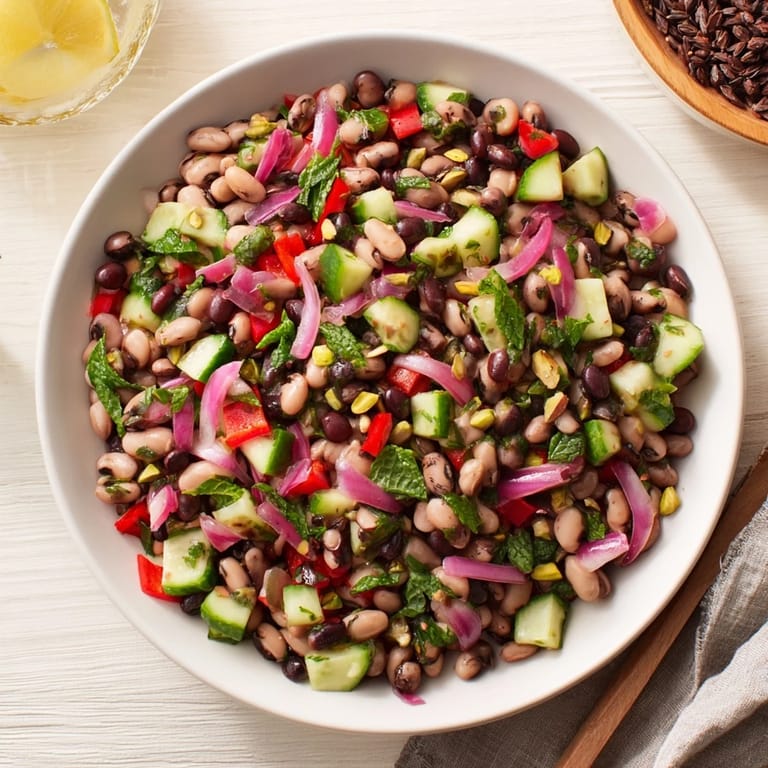
- Black beans (1 cup) and cannellini beans (1 cup): The trio creates layers of texture, each bean type bringing its own subtle earthiness.
- Cucumber, red onion, bell pepper (diced): Fresh vegetables keep the salad snappy; I dice everything by hand so the pieces stay chunky and distinct.
- Fresh flat-leaf parsley and mint (about 1/4 cup each): Don't use dried herbs here—the brightness matters, and fresh herbs are what make this taste alive.
- Roasted pistachios (1/3 cup): Buy them unsalted so you control the seasoning; the crunch ties everything together.
- Cacao nibs or cocoa powder (1 tablespoon or 1 teaspoon): Start with less than you think—this ingredient is bold and shouldn't overshadow the other flavors.
- Extra virgin olive oil (3 tablespoons): Good oil matters here since it's not being heated; taste it first to make sure it's fruity, not rancid.
- Lemon juice, pomegranate molasses, honey, cumin, cinnamon, salt, and pepper: These build a warm, complex dressing that feels Middle Eastern without tasting heavy.
Tired of Takeout? 🥡
Get 10 meals you can make faster than delivery arrives. Seriously.
One email. No spam. Unsubscribe anytime.
Instructions
- Gather your beans:
- Pour all three types of cooked beans into a large bowl—the sound of them hitting the bowl should feel generous and abundant.
- Build the base:
- Toss in the cucumber, onion, pepper, parsley, and mint with gentle hands, mixing just enough so everything gets acquainted without crushing anything.
- Make the dressing:
- In a separate bowl, whisk the oil and lemon juice together first until it looks creamy, then add the pomegranate molasses, honey, and spices; keep tasting as you go because balance matters here.
- Marry everything together:
- Pour the dressing over the vegetables and beans, then toss with the kind of confidence that comes from knowing you're building something good.
- Add the texture:
- Fold in the pistachios carefully so they stay whole and crunchy, then dust the cacao across the top like you're finishing a painting.
- Let it breathe:
- Set the salad aside for at least 10 minutes—this isn't laziness, it's strategy; the flavors need time to find each other.
- Serve:
- Whether you chill it or serve at room temperature is up to your mood and the weather.
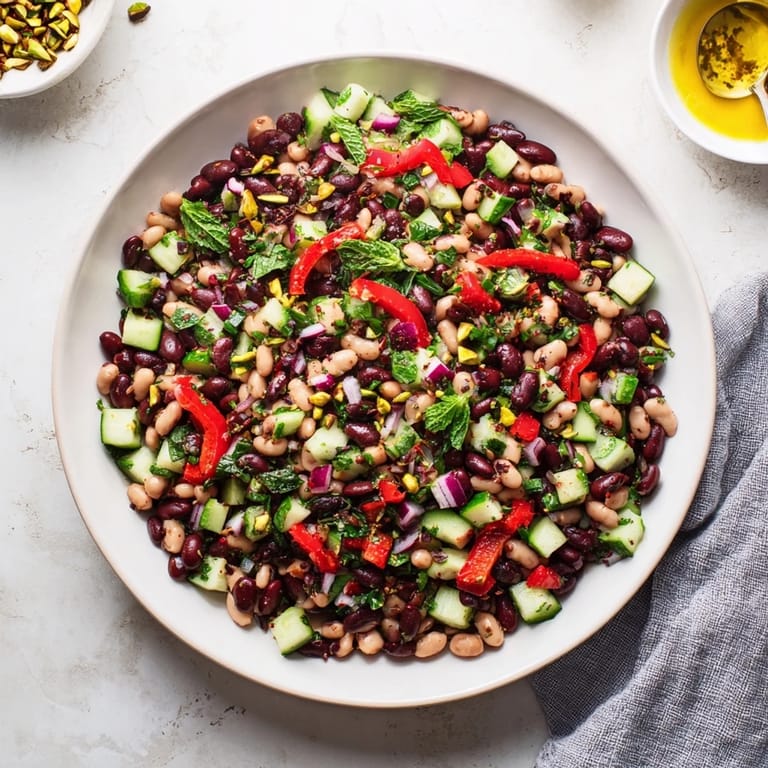 Save
Save My friend who hates beans sat down to eat this and didn't realize what she was eating until three bites in. When I told her, she laughed and kept eating anyway, which felt like the highest compliment—sometimes food wins people over before their preferences even get a say.
Why the Spice Blend Works
Cumin and cinnamon are like old friends who know how to finish each other's sentences. Together they create a warm undertone that feels familiar yet surprising, the kind of flavor that makes people pause mid-conversation to ask what you put in this. The pomegranate molasses adds a gentle tartness that keeps everything bright instead of heavy, which is crucial when you're working with three types of beans.
The Cacao Question
Adding chocolate to a savory dish feels bold the first time, almost reckless. But cacao has been used in savory Middle Eastern cooking for centuries, and once you understand that it's not about sweetness but about deepening the earthiness, it clicks. The cacao nibs add texture and a subtle bitterness that contrasts beautifully with the honey in the dressing.
Timing and Storage
This salad is forgiving and flexible, which is part of its charm. You can make it an hour ahead or eat it immediately; it works either way because the beans are already cooked and the vegetables won't wilt from the dressing. Store it in a covered container in the fridge for up to three days, though I find it's best consumed within two.
- If the salad sits overnight, the cacao flavors actually mellow out, which some people prefer.
- Add the pistachios right before serving if you want them to stay maximally crunchy.
- Taste the dressing separately before pouring it in; the seasoning should feel bold because the beans will dilute it slightly.
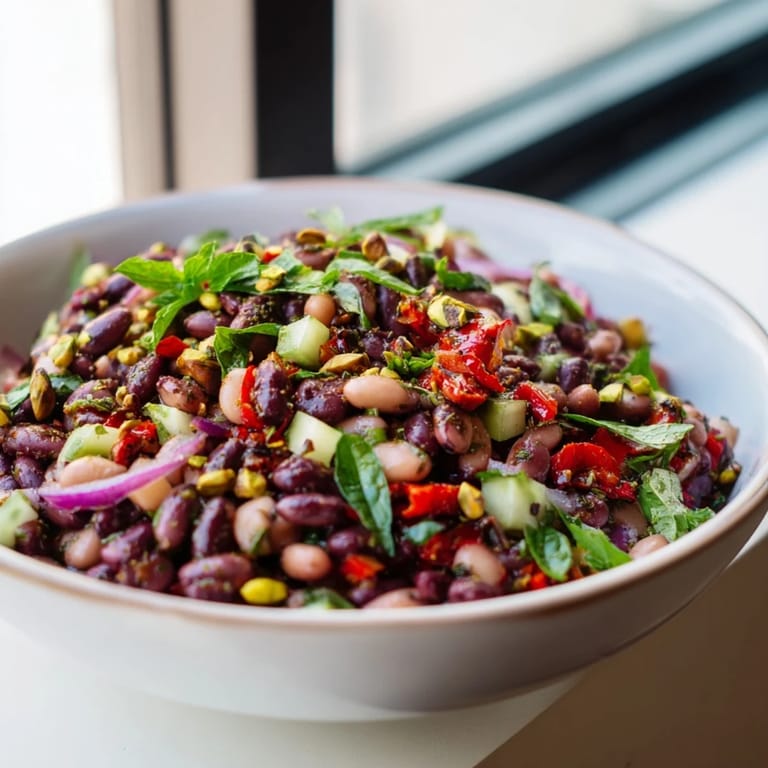 Save
Save This salad taught me that cooking doesn't always mean following a map—sometimes it means trusting a hunch and seeing where it leads. Make it, adjust it, and most importantly, share it with someone who needs to be surprised by their food.
Recipe Questions & Answers
- → What types of beans are used in this salad?
The salad features chickpeas, black beans, and cannellini beans, all cooked and rinsed for a dense texture.
- → How does the cacao influence the salad's flavor?
Cacao nibs or cocoa powder add a subtle bitterness and depth, complementing the sweetness from honey and the earthiness of the pistachios.
- → Can this salad be served warm?
It is best enjoyed chilled or at room temperature to allow the flavors to fully develop and meld together.
- → What alternatives exist for the pomegranate molasses?
Balsamic glaze can be used as a substitute to maintain the tangy and sweet balance in the dressing.
- → Are there any nut allergies to consider?
Yes, the salad contains roasted pistachios, which are tree nuts; they can be omitted or replaced if needed.